 0
0
 0
0
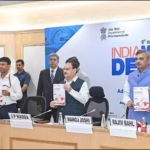
NEW DELHI — In a major milestone for public health, the Union Ministry of Health and Family Welfare released the highly anticipated National Family Health Survey-6 (NFHS-6) data on May 29, 2026. Evaluating nearly 6.79 lakh households across 715 districts between 2023 and 2024, the survey reveals substantial, nationwide progress in maternal and child health indicators. Driven by scaled-up government interventions, India has achieved historic highs in institutional deliveries, childhood immunizations, and prenatal care coverage, alongside a encouraging drop in childhood stunting.
However, leading public health authorities warn that these structural successes mask an emerging, complex challenge. As the country celebrates these hard-won statistical victories, the focus must urgently pivot from basic healthcare access to service quality, regional equity, and addressing a sophisticated “double burden” of malnutrition.
The Hard Numbers: What the Survey Revealed
The findings of NFHS-6 provide a comprehensive, data-driven look at how reliably the Indian public health ecosystem now reaches families. The data shows distinct upward trajectories in every critical window of maternal and pediatric care:
-
Antenatal Care (ANC): A striking 95.9% of pregnant women received some form of antenatal care, with 76.2% registering within their crucial first trimester. Furthermore, 65.2% of expectant mothers completed at least four comprehensive ANC visits.
-
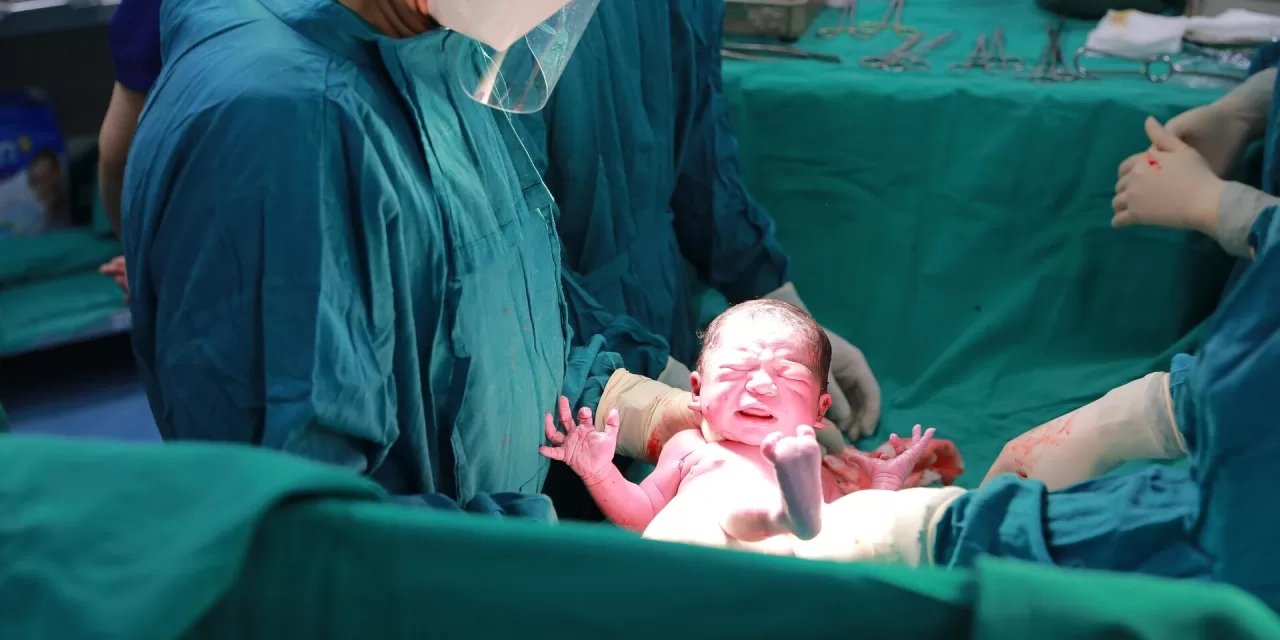
Safe Deliveries: Institutional deliveries climbed to 90.6% nationwide, closely mirrored by the fact that 91.3% of all births were attended by skilled health personnel.
-
Pediatric Immunization: Full vaccination coverage among children aged 12–23 months reached 87.1%. Notably, rotavirus vaccine uptake surged to 85.4% (up from just 36.4% in the prior survey round), and the second dose of the measles-containing vaccine reached 71.8%.
-
Early Childhood Nutrition: Stunting (low height-for-age) among children under five fell from 35.5% to 29.3%, while severe wasting (low weight-for-height) dropped to 5.2%.
NFHS-6 Key Health Trajectories (2026 Release)
├── Maternal Care
│   ├── Antenatal Care Access: 95.9%
│   └── Institutional Deliveries: 90.6%
└── Child Health
    ├── Full Vaccination (12-23 mo): 87.1%
    └── Under-5 Stunting Drop: 35.5% ➔ 29.3%
Officials attribute this momentum to the sustained, intersecting implementation of national reproductive and child health schemes. These include Janani Suraksha Yojana (JSY) and Surakshit Matritva Aashwasan (SUMAN) for safe deliveries, alongside the expanding reach of the Universal Immunization Programme.
This macro-level progress builds directly upon long-term mortality declines reported by the Press Information Bureau (PIB), which highlighted a drop in the Maternal Mortality Ratio (MMR) to 97 per lakh live births and an Infant Mortality Rate (IMR) reduction to 28 per 1,000 live births.
The Expert Perspective: The “Dual Challenge” Ahead
While public health professionals welcome the findings, independent experts emphasize that expanding access is only half the battle.
An independent economic and policy analysis by SBI Research noted that while India’s health gains are undeniably real, the next phase of progress will demand vastly more targeted funding for integrated, localized care. The review highlighted that India is increasingly caught in a “dual challenge”: fighting persistent, historical undernutrition while simultaneously managing an unprecedented rise in non-communicable diseases (NCDs) and metabolic risks.
“A high rate of institutional delivery is an excellent logistical achievement,” explains Dr. Sunita Malhotra, a maternal health policy consultant based in New Delhi, who was not involved in compiling the survey. “But a safe delivery is more than just giving birth inside a concrete facility. The conversation must now shift entirely toward clinical quality—ensuring that facilities are adequately staffed, emergency obstetric care is functional 24/7, and patient dignity is protected. We have built the infrastructure; now we must optimize the care delivered within it.”
The Ministry’s report openly acknowledges this shifting landscape, noting that the coexistence of rising overweight and obesity rates alongside undernutrition remains a critical public health hurdle.
Critical Gaps: The Shadow of Regional Inequality
Despite the positive national averages, public health researchers urge caution. Aggregate numbers frequently conceal stark disparities across different states, socioeconomic brackets, and rural-urban divides.
While southern and western states continue to mirror developed-market health indicators, specific districts within the central and eastern belts face stubborn bottlenecks. Last-mile delivery of supplemental nutrition services remains uneven, and the prevalence of gestational and childhood anemia remains a persistent issue.
Furthermore, the data underscores a profound structural reality: 95.6% of children received the majority of their routine vaccinations through public health infrastructure. This confirms that the poorest and most vulnerable segments of the population rely almost exclusively on government sub-centers, Accredited Social Health Activists (ASHAs), and Anganwadi networks. Any lapse in the funding, training, or supply chains of these grassroots systems directly threatens India’s broader health trajectory.
The Double Burden of Malnutrition
The emerging trend of the “double burden of malnutrition”—where undernutrition and overnutrition exist within the very same communities or even households—presents a complex puzzle for health planners.
Traditional public health programs were heavily designed around caloric deficit and micronutrient distribution, such as Iron-Folic Acid (IFA) tablets. Today, urban migration, the proliferation of ultra-processed foods, and changing dietary patterns require a structural update.
Public health strategies must evolve beyond basic food security to encompass nuanced nutrition counseling, intensive lifestyle education, early screening for gestational diabetes, and preventive care for pediatric metabolic health.
Practical Implications for Everyday Health Decisions
For health-conscious consumers and families, the NFHS-6 data offers valuable, actionable insights for daily life:
-
The Power of the First Trimester: The clear correlation between early health tracking and positive birth outcomes highlights the absolute necessity of first-trimester registration. Seeking clinical care in the first 12 weeks of pregnancy allows for early risk screening and crucial nutritional optimization.
-
Relying on Grassroots Networks: The high success rate of public health programs shows that local primary health centers, ASHA workers, and Anganwadi centers are highly effective resources. Families should actively utilize these community networks for essential health counseling, routine child immunizations, and complementary feeding advice for infants aged 6 to 8 months.
-
Broader Focus on Nutrition: Achieving optimal family health requires looking beyond bare minimum caloric intake. Prioritizing diverse, nutrient-dense whole foods is essential to protect the household against both undernutrition and the long-term risks of metabolic obesity.
Ultimately, NFHS-6 proves that India has successfully engineered a massive, operational health apparatus capable of reaching hundreds of millions. The task for the coming decade is to infuse that vast apparatus with consistent clinical quality, ensure no region is left behind, and confront the evolving realities of modern nutrition.
References
- https://www.ndtv.com/health/india-records-significant-gains-in-maternal-and-child-health-report-11671283
Medical Disclaimer: This article is for informational purposes only and should not be considered medical advice. Always consult with qualified healthcare professionals before making any health-related decisions or changes to your treatment plan. The information presented here is based on current research and expert opinions, which may evolve as new evidence emerges.