 0
0
 0
0
Read Time:5 Minute, 48 Second
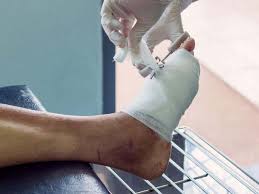
HYDERABAD, India — Scientists at the Council of Scientific and Industrial Research–Indian Institute of Chemical Technology (CSIR-IICT) have announced the development of a novel, indigenously manufactured surgical adhesive designed to rapidly seal human tissue and close surgical incisions without traditional needle-and-thread suturing.
According to institute officials on August 8, 2026, the biocompatible liquid sealant has successfully passed initial clinical evaluation, received commercial licensing, and launched through an initial pharmaceutical partnership. CSIR-IICT is now actively seeking additional industry collaborators to scale manufacturing, lower costs, and expand access across emergency departments, operating theaters, and rural clinics throughout India.
While the milestone represents a significant step forward for domestic medical technology, independent surgical experts emphasize that tissue adhesives are specialized tools intended to complement—not entirely replace—conventional sutures and surgical staples.
The Science of Medical-Grade Glues
Surgical glues, formally known as topical tissue adhesives, are specialized liquid formulations that undergo rapid chemical polymerization when brought into contact with moisture on living tissue.
The CSIR-IICT formulation relies on alkyl 2-cyanoacrylate technology. Upon application to clean, closely aligned skin edges, the liquid instantly reacts with trace moisture on the skin’s surface, hardening into a flexible, water-resistant film within seconds. This polymer shield holds the tissue boundaries firmly together while natural cellular repair occurs underneath.
+-------------------------------------------------------------------------+
|                  HOW CYANOACRYLATE TISSUE ADHESIVES WORK               |
+-------------------------------------------------------------------------+
|                                                                         |
|  1. Liquid Applied          2. Rapid Polymerization      3. Protective  |
|     to Aligned Edges           with Skin Moisture           Shield Formed|
|                                                                         |
|      ||          ||              \\  ||  //               ==============|
|     [Skin]    [Skin]            [Polymerizing]            [Sealed Skin] |
|      ||          ||              //  ||  \\               ==============|
|                                                                         |
|  Outcome: Rapid structural hold, water-resistant barrier, no needle trauma|
+-------------------------------------------------------------------------+
“The primary advantage of an alkyl 2-cyanoacrylate adhesive lies in its biological compatibility and rapid setting time,” explains Dr. Ananya Mukherjee, an independent trauma surgeon and clinical professor of surgery not affiliated with the CSIR-IICT development team. “In acute trauma or fast-paced surgical environments, having a sterile, ready-to-use liquid compound that bonds in moist environments allows clinicians to secure clean, superficial lacerations rapidly, eliminating the need for local anesthetic injections typically required before suturing.”
CSIR-IICT researchers have identified a broad spectrum of potential surgical applications for the indigenous glue, ranging from routine appendectomies, Caesarean sections, and laparoscopic procedures to delicate surgeries in ear, nose, and throat (ENT), vascular, cosmetic, dental, and periodontal medicine.
Clinical Benefits: Pain-Free Closure and Reduced Needlestick Risk
For both patients and healthcare infrastructure, topical tissue adhesives offer distinct operational advantages over traditional suturing.
| Feature / Metric | Traditional Sutures | Cyanoacrylate Tissue Adhesive |
| Application Time | 5 to 15 minutes (requires anesthesia) | 30 to 90 seconds (no anesthesia) |
| Patient Discomfort | Moderate (needle punctures, local numbing) | Minimal to none |
| Follow-up Care | Requires return visit for removal | Self-sloughing (falls off in 7–10 days) |
| Water Resistance | Low (dressings must remain dry) | High (forms waterproof barrier) |
| Needlestick Risk | Present during placement & removal | Eliminated |
From a public health standpoint, the elimination of follow-up visits for suture removal is particularly impactful in lower-resource or rural settings. Patients in remote areas often face financial and logistical barriers when traveling back to urban hospital centers simply to have non-absorbable stitches taken out. Because cyanoacrylate film naturally sloughs off as the outermost layer of skin sheds over 7 to 10 days, patient burden is significantly reduced.
Additionally, eliminating sharp needles during wound closure reduces the risk of accidental needlestick injuries among surgical teams, lowering healthcare worker exposure to bloodborne pathogens.
Weighing the Evidence: Speed vs. Tensile Strength
Despite these compelling benefits, medical researchers urge balanced expectations, noting that tissue adhesives are not a universal cure-all for every wound type.
A landmark systematic review conducted by the Cochrane Collaboration analyzed 33 randomized controlled trials encompassing 2,793 human participants across various surgical settings. The review confirmed that while tissue adhesives dramatically reduce procedure time, they are associated with a higher rate of wound dehiscence—the accidental separation of wound edges before complete healing—compared to standard sutures.
The Cochrane review calculated a risk ratio of 3.35 for wound separation with adhesives compared to sutures. In practical terms, approximately 45 per 1,000 patients treated with glues experienced minor wound separation, compared to 13 per 1,000 patients treated with conventional stitches.
“A fast closure does not automatically equate to a stronger closure,” cautions Dr. Mukherjee. “Cyanoacrylate glues provide excellent surface sealing, but they lack the deep structural tensile strength provided by absorbable internal sutures. If you attempt to glue a high-tension wound—such as a laceration over a joint like an elbow or knee—the mechanical force will almost certainly cause the glue bond to fail.”
Surgeons also point out that while topical glues form an effective barrier against external pathogens, they offer no advantage over standard sutures regarding baseline infection rates or overall long-term cosmetic scarring when properly applied.
Clinical Limitations and Unanswered Questions
Medical authorities emphasize that strict wound selection criteria must be enforced when considering tissue glues. Clinical practice guidelines published by the American Academy of Family Physicians (AAFP) explicitly advise against using cyanoacrylate tissue adhesives in the following scenarios:
-
High-Tension Sites: Over joints, hands, or areas subject to frequent stretching.
-
Contaminated or Infected Wounds: Animal bites, puncture wounds, or heavily soiled injuries, where sealing the surface can trap bacteria deep within tissue layers.
-
Mucous Membranes: Inside the mouth, nose, or genital regions where constant fluid exposure prevents proper polymerization.
-
Jagged or Deep Lacerations: Wounds where underlying muscular or subcutaneous layers require structural suturing.
Furthermore, independent medical analysts note that while CSIR-IICT’s technology announcement is promising, detailed clinical data—including exact trial sample sizes, patient demographics, follow-up durations, specific adverse event rates, and regulatory clearance classes—have not yet been published in peer-reviewed literature. Transparent publication of these parameters will be vital for widespread clinical adoption by hospital purchasing boards.
Practical Guidance for Patients
Healthcare professionals strongly caution the public against confusing medical-grade tissue glues with household commercial superglues.
While household glues share chemical similarities, they contain high levels of industrial impurities, generate exothermic heat during curing that can burn human tissue, and release toxic degradation byproducts (such as free formaldehyde) that cause severe skin irritation and cellular necrosis. Medical-grade cyanoacrylates are specially synthesized with longer alkyl chains to minimize tissue toxicity, packaged in sterile single-use applicators, and strictly formulated for biological safety.
Patients presenting with deep, actively bleeding, or contaminated wounds should seek immediate medical evaluation at an emergency facility. While indigenous innovations like CSIR-IICT’s adhesive promise to streamline surgical care, the choice of closure technique ultimately rests on clinical judgment, anatomical location, and individual healing needs.
References
-
IANS. “CSIR-IICT to Promote Surgical Adhesive for Rapid Wound Closure.” AP7AM, August 8, 2026.
Medical Disclaimer: This article is for informational purposes only and should not be considered medical advice. Always consult with qualified healthcare professionals before making any health-related decisions or changes to your treatment plan. The information presented here is based on current research and expert opinions, which may evolve as new evidence emerges.


Happy
0 %

Sad
0 %

Excited
0 %

Sleepy
0 %

Angry
0 %

Surprise
0 %