 0
0
 0
0
Read Time:6 Minute, 4 Second
AHMEDABAD — State health officials in Gujarat have confirmed 39 laboratory-verified cases of Chandipura virus infection and 23 associated deaths, according to official updates released on August 8, 2026. The rapidly evolving outbreak has predominantly struck children under 15 years of age, triggering an aggressive public health intervention across western India. Because the vector-borne pathogen can cause acute brain inflammation within hours of symptom onset, state and central authorities are racing to contain transmission, bolster clinical response in rural health facilities, and educate families on early warning signs.
The latest numbers follow earlier reports from the Gujarat Department of Health indicating 35 confirmed cases and 22 fatalities among 184 suspected cases of Acute Encephalitis Syndrome (AES). Officials emphasize that case counts remain fluid as peripheral medical centers send blood and cerebrospinal fluid samples to central laboratories for confirmatory testing.
A Rapidly Progressing Neurological Threat
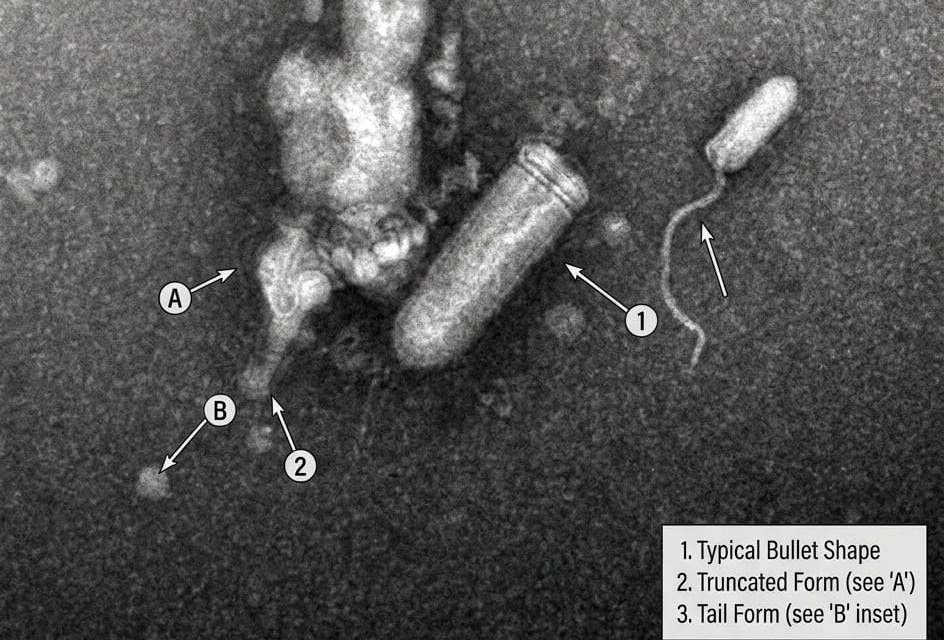
First isolated in 1965 in Maharashtra’s Chandipura village, Chandipura virus (CHPV) is an RNA virus belonging to the Rhabdoviridae family—the same family that includes the rabies virus. While historically considered a sporadic threat, CHPV has emerged over the last two decades as a significant cause of pediatric encephalitis outbreaks in western, central, and southern India.
+-----------------------------------------------------------------------+
|                       CHANDIPURA VIRUS PROFILE                        |
+-------------------+---------------------------------------------------+
| Family            | Rhabdoviridae                                     |
| Primary Vectors   | Female Sandflies (Phlebotomus species)            |
| Primary Hosts     | Children under 15 years of age                    |
| Transmission      | Vector bites (No proven human-to-human spread)    |
| Severity          | Rapid onset Acute Encephalitis Syndrome (AES)     |
| Mortality Rate    | Historically 56% to 75% in confirmed pediatric cases|
+-------------------+---------------------------------------------------+
The virus is transmitted primarily through the bites of infected sandflies (Phlebotomus species), although mosquitoes and ticks are also recognized as potential vectors. Outbreaks frequently coincide with the monsoon and post-monsoon seasons, when elevated humidity and stagnant water create optimal breeding conditions for sandflies. These insects thrive in rural and peri-urban environments, particularly in household crevices, unpaved mud walls, cattle sheds, and organic waste.
“What makes Chandipura particularly dangerous is its aggressive neurological progression,” explains Dr. Ananya Sen, an epidemiologist specializing in vector-borne diseases who is not directly involved in the current containment operations. “Unlike many tropical viruses that present with a slow-burning fever, CHPV crosses the blood-brain barrier rapidly, causing extensive neuronal damage and cerebral edema before an effective immune response can take shape.”
Importantly, public health authorities confirm there is currently no evidence of routine human-to-human transmission. Person-to-person contact does not pose a primary risk, allowing response teams to focus heavily on vector eradication, environmental sanitation, and rapid hospital referrals.
Masked by Common Symptoms: Recognizing the Early Signs
In its initial hours, a Chandipura virus infection can easily be mistaken for a routine seasonal viral fever, presenting a distinct clinical challenge for rural healthcare workers and parents.
Initial Symptoms
-
Sudden, high-grade fever
-
Intense headache and neck stiffness
-
Persistent vomiting or diarrhea
-
Marked lethargy and extreme irritability
Advanced Neurological Signs (Within 24–48 Hours)
-
Confusion, disorientation, or altered sensorium
-
Involuntary muscle twitching or severe convulsions (seizures)
-
Loss of consciousness or rapid descent into coma
“Chandipura virus infection comes about suddenly,” noted Dr. Vivek Jain, senior director and unit head of pediatrics at Fortis Hospital, Shalimar Bagh, in recent commentary regarding the regional threat. “The initial symptoms are high temperature accompanied by a very severe headache, vomiting, and extreme fatigue.” Dr. Jain emphasized that any unusual sleepiness, disorientation, or seizure activity in a febrile child demands immediate emergency evaluation, as brain swelling can reach critical levels within 24 to 48 hours.
Because symptoms of CHPV overlap significantly with other forms of AES—such as Japanese encephalitis, bacterial meningitis, cerebral malaria, and severe dengue—laboratory verification is essential. Confirmation relies on molecular testing via Reverse Transcription-Polymerase Chain Reaction (RT-PCR) or Enzyme-Linked Immunosorbent Assay (IgM ELISA) testing, typically conducted by specialized centers such as the National Institute of Virology (NIV).
Diagnostic Challenges and Supportive Care Realities
There is currently no specific antiviral drug approved to clear Chandipura virus, nor is there a commercially available human vaccine. As a result, clinical management relies entirely on intensive supportive care.
Because acute brain swelling can impair vital functions within hours, hospital management centers on:
-
Airway & Respiratory Support: Ensuring adequate oxygenation and placing severely lethargic patients on mechanical ventilation if necessary.
-
Intracranial Pressure Management: Administering osmotic diuretics (such as mannitol) to reduce brain swelling.
-
Seizure Control: Rapid intravenous administration of anticonvulsant medications.
-
Hemodynamic Stability: Monitoring fluid balance meticulously to prevent both cerebral edema and hypovolemic shock.
Historically, the World Health Organization (WHO) notes that the case-fatality ratio in confirmed CHPV outbreaks ranges between 56% and 75%. Medical experts caution, however, that these high percentages often reflect reporting bias—where only the most critically ill children who reach tertiary hospitals are tested, while milder infections may go uncounted.
During India’s large-scale 2024 outbreak, health surveillance tracked 245 cases of suspected AES and 82 deaths between June and mid-August, with 64 eventually confirming positive for CHPV. This gap highlights why public health agencies track suspected encephalitis cases alongside laboratory-confirmed cases to ensure no critically ill child is denied rapid medical intervention while awaiting lab results.
Public Health Containment Efforts
In response to the rising case count, the Ministry of Health and Family Welfare, in coordination with the Gujarat state government, has deployed National Joint Outbreak Response Teams (NJORT). These specialist units are conducting field investigations, facilitating rapid sample transport, and standardizing treatment protocols in district hospitals.
Key measures currently underway include:
-
Vector Abatement: Indoor residual spraying of insecticides (such as malathion) targeting sandfly habitats in affected villages.
-
Health Worker Training: Briefing primary healthcare clinicians to treat any febrile child showing neurological symptoms as a medical emergency, initiating anti-edema treatment before transferring the patient.
-
Community Education: Deploying village-level health workers (ASHA workers) to instruct families on vector control and symptom recognition.
Practical Measures for Families
Public health officials advise parents living in or traveling through affected districts to implement strict insect-protection measures, particularly around young children:
-
Eliminate Indoor Harborages: Seal cracks and crevices in mud or concrete walls where sandflies hide during daylight hours.
-
Use Repellents Safety: Apply child-safe, approved insect repellents to exposed skin according to package directions.
-
Protective Wear: Dress children in lightweight, full-length sleeves and trousers, especially during dawn and dusk when vector activity peaks.
-
Fine-Mesh Bed Nets: Ensure sleeping areas utilize fine-mesh mosquito or sandfly netting (sandflies are significantly smaller than typical mosquitoes and can pass through coarse netting).
-
Sanitation and Livestock: Keep animal shelters clean and situated away from main residential quarters, ensuring household waste is properly disposed of to eliminate breeding grounds.
While the figures in Gujarat underscore a severe clinical situation, health authorities urge balanced awareness over panic. Prompt medical evaluation at the first sign of fever combined with neurological changes remains the most decisive factor in improving pediatric survival rates.
References
-
https://www.fmbharat.com/en/india/gujarat-chandipura-virus-cases-rise-to-39-death-toll-reaches-23
Medical Disclaimer: This article is for informational purposes only and should not be considered medical advice. Always consult with qualified healthcare professionals before making any health-related decisions or changes to your treatment plan. The information presented here is based on current research and expert opinions, which may evolve as new evidence emerges.


Happy
0 %

Sad
0 %

Excited
0 %

Sleepy
0 %

Angry
0 %

Surprise
0 %