 0
0
 0
0
Read Time:5 Minute, 47 Second
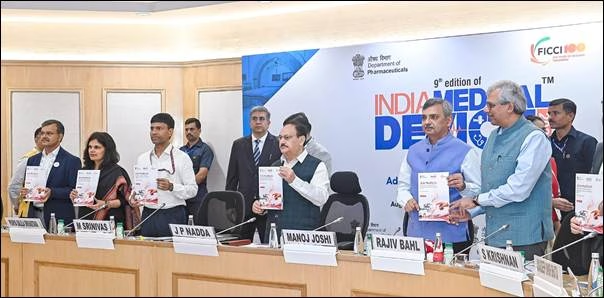
NEW DELHI — In a major push toward modernizing healthcare delivery across Asia’s second-most populous nation, Union Minister of Chemicals & Fertilizers and Health & Family Welfare, Shri J. P. Nadda, released a landmark knowledge paper titled “AI in MedTech: Revolutionizing Healthcare Through Artificial Intelligence”.
Unveiled at Vigyan Bhawan during the 9th Edition of India Medical Device 2026—an event organized by the Department of Pharmaceuticals alongside the Federation of Indian Chambers of Commerce & Industry (FICCI)—the report outlines a national framework to transition artificial intelligence from isolated clinical pilots into routine medical practice.
Jointly authored by management consulting firm Praxis Global Alliance and FICCI, the policy document highlights five priority interventions aimed at integrating AI directly into medical hardware and software, potentially easing severe specialist shortages in rural and underserved areas.
                 INDIA'S MEDTECH AI ROADMAP

   FOUNDATIONAL INFRASTRUCTURE        EXISTING ECOSYSTEM GAPS
   • ABDM Digital Health Highway      • Fragmented Patient Datasets
   • IndiaAI & SAHI Initiatives       • Static Medical Regulations
   • Nat'l MedTech Policy (2023)      • Opaque Insurance Pathways
                 │                              │
                 └──────────────┬───────────────┘
                                │
                                ▼
                       FIVE KEY PRIORITIES
   1. Direct Device Embedding    2. Scalable Infrastructure
   3. Lifecycle Regulation       4. AI Diagnostic Rollouts
             5. Multi-Sectoral Governance
Moving Beyond Pilot Projects: The Five Core Priorities
While India has established strong foundational digital highways—including the Ayushman Bharat Digital Mission (ABDM), National Medical Devices Policy 2023, IndiaAI Mission, SAHI (Secure AI for Health Initiative), and BODH (Benchmarking Open Data Platform for Health AI)—the report warns that solutions often stall at the proof-of-concept phase.
To bridge this gap between innovation and everyday bedside care, the knowledge paper outlines five strategic focus areas:
-
Embedding Intelligence Directly in Devices: MedTech represents India’s most immediate opportunity for AI deployment. Integrating algorithmic decision support into hardware—such as portable ultrasound devices, handheld ECG machines, and point-of-care test kits—effectively embeds specialist-level expertise directly into primary care instruments.
-
Transitioning from Foundations to Ecosystem Scale: Although clinical acceptance and digital health infrastructure have grown rapidly, wide-scale adoption remains constrained by fragmented electronic health records, evolving regulatory frameworks, and unclear insurance reimbursement pathways.
-
Closing Infrastructure and Policy Gaps: To move toward routine clinical deployment, the ecosystem must address three core bottlenecks: creating AI-ready clinical data repositories, implementing adaptive lifecycle-based device regulations, and designing reimbursement mechanisms that recognize the value added by AI.
-
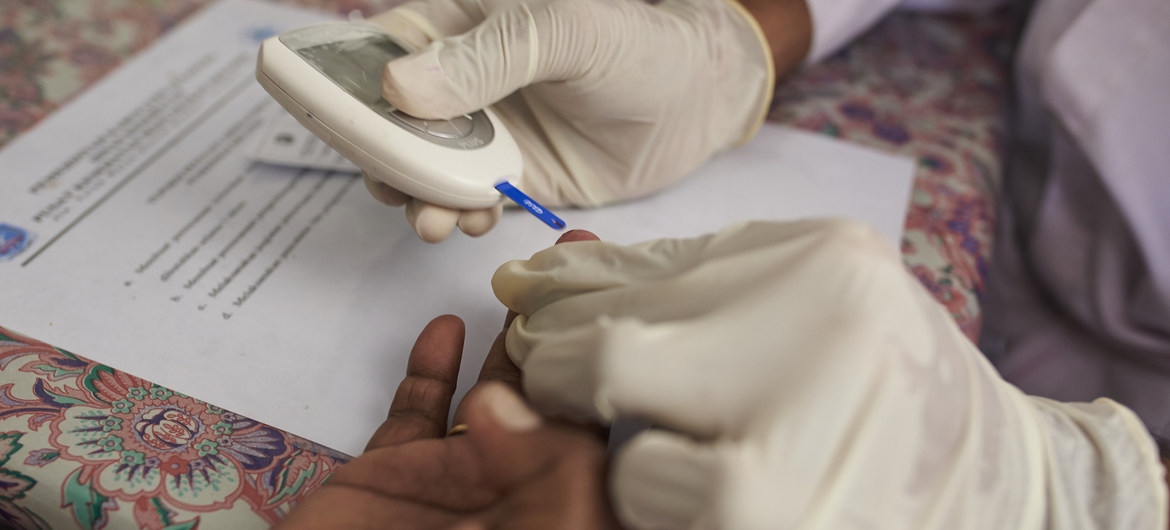
Prioritizing Diagnostic Scaling: AI-enhanced diagnostic tools (e.g., automated chest X-ray screening for tuberculosis or digital retinal imaging for diabetic retinopathy) are projected to be the first solutions deployed at scale. These tools extend expert capabilities to community health centers, improving doctor productivity and narrowing urban-rural health equity gaps.
-
Cross-Sectoral Alignment: Establishing India as a global manufacturing and development hub for medical AI requires unified policy coordination among government ministries, health regulators, medical device manufacturers, insurers, and academic research institutions.
Key Industry Voices and Government Support
The high-level gathering included prominent leadership across India’s health and industrial policy sectors. Present alongside Union Minister J. P. Nadda were Shri Manoj Joshi (Secretary, Department of Pharmaceuticals), Dr. M. Srinivas (Member, NITI Aayog), Dr. Rajiv Bahl (Director General, Indian Council of Medical Research), Smt. Punya Salila Srivastava (Secretary, Department of Health and Family Welfare), and Shri Sunil Kumar Barnwal (CEO, National Health Authority).
Leading public health experts not directly involved in drafting the report have largely welcomed the strategic focus, emphasizing its alignment with practical clinical needs.
“In a country where there is approximately one specialist doctor for every 10,000 citizens in rural districts, artificial intelligence should not be viewed as a luxury or a novelty,” said Dr. Anita Sharma, a senior public health researcher and clinical epidemiologist based in New Delhi. “When an algorithm integrated into a basic portable ultrasound can assist a community nurse in detecting high-risk obstetric complications early, AI transforms from an abstract technology into a life-saving public health tool.”
However, medical device specialists note that regulating algorithms presents unique engineering challenges compared to traditional static devices.
“Traditional medical equipment is static; a surgical scalpel or a standard X-ray unit does not change its behavior after sale,” explained Rajesh Varma, an independent biomedical engineering consultant and former regulatory reviewer. “Adaptive machine-learning models continuously update based on new data. The knowledge paper’s emphasis on ‘lifecycle-based regulation’ is crucial—regulators must evaluate how software evolves over time without stalling life-saving updates in bureaucratic red tape.”
Real-World Impact: What This Means for Patients
For the average healthcare consumer, the integration of AI into medical technology promises faster, more accurate diagnostic turnaround times and wider access to care:
-
Earlier Disease Detection at Primary Clinics: Patients visiting tier-2, tier-3, or rural health centers can receive rapid screenings for conditions such as diabetic eye disease, early-stage tuberculosis, or cardiovascular abnormalities without traveling long distances to urban tertiary hospitals.
-
Reduced Diagnostic Bottlenecks: AI-assisted radiology and pathology applications act as a second pair of eyes for physicians, prioritizing critical cases and lowering error rates in high-volume public hospitals.
-
Lower Overall Healthcare Outlays: By identifying health conditions earlier and streamlining administrative hospital operations, medical AI has the potential to reduce costly emergency hospitalizations and out-of-pocket patient expenditures.
Technical Challenges and Ethical Counterarguments
Despite the optimism expressed at Vigyan Bhawan, clinical AI researchers stress that several technological and ethical hurdles must be resolved before full-scale deployment:
| Challenge | Primary Concern | Proposed Framework Solution |
| Data Bias | Machine learning models trained predominantly on Western or urban demographic datasets may misinterpret clinical indicators in diverse rural Indian populations. | Establishing representative, anonymized national data repositories under the BODH initiative. |
| Data Privacy | Interoperable health networks require strict safeguards to prevent unauthorized access to sensitive patient data. | Mandatory adherence to SAHI governance standards and consent-based data architecture via ABDM. |
| Reimbursement | Public and private health insurance schemes rarely cover AI-driven diagnostic interpretation fees. | Developing updated health technology assessments (HTA) that quantify long-term cost savings. |
“Artificial intelligence is an extraordinary assistant, but it cannot replace human clinical judgment,” Dr. Sharma added. “Ensuring that the final decision remains with a trained healthcare professional protects both patient safety and the human connection at the heart of medicine.”
With its combined software capabilities, diverse clinical database, and expanding domestic manufacturing infrastructure, India is positioning itself not just as a consumer of health technology, but as a global exporter of responsible, accessible AI solutions.
References & Data Sources
-
Government Announcement: Ministry of Chemicals and Fertilizers, Department of Pharmaceuticals. Union Minister J P Nadda releases Knowledge Paper on ‘AI in MedTech: Revolutionizing Healthcare Through Artificial Intelligence’. Press Information Bureau (PIB), Delhi. Released August 8, 2026.
- Full report can be accessed here
- Medical Disclaimer: This article is for informational purposes only and should not be considered medical advice. Always consult with qualified healthcare professionals before making any health-related decisions or changes to your treatment plan. The information presented here is based on current research and expert opinions, which may evolve as new evidence emerges.


Happy
0 %

Sad
0 %

Excited
0 %

Sleepy
0 %

Angry
0 %

Surprise
0 %