 0
0
 0
0
Read Time:7 Minute, 1 Second
NEW DELHI — In a major push toward self-reliance in healthcare infrastructure, India is rapidly expanding its domestic medical technology sector, deploying targeted policy incentives and regulatory reforms to curb its historically heavy reliance on foreign equipment.
Speaking in a statement reported by DD News on August 7, 2026, Prime Minister Narendra Modi declared that the nation is steadily emerging as a “trusted global med-tech partner.” Alongside him, Union Health Minister J.P. Nadda highlighted a wave of new production, infrastructure, and research initiatives aimed at reshaping care delivery across the country.
The industrial push holds the potential to lower costs and stabilize supply lines for critical clinical equipment—ranging from diagnostic radiology units to life-support ventilators. However, global health authorities, clinical experts, and health economists caution that scaling up domestic manufacturing is only the first step. For the initiative to meaningfully improve public health, locally produced devices must prove rigorously safe, clinically effective, financially accessible, and seamlessly integrated into healthcare systems beyond major metropolitan hubs.
High-End Manufacturing Takes Root
For decades, Indian healthcare providers faced acute vulnerability to international supply chain disruptions. Recent policy interventions aim to reverse that dynamic.
According to Minister Nadda, more than 50 high-end medical devices have officially entered domestic production under the government’s flagship Production Linked Incentive (PLI) scheme. These cover vital clinical categories, including oncology, radiology, cardiology, nephrology, and intensive care.
[Domestic Production Growth]
   │
   ├─► Greenlighted Projects: 24 greenfield facilities commissioned
   ├─► Active Manufacturing: 57 distinct advanced medical devices
   ├─► Market Momentum: Cumulative sales reached ₹13,624.52 crore
   └─► Global Footprint: ₹6,425.48 crore in international exports
Official figures from the Ministry of Chemicals and Fertilizers show that 24 greenfield projects have been commissioned under the medical-device PLI program, establishing localized manufacturing for complex hardware such as:
-
Linear accelerators for cancer radiotherapy
-
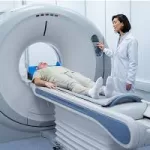
Magnetic Resonance Imaging (MRI) and Computed Tomography (CT) scanners
-
High-end ultrasound systems and digital mammography units
-
Hemodialysis equipment, ventilators, cardiac stents, and surgical implants
Backing this industrial expansion is a total budgetary outlay of ₹3,420 crore under the PLI initiative, designed to offer direct financial incentives tied to incremental sales. Currently valued at approximately $15 billion to $16 billion, India’s medical technology sector is growing at nearly 12% annually, making it the fourth-largest MedTech market in Asia and placing it among the top 20 worldwide.
The Import Paradox: Why Local Assembly Isn’t a Silver Bullet
Medical devices are the bedrock of modern clinical medicine. A delayed shipment of replacement parts or an import freeze on specialized hardware directly translates to delayed cancer treatments, canceled emergency surgeries, and impaired diagnostic capabilities.
Historically, India has relied on foreign imports for roughly 70% to 80% of its medical devices, with an even heavier concentration in high-value, complex technologies.
While domestic manufacturing builds essential resilience against global geopolitical or economic shocks, industry analysts warn against equating “Made in India” with immediate cost reductions or superior clinical performance.
“A common misconception is that domestic assembly immediately lowers the cost of healthcare,” notes Dr. Rajesh Kumar, an independent healthcare policy analyst not affiliated with the government programs. “In reality, high-end devices rely on a global web of specialized microchips, optical sensors, and proprietary software. Until the local supply chain matures, local pricing will remain tied to imported raw materials.”
A 2025 government-industry assessment highlighted this vulnerability, noting that domestic value addition in India’s MedTech sector hovered around 25%. While policy targets aim to push this to 45% over the coming years, dependence on critical foreign inputs remains a central hurdle.
To bridge this gap, the government introduced a complementary ₹500-crore Strengthening of Medical Devices Industry scheme. This program funds common testing infrastructure, skills development, and localized component manufacturing—aiming directly at the sector’s supply-chain bottlenecks.
Regulation and Quality Assurance Across the Product Life Cycle
As local production ramps up, regulatory scrutiny becomes paramount. In India, medical devices are governed by the Central Drugs Standard Control Organisation (CDSCO) under the Drugs and Cosmetics Act, 1940, and the Medical Devices Rules, 2017.
The regulatory framework categorizes equipment based on clinical risk:
| Risk Category | Device Classification | Regulatory Oversight Requirements |
| Class A | Low Risk (e.g., surgical scalpels, thermometers) | Basic quality standards & manufacturing registration |
| Class B | Low-Moderate Risk (e.g., hypodermic needles, suction pumps) | Technical documentation & conformity checks |
| Class C | Moderate-High Risk (e.g., ventilators, dialysis machines) | In-depth technical audits & clinical evaluation |
| Class D | High Risk (e.g., cardiac stents, implantable pacemakers) | Rigorous clinical investigation data & ongoing surveillance |
For high-risk technologies, manufacturers must present exhaustive clinical investigation data, technical dossiers, and stringent quality-control protocols before entering the market.
World Health Organization (WHO) regulatory guidelines stress that oversight cannot stop at the factory gate. Effective medical device policy requires life-cycle monitoring, encompassing pre-market testing, hospital procurement, clinical operator training, routine calibration, and post-market safety surveillance.
The Access Equation: Equipment Means Nothing Without Infrastructure
The ultimate health impact of domestic MedTech depends heavily on how equipment is deployed in real-world clinical environments.
In expert commentary published by the WHO on global device access, Adriana Velázquez Berumen, senior adviser on medical devices, underscored a crucial clinical truth:
“The performance does not depend on the device itself but on the way they are used; this has to be safe and correct.”
This distinction is vital for a country with stark healthcare disparities between major urban centers and rural district facilities. Placing a domestically produced ventilator or advanced imaging system into a regional clinic yields zero public health benefit if that facility suffers from unreliable electrical grids, lacks certified biomedical engineers for maintenance, or lacks trained clinicians to interpret diagnostic outputs safely.
       [ Effective Health Impact ]
                   │
  ┌────────────────┼────────────────┐
  ▼                ▼                ▼
[Safe Hardware] [Trained Staff] [Infra & Power]
True healthcare access, as defined by international public health frameworks, requires four key pillars:
-
Appropriateness: Hardware designed for local operational environments (e.g., heat-tolerant, dust-resistant, power-surge protected).
-
Affordability: Equipment priced sustainably for both public health budgets and out-of-pocket patient costs.
-
Reliability: Consistent performance backed by local repair networks and available spare parts.
-
Evidence: Proven clinical safety verified through unbiased, transparent data.
Patient Perspective: Navigating the MedTech Shift
For healthcare consumers, the domestic MedTech push could eventually lead to shorter wait times for diagnostic scans, broader availability of life-saving interventions, and lower out-of-pocket costs. However, patients should maintain an informed, proactive approach to their care.
Key Advice for Patients and Families
-
Ask About Operational Readiness: When undergoing complex diagnostics or procedures, ask your provider if the facility has certified technicians and dedicated maintenance support for their specialized equipment.
-
Focus on Clinical Need: A test or procedure should be dictated by clinical necessity, not by whether a hospital recently acquired a new scanner or device.
-
Home Device Safety: For home health monitors (e.g., digital blood pressure cuffs, pulse oximeters, blood glucose meters), ensure devices are properly calibrated and certified. Always seek professional training on proper usage; incorrect application can produce false readings and lead to inappropriate self-medication.
Remaining Challenges and Future Outlook
While India’s production figures reflect substantial industrial momentum, critical questions remain for public health researchers and policy advocates:
-
Clinical Efficacy: Will domestic manufacturers conduct robust, transparent clinical trials that reflect India’s diverse patient demographics?
-
Procurement Reform: Will public health systems prioritize total clinical value and long-term durability over the lowest purchase price during equipment tenders?
-
Equitable Distribution: Will policy mechanisms ensure high-end devices reach rural district hospitals, rather than remaining concentrated in private, urban tertiary centers?
India’s aggressive MedTech expansion represents a crucial convergence of economic strategy and public health policy. Expanding manufacturing capacity builds national resilience, but the ultimate measure of its success will not be read on balance sheets or export ledgers—it will be measured at the bedside, in the safety of diagnoses, the efficacy of treatments, and the equitable delivery of care to every segment of society.
References
-
DD News. “India’s med-tech ecosystem gaining strength through domestic manufacturing, lower import dependence: PM Modi.” August 7, 2026. ddnews.gov.in
Medical Disclaimer: This article is for informational purposes only and should not be considered medical advice. Always consult with qualified healthcare professionals before making any health-related decisions or changes to your treatment plan. The information presented here is based on current research and expert opinions, which may evolve as new evidence emerges.


Happy
0 %

Sad
0 %

Excited
0 %

Sleepy
0 %

Angry
0 %

Surprise
0 %