 0
0
 0
0
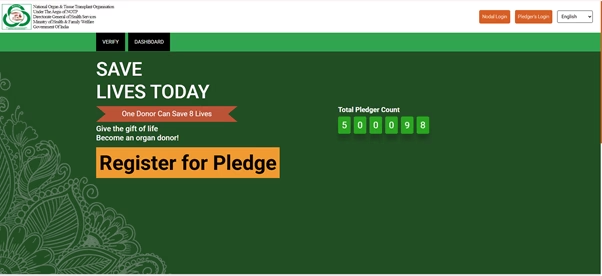
NEW DELHI — In a milestone development for India’s public health sector, the National Organ and Tissue Transplant Organization (NOTTO) announced on June 22, 2026, that the country has officially surpassed 500,000 (5 lakh) voluntary organ donation pledges. This surge in public registration reflects a significant shift in national awareness, catalyzed by a streamlined national registration system and high-profile public awareness campaigns.
While health authorities are celebrating this achievement as a major advancement in cultivating a culture of social responsibility, public health experts emphasize that the country still faces a steep uphill battle. Millions of citizens remain unaware of how to bridge the severe deficit between available organs and patients on the national waitlist.
A Historic Shift in Public Participation
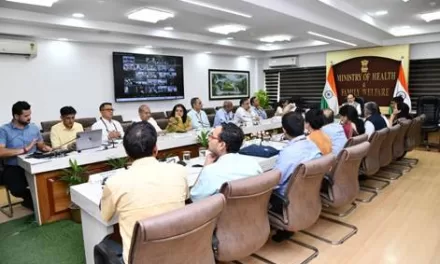
The milestone, confirmed by the Ministry of Health and Family Welfare, highlights the growing success of India’s digitized health infrastructure. Central to this expansion is the modernized national pledge portal ($notto.abdm.gov.in$), which utilizes a secure, national digital identity-linked verification system to streamline the registration process. By eliminating bureaucratic hurdles, the portal allows citizens to register their consent to be an organ donor after death within minutes.
Dr. Anil Kumar, Director of NOTTO, expressed profound gratitude to the public while emphasizing the collaborative efforts that drove the campaign.
“This achievement underscores the increasing public recognition of organ donation as a profound act of humanity,” Dr. Kumar stated. “The valuable contributions of non-governmental organizations, healthcare professionals, educational institutions, and state administrations have been pivotal in mobilizing this level of public support.”
The movement has also received sustained momentum from the highest levels of government. Prime Minister Narendra Modi has repeatedly utilized his monthly Mann Ki Baat radio addresses to advocate for the cause, framing organ donation as a national movement capable of saving thousands of lives annually.
The Statistical Reality: Progress Versus Demand
To understand the true weight of this milestone, it must be evaluated alongside India’s broader transplant metrics. According to data released by the health ministry earlier this year, India’s transplant ecosystem has matured rapidly over the past decade:
-
Fourfold Increase in Operations: Total organ transplants performed in India rose from fewer than 5,000 in 2013 to 20,019 in 2025.
-
The Deceased Donor Evolution: Approximately 18% of these transplants are now performed using organs from deceased (cadaveric) donors, a substantial shift for a country historically reliant almost entirely on living donors.
-
The Multiorgan Impact: More than 1,200 families stepped forward to donate the organs of their brain-dead loved ones in 2025 alone, with the majority turning into multiorgan donations that saved multiple lives simultaneously.
Despite these landmark strides, the gap between supply and demand remains critical.
| Metric | Current Status (India) |
| Active Major Organ Waitlist | 89,839 patients (As of March 3, 2026) |
| Estimated Annual Requirement | ~500,000 patients |
| Deceased Donation Rate | Fewer than 1 per million population (PMP) |
For context, global leaders in deceased organ donation, such as Spain, maintain a rate of approximately 49 PMP. India’s rate, while up significantly from 0.27 PMP in 2013 to roughly 0.81 PMP, leaves thousands of end-stage organ failure patients waiting in jeopardy.
Infrastructure Gaps and Policy Vulnerabilities
Independent experts warn that pledges alone do not automatically translate into successful transplantations. Translating a digital pledge into a life-saving medical procedure requires an incredibly synchronized network of intensive care units, transplant coordinators, rapid transport logistics, and transparent registries.
Dr. Sunil Shroff, a senior consultant transplant surgeon and Managing Trustee of the MOHAN Foundation—a leading non-profit spearheading organ donation advocacy for three decades—points out that administrative gaps still threaten the integrity of the system.
“The 5 lakh pledges show that the public’s heart is in the right place, but our hospital infrastructure must catch up,” explained Dr. Shroff, who was not involved in the government’s recent report. “Pledges are expressions of intent, but actual deceased donations happen in the ICU when a patient is declared brain-dead. If hospitals fail to identify potential donors, counsel grieving families, or maintain strict protocols, those pledges cannot materialize into saved lives.”
A glaring institutional bottleneck was highlighted in a March 2026 parliamentary report: out of 804 registered transplant hospitals across India, 217 failed to report their transplant and donor data to the National Registry Portal in 2025. This lack of compliance complicates real-time organ allocation and compromises the transparency mandated by the Transplantation of Human Organs and Tissues Act (THOTA), 1994. The government has directed states to take strict action against non-compliant centers to ensure ethical and equitable distribution.
Public Health Implications: What This Means for You
For the average citizen, India’s evolving transplant landscape modifies how families should approach end-of-life conversations. Public health officials emphasize that registering a pledge on the national portal is only the first step. Under current Indian legal frameworks, the immediate next-of-kin holds the final authority to permit or deny organ harvesting if a individual is declared brain-dead.
Steps to Make Your Pledge Count
-
Register Officially: Visit the official NOTTO portal to log your consent securely using national digital identity verification.
-
Inform Your Family: Inform your immediate family members regarding your choice. Documenting your decision prevents ambiguity and reduces emotional distress for your family during a medical crisis.
-
Understand Brain Death: Recognize that deceased donation occurs strictly after “brain death”—the permanent, irreversible cessation of all brain function—which is legally distinct from a coma or vegetative state.
Looking Ahead: Building Self-Reliance
The ultimate objective of India’s National Organ Transplant Programme (NOTP) is to achieve complete healthcare self-reliance, transitioning away from historical vulnerabilities associated with commercialized transplantation toward an indigenous, highly ethical, and socio-centrically driven framework.
While challenges regarding regional infrastructure disparities and data deficiencies remain, achieving half a million pledges serves as a powerful proof of concept. It proves that targeted public advocacy, paired with secure digital entry points, can successfully dismantle age-old social stigmas, laying the foundation for a responsive and world-class healthcare delivery network.
References
-
Government Policy & Statistical Releases:
-
Ministry of Health and Family Welfare, Government of India. Update on Organ Transplantation: 217 of 804 Registered Transplant Hospitals Did Not Report Data on National Registry Portal in 2025. Published March 10, 2026. PIB Delhi (Release ID: 2237410).
-
Medical Disclaimer: This article is for informational purposes only and should not be considered medical advice. Always consult with qualified healthcare professionals before making any health-related decisions or changes to your treatment plan. The information presented here is based on current research and expert opinions, which may evolve as new evidence emerges.