 0
0
 0
0
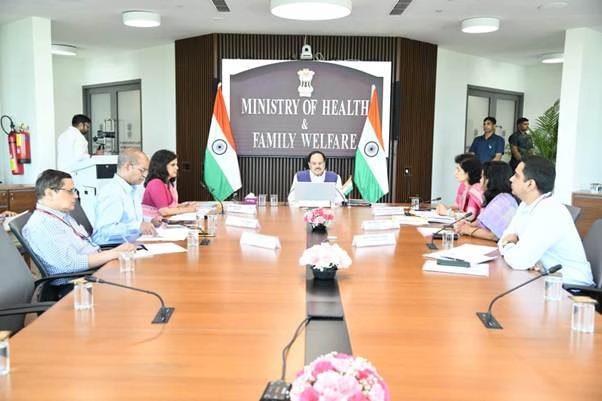
NEW DELHI — In a major push to eliminate one of the world’s oldest infectious diseases, Union Health Minister Shri J.P. Nadda chaired a high-level review meeting on June 19, 2026, to accelerate the Intensified 100-Day TB Mukt Bharat Abhiyan (Tuberculosis-Free India Campaign). Speaking via video conference to health ministers and senior officials from across India’s States and Union Territories, Nadda declared that “every missing TB case must be found,” signaling a aggressive shift toward community-level, proactive screening. The high-stakes meeting comes as the campaign enters its final weeks, aiming to wrap up its second phase by early July 2026.
A Strategic Shift: Hunting for the Bacteria
For decades, traditional tuberculosis control programs relied heavily on passive case-finding—waiting for individuals showing severe symptoms, like a chronic cough or unexpected weight loss, to walk into a clinic. Public health experts have long warned that this approach allows the Mycobacterium tuberculosis bacteria to spread unchecked within households.
The current campaign flips this model completely.
“The campaign marks a paradigm shift in our TB control strategy,” Nadda stated during the review. “We are no longer waiting for patients to come to health facilities. We are proactively reaching communities, villages, urban wards, and congregate settings to identify vulnerable individuals and detect cases early.”
Since December 2024, the intensified campaign has achieved massive scale:
-
Over 28.1 crore (281 million) people have been screened.
-
20 lakh (2 million) individuals have been initiated on TB Preventive Treatment (TPT).
-
5.7 lakh (570,000) new Nikshay Mitras (community donors providing nutritional support) have been registered.
High-Tech Tools and Mass Mobilization
Central to this massive outreach is the deployment of portable medical technology. The Health Ministry reported a stunning 34-fold increase in X-ray screenings, driven by the large-scale distribution of handheld X-ray machines. These devices allow healthcare workers to screen individuals in remote areas, bypassing the need for large, stationary hospital equipment.
TB Progress in India (2014 vs. 2024)
=========================================================
Incidence Rate:  243 per lakh [2014] ---> 187 per lakh [2024]
Mortality Rate:  34 per lakh  [2014] ---> 21 per lakh  [2024]
=========================================================
To optimize the workflow, Union Health Secretary Smt. Punya Salila Srivastava announced that additional radiographer positions are being created under the National Health Mission to operate these machines. Furthermore, the ministry plans to deploy artificial intelligence (AI)-enabled X-ray software to analyze chest scans instantly in the field, alongside expanded diagnostic tools like Truenat and CBNAAT molecular testing machines.
On the digital front, the government launched the TB Mukt Bharat App, featuring an AI-powered chatbot named “Khushi.” The app is optimized for entry-level smartphones, providing low-income users with immediate information on symptoms, legal entitlements, and local diagnostic options.
Community-Led Healthcare
The second phase of the initiative, which commenced on March 24, 2026, has focused heavily on high-risk zones. Over 1.7 lakh (170,000) Ayushman Arogya Shivirs (health camps) have been conducted, reaching more than 1.2 lakh vulnerable villages, urban slums, and congregate settings.
The campaign has successfully leveraged youth volunteer networks, incorporating 32 lakh students and 1.9 lakh volunteers from the MY Bharat initiative to lead community awareness programs.
Local innovations are also shaping the national strategy:
-
Kerala highlighted its “Zero Catastrophic Cost” model in the Kannur district, aimed at protecting families from medical bankruptcy during treatment.
-
Mizoram is actively expanding its donor database by partnering with public sector undertakings via Corporate Social Responsibility (CSR) initiatives to fund nutritional support for patients.
The Critical Intersection of Nutrition and Survival
Health Minister Nadda emphasized that reducing mortality must remain the central goal, urging states to prioritize nutritional security. Clinical research consistently shows that undernutrition compromises the immune system, making individuals more susceptible to active TB and increasing the risk of death during treatment.
To bridge this gap, India’s Nikshay Poshan Yojana provides direct financial assistance for nutrition, supplemented by Nikshay Mitras who adopt patients to provide monthly food baskets. Nadda called on local lawmakers to utilize Jan Bhagidari (public participation) to personally oversee the health outcomes within their respective constituencies.
Perspective from the Field: Remaining Challenges
While the government’s data reflects positive historical trends—with TB incidence dropping from 243 per lakh in 2014 to 187 per lakh in 2024—independent public health experts urge cautious optimism.
“Proactive screening with portable X-rays is an excellent step forward for early detection,” says Dr. A. K. Sharma, a public health consultant and epidemiologist not involved in the government review. “However, the massive influx of newly identified cases puts immense pressure on local health networks. We must ensure that the supply chains for first- and second-line anti-TB drugs remain robust, and that treatment adherence is strictly monitored to prevent the development of drug-resistant strains.”
State officials from several regions, including Madhya Pradesh, Tamil Nadu, and West Bengal, echoed these infrastructure concerns during the meeting, requesting immediate support to fill the deficit of radiographers, molecular diagnostic machines, and handheld X-ray hardware.
As the second phase nears its July deadline, the Health Ministry’s focus is firmly fixed on closing these infrastructural gaps, ensuring that the momentum generated by the 100-day push transitions into a sustainable, long-term healthcare system capable of eliminating tuberculosis entirely.
Reference Section
-
Source Material: Press Information Bureau (PIB) Delhi. “Union Health Minister Chairs High-Level Virtual Review Meeting of TB Mukt Bharat Abhiyan with all States and UTs.” Published June 19, 2026.
Medical Disclaimer
Medical Disclaimer: This article is for informational purposes only and should not be considered medical advice. Always consult with qualified healthcare professionals before making any health-related decisions or changes to your treatment plan. The information presented here is based on current research and expert opinions, which may evolve as new evidence emerges.