 0
0
 0
0
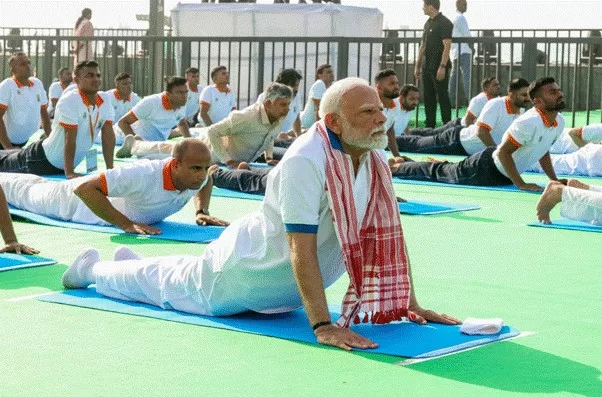
NEW DELHI — In what is shaping up to be one of the largest coordinated community-driven public health demonstrations in history, the Ministry of Ayush announced on June 19, 2026, that organizational registrations on its Yoga Sangam Portal have crossed the 6 lakh (600,000) milestone. This massive surge in participation comes just ahead of the 12th International Day of Yoga (IDY) on June 21, where millions of citizens are set to practice synchronized yoga alongside Prime Minister Shri Narendra Modi under the official 2026 health theme: “Yoga for Healthy Ageing.”
The digital platform, which serves as the logistical backbone for the nationwide movement, has mapped events spanning all States and Union Territories, effectively covering 778 districts. According to institutional data released by the Ministry of Ayush, the registrations comprise a diverse mix of civil society: over 3.22 lakh government institutions, nearly 2 lakh educational institutions, more than 16,000 private enterprises, over 5,000 non-governmental organizations (NGOs), and roughly 44,000 community groups.
Geographically, West Bengal has emerged as the clear national leader in grassroots mobilization, logging more than 2.76 lakh registered organizations. Rajasthan follows in second place with nearly 1.50 lakh registrations, while substantial institutional engagement has also been documented across Maharashtra, Andhra Pradesh, Madhya Pradesh, Assam, Uttar Pradesh, Tamil Nadu, Odisha, and Chhattisgarh.
The Public Health Context: Moving Towards ‘Jan Bhagidari’
Rather than restricting the annual observance to a single, high-profile physical location, the 2026 “Yoga Sangam” framework operates on a decentralized model. Participating organizations use a Common Yoga Protocol (CYP)—a pre-designed, evidence-based sequence of postures (asanas), breathing exercises (pranayama), and meditation—to conduct simultaneous sessions at their own local venues.
Public health experts view this structural shift as an important transition from a top-down government awareness campaign into a self-sustaining community movement, or Jan Bhagidari (public participation). With India facing a growing burden of non-communicable diseases (NCDs) and an expanding aging demographic, large-scale preventive health initiatives are increasingly vital to ease long-term strain on secondary and tertiary healthcare systems.
The Science of “Yoga for Healthy Ageing”
This year’s focus on healthy aging aligns with global health priorities, particularly the World Health Organization’s (WHO) Decade of Healthy Ageing. As the human body ages, it undergoes structural modifications characterized by gradual tissue dehydration, joint stiffness, and a natural decline in muscle mass (sarcopenia), which collectively impair functional independence and elevate fall risks.
Medical research increasingly validates yoga as a viable, low-cost behavioral intervention to counter these physiological declines. A comprehensive systematic review and meta-analysis published in the Annals of Internal Medicine evaluated 33 randomized controlled trials involving over 2,300 participants over the age of 65. The researchers found strong evidence that regular, adapted yoga practice significantly improved key predictors of physical longevity, specifically gait speed and lower-extremity strength (such as the ability to rise from a chair). Both metrics are directly tied to a reduction in frailty and a lower risk of injury-related hospitalizations.
Furthermore, a landmark review conducted by Johns Hopkins Medicine highlighted that gentle yoga mitigates chronic inflammation and eases the discomfort of tender, swollen joints in patients suffering from arthritis. The American College of Physicians currently recommends yoga as a first-line, non-pharmacological treatment for chronic lower back pain.
Expert Perspectives: Clinical Utility and Implementation
Clinical experts emphasize that the primary value of yoga in an aging population lies in its accessibility and multi-systemic benefits.
“Yoga acts as an integrative mind-body practice that simultaneously addresses cardiorespiratory fitness, musculoskeletal flexibility, and neuromotor balance,” notes Dr. Harpreet Singh, a senior preventive cardiologist and public health researcher not involved in the government initiative. “Unlike high-impact aerobic regimens, which can be challenging or outright contraindicated for older adults with advanced osteoarthritis or cardiovascular limitations, yoga is highly customizable.”
Dr. Singh points out that gentle hatha or chair-based yoga routines allow individuals with substantial balance issues or multiple comorbidities to participate safely.
“From a physiological standpoint, the controlled, slow movements and deep diaphragmatic breathing stimulate the vagus nerve, increasing parasympathetic tone. This downregulates the body’s chronic stress response, leading to measurable reductions in resting blood pressure, heart rate, and systemic inflammatory markers that drive premature cellular aging.”
Limitations, Methodological Gaps, and Safety Considerations
While the public enthusiasm and clinical data surrounding yoga are highly encouraging, epidemiologists and medical professionals urge a balanced perspective regarding its role in comprehensive healthcare.
-
Complementary, Not Curative: Medical authorities emphasize that yoga must be viewed strictly as a complementary lifestyle practice rather than a standalone replacement for established medical therapies, pharmaceutical prescriptions, or surgical interventions. Chronic conditions like type 2 diabetes, hypertension, and advanced cardiovascular disease require ongoing clinical management.
-
The Data Variance Problem: A primary limitation in existing yoga research is the lack of strict standardization. Purnima Madhivanan et al., in a clinical commentary published in Advanced Geriatrics Medicine and Research, noted that while newer data shows positive effects on cognitive decline and cellular aging, much of the early literature relied on small sample sizes and lacked rigorous active-control groups. More large-scale, community-based randomized trials are needed to definitively isolate yoga’s long-term outcomes from other lifestyle variables.
-
Inherent Injury Risks: Though generally safe, yoga is not entirely without risk. Clinical surveys indicate that improper execution of postures can lead to musculoskeletal strains, joint pain, or muscle cramps. Severe complications, though rare, can occur if individuals with conditions like advanced osteoporosis or glaucoma attempt strenuous inversions or deep forward bends without professional guidance.
Practical Takeaways for Consumers
For individuals looking to integrate yoga into their daily routine for long-term health, medical experts recommend a gradual, systematic approach:
-
Seek Medical Clearance: Before initiating any new physical activity regimen, individuals—especially older adults or those managing chronic medical conditions—should consult their primary healthcare provider.
-
Prioritize Qualification Over Complexity: Beginners should seek instruction from certified yoga professionals who understand anatomy and can offer personalized modifications.
-
Utilize Structural Props: Incorporating blocks, straps, blankets, or sturdy chairs can significantly reduce strain on vulnerable joints, maximize safety, and ensure proper physical alignment without sacrificing the pose’s therapeutic benefits.
-
Consistency Over Intensity: A regular, daily 20-to-30-minute routine focused on gentle stretching, balance, and controlled breathing yields far greater long-term health dividends than sporadic, overly strenuous sessions.
As the Ministry of Ayush leaves registrations open on its portal leading up to June 21, the mass participation reflected in the 6 lakh milestone demonstrates an expanding public commitment to active, preventative health management across generations.
References
-
Press Information Bureau (PIB) Delhi: Press Release issued on June 19, 2026 (Posted 11:45 PM). URL:
yoga.ayush.gov.in/yoga-sangam
Medical Disclaimer: This article is for informational purposes only and should not be considered medical advice. Always consult with qualified healthcare professionals before making any health-related decisions or changes to your treatment plan. The information presented here is based on current research and expert opinions, which may evolve as new evidence emerges.