 0
0
 0
0
ATLANTA — Federal health officials have expanded the investigation into the nation’s largest active foodborne illness outbreak, widening the footprint of a widespread Cyclospora parasite outbreak from nine to 15 states. According to public health updates and agency records, contaminated iceberg lettuce remains the primary vehicle under investigation for the surge in gastrointestinal infections.
As of early August 2026, official records from the U.S. Centers for Disease Control and Prevention (CDC) documented at least 1,947 confirmed cases tied to the multistate cluster. However, epidemiologists warn that the true number of affected individuals is significantly higher due to delays in reporting, testing barriers, and the fact that many mild infections go undiagnosed.
Anatomy of the Outbreak: What Is Cyclospora?
Cyclospora cayetanensis is a microscopic, single-celled parasite that infects the small intestine, causing a clinical condition known as cyclosporiasis. Unlike bacterial pathogens such as Salmonella or E. coli, which can manifest within hours, Cyclospora has a delayed incubation period. Symptoms typically appear about one week after consuming contaminated food or water, though the onset can range from 2 to 14 days.
The signature symptom of cyclosporiasis is profuse, watery diarrhea. Other frequent symptoms include:
-
Severe abdominal cramping and bloating
-
Marked fatigue and muscle aches
-
Nausea and loss of appetite
-
Low-grade fever and flu-like malaise
If left untreated, the infection can follow a relapsing course, where patients experience temporary improvement followed by recurrent bouts of illness lasting anywhere from several days to over a month.
       Timeline of Cyclospora Infection & Spread

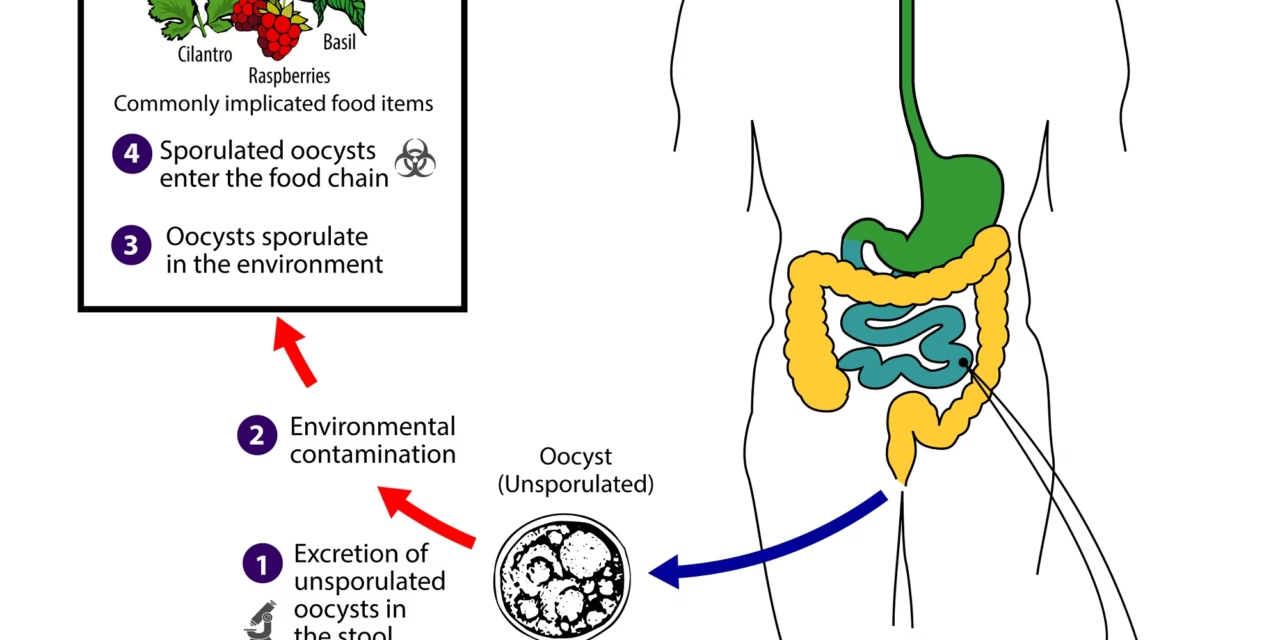
[ Contamination ] ──> [ Incubation ] ──> [ Clinical Onset ] ──> [ Diagnostic Lag ]
 Fresh produce       1 to 2 weeks       Watery diarrhea,      Specialized stool
 contaminated via    outside body to    cramping, fatigue     tests required;
 human feces.        become infectious. (1–14 days post-exp).  routine tests miss it.
Epidemiologically, direct person-to-person transmission is extremely rare. When excreted in human feces, the parasite is unsporulated (non-infectious). It requires a period of 1 to 2 weeks in warm environmental conditions outside the host to mature into its infectious form. Consequently, broad outbreaks are almost exclusively linked to fresh produce—particularly pre-packaged leafy greens, berries, and herbs—that have come into contact with contaminated soil or irrigation water during harvesting and distribution.
Tracking the Produce Supply Chain
Tracking Cyclospora presents unique supply chain challenges for food safety investigators. Because raw iceberg lettuce is distributed rapidly across restaurants, institutions, and grocery networks nationwide, a single contaminated agricultural batch can disperse across multiple state lines long before initial cases are recognized.
“By the time a cluster of illness is identified through laboratory surveillance, the implicated fresh produce has often reached the end of its shelf life or been consumed,” explains Dr. Kendra M. Pierre-Louis, an infectious disease specialist who spoke on general parasite surveillance in an interview with UCLA Health. “Because standard stool cultures routinely performed in clinics do not detect Cyclospora, clinicians must specifically request a microscopic examination for ova and parasites or an advanced gastrointestinal PCR panel. This multi-step diagnostic requirement inherently creates a lag in public health tracking.”
The CDC notes that because diagnosis can require testing multiple stool specimens over several days, official case counts represent only the tip of the epidemiological iceberg.
Diagnosis, Treatment, and Medical Management
For healthy individuals, cyclosporiasis is rarely life-threatening, but it can be debilitating. Individuals with weakened immune systems—such as cancer patients undergoing chemotherapy, organ transplant recipients, or people living with advanced HIV—face a elevated risk of severe, persistent illness and dehydration.
Recommended Therapies
Unlike many standard foodborne bacterial infections that resolve with supportive care or broad-spectrum antibiotics, Cyclospora requires targeted antimicrobial therapy.
-
First-Line Treatment: The standard medical regimen recommended by the CDC and the Infectious Diseases Society of America (IDSA) is a combination of trimethoprim-sulfamethoxazole (TMP-SMX), commercially known as Bactrim, Septra, or Cotrim.
-
Sulfa-Allergic Patients: For individuals with sulfa allergies, treatment options are limited. Ciprofloxacin or nitazoxanide may be considered by healthcare providers, though efficacy rates are significantly lower than with TMP-SMX. Patients should consult their physician immediately to determine an appropriate alternative regimen.
Healthcare professionals emphasize that rehydration is vital alongside targeted medicine. Fluid and electrolyte replacement should begin as soon as prolonged watery diarrhea occurs.
Consumer Guidance and Prevention Limits
Public health agencies urge consumers to maintain heightened awareness around food safety alerts and active recalls. However, health authorities stress an important limitation regarding fresh produce safety: washing alone cannot guarantee the complete removal of Cyclospora.
Because the parasite’s sticky outer shell allows it to adhere tightly to leaf folds or embed within microscopic surface crevices, rinsing iceberg lettuce under tap water reduces—but does not eliminate—the pathogen.
“Cooking produce to an internal temperature of at least 158°F (70°C) effectively inactivates Cyclospora oocysts,” notes CDC food safety guidance. “However, because iceberg lettuce and salad greens are intended for raw consumption, public health intervention relies heavily on rigorous agricultural water management, sanitation at the farm level, and rapid product recalls.”
Actionable Steps for Consumers
-
Monitor Recalls: Frequently check local health department and CDC food safety portals for specific brand or lot recalls.
-
Practice Cross-Contamination Safety: Wash hands thoroughly with soap and warm water for 20 seconds before and after handling raw produce.
-
Refrigerate Fresh Cut Greens: Keep sliced, cut, or prepared salad greens refrigerated at or below 40°F (4°C) to prevent bacterial co-growth.
-
Seek Early Evaluation: If you experience watery diarrhea lasting longer than 3 days—especially following the consumption of raw leafy greens—contact a healthcare provider and request specific testing for Cyclospora.
Unanswered Questions and On-Going Surveillance
While the current investigation points toward iceberg lettuce as the primary driver behind this multi-state expansion, public health officials continue to investigate whether secondary sources or concurrent clusters exist. Federal agencies are conducting trace-back investigations across agricultural packing houses and field sites to isolate the exact point of contamination in the supply chain.
As the response unfolds, public health agencies urge both clinicians and consumers to remain vigilant, report suspected cases promptly, and adhere strictly to published food safety guidelines.
Medical Disclaimer: This article is for informational purposes only and should not be considered medical advice. Always consult with qualified healthcare professionals before making any health-related decisions or changes to your treatment plan. The information presented here is based on current research and expert opinions, which may evolve as new evidence emerges.
References
- Reuters. “CDC expands largest known cyclosporiasis outbreak to 15 states, Washington Post reports.” Published August 4, 2026. Available at: https://www.reuters.com/business/healthcare-pharmaceuticals/cdc-expands-largest-known-cyclospora-outbreak-15-states-washington-post-reports-2026-08-04/