 0
0
 0
0
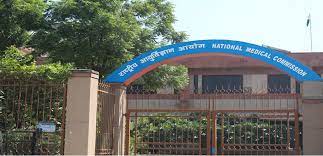
NEW DELHI — In a major administrative push to resolve the chronic faculty shortages plaguing India’s medical education sector, the National Medical Commission (NMC) has issued a comprehensive clarification regarding its newly implemented faculty appointment rules. The directive instructs medical colleges and teaching institutions nationwide to independently determine faculty eligibility using the commission’s structural guidelines, explicitly warning institutions against making routine, minor inquiries to the central Postgraduate Medical Education Board (PGMEB).
Issued following an influx of stakeholder queries from universities and accredited hospitals, the clarification aims to eliminate bureaucratic bottlenecks, fast-track appointments, and expand the pool of qualified medical educators. By establishing an standardized framework, the NMC seeks to smoothly transition the nation’s medical infrastructure into a new era of expanded student enrollment while trying to prevent administrative delays from stalling classroom instruction.
Expanding the Pipeline: The New Framework
The foundation of this administrative shift rests on the Medical Institutions (Qualifications of Faculty) Regulations, 2025, which officially took effect on June 30, 2025. Following its rollout, the NMC received dozens of requests from colleges and National Board of Examinations in Medical Sciences (NBEMS) accredited hospitals seeking guidance on how to calculate teaching experience and evaluate non-traditional candidates.
To address this, the NMC’s new Frequently Asked Questions (FAQ) directive establishes clear equivalencies for specialists working outside conventional academic medical colleges. Under the clarified rules, a consultant or specialist working in an NBEMS-accredited broad or super-specialty government department can be recognized as a “Senior Consultant.” Once designated, these specialists can qualify as postgraduate (PG) teachers. Furthermore, after completing three years of cumulative PG teaching experience as a Senior Consultant, these professionals become fully eligible for promotion to the rank of Professor.
The framework also significantly lowers entry barriers for seasoned clinicians working in large public health facilities:
-
Associate Professor Eligibility: A Registered Medical Practitioner possessing a recognized postgraduate qualification and 10 years of cumulative experience in a government hospital with at least 220 beds can now be appointed as an Associate Professor. The candidate must complete mandatory basic courses in medical education and biomedical research within two years of appointment.
-
Assistant Professor Eligibility: Clinicians with two years of cumulative post-PG experience in a 220-bed government hospital can now transition directly into Assistant Professor roles. Crucially, this removes the historical requirement of completing a mandatory one-year senior residency inside a formal medical college.
Direct Impacts on Public Health and Healthcare Workforce
India’s ambitious medical expansion—characterized by a massive push by the Ministry of Health to increase MBBS and postgraduate (MD/MS) seats—has frequently run into a structural brick wall: a severe deficit of legally qualified teachers. According to data from the Press Information Bureau (PIB), while physical infrastructure has expanded rapidly to underserved and rural districts, staffing those institutions has lagged behind.
“Faculty shortages are arguably the single greatest barrier to sustainably scaling India’s physician workforce,” says Dr. Arati Sharma, a veteran medical education consultant based in New Delhi, who was not involved in drafting the regulations. “When a college lacks professors, the regulator is forced to cut student intake or withhold seat expansions. By opening the doors to highly experienced government hospital consultants, the NMC is effectively tapping into an underutilized reservoir of clinical talent.”
For the general public, this regulatory adjustment has concrete downstream implications. A larger, more robust faculty pipeline means more medical students can be trained simultaneously. Over time, this accelerates the graduation of new doctors into the public healthcare ecosystem, particularly in rural and regional districts where physician deficits hit patients the hardest.
Balances, Limitations, and Quality Concerns
While the regulatory clarification provides much-needed hiring flexibility, it has also sparked vital debates among public health analysts regarding the maintenance of academic standards.
Public health experts caution that extensive clinical experience does not automatically translate into effective classroom teaching or research mentorship. A doctor who has spent a decade managing high patient volumes in a 220-bed district hospital possesses exceptional clinical skills, but they may lack training in modern pedagogy, student evaluation, and biomedical research methodologies.
Recognizing this gap, the NMC has embedded protective guardrails into the regulations. Appointees from non-academic backgrounds are legally required to complete foundational courses in medical education and biomedical research within a strict two-year window post-appointment.
Furthermore, because this recent directive is strictly administrative rather than a statutory overhaul of the underlying 2025 regulations, it cannot completely eliminate ambiguity for complex edge cases. Independent medical education analysts note that unless state governments and individual universities interpret institutional equivalence uniformly, variations in hiring practices could still emerge, potentially leading to legal disputes over seniority and promotion tracks.
The Road Ahead for Colleges and Clinicians
For leadership teams at medical colleges, the NMC’s directive shifts the burden of responsibility back to local institutional review boards. Colleges are expected to resolve eligibility assessments internally, reserving the PGMEB referral pathway exclusively for genuinely exceptional or unprecedented scenarios.
For practicing physicians and specialists within government systems and NBEMS institutions, the clarification provides a transparent, legally recognized pathway to transition into formal academic careers without sacrificing their accrued years of public service.
Ultimately, the long-term success of this systemic shift will depend heavily on implementation. If medical institutions diligently enforce the mandatory pedagogical training programs while utilizing the widened talent pool, India may successfully balance the urgent need for a larger medical workforce with the uncompromised quality of medical education.
References
-
UNI India. NMC clarifies process for determining eligibility for medical teaching posts under MIQF-2025. Reported July 17, 2026.
Medical Disclaimer: This article is for informational purposes only and should not be considered medical advice. Always consult with qualified healthcare professionals before making any health-related decisions or changes to your treatment plan. The information presented here is based on current research and expert opinions, which may evolve as new evidence emerges.