 0
0
 0
0
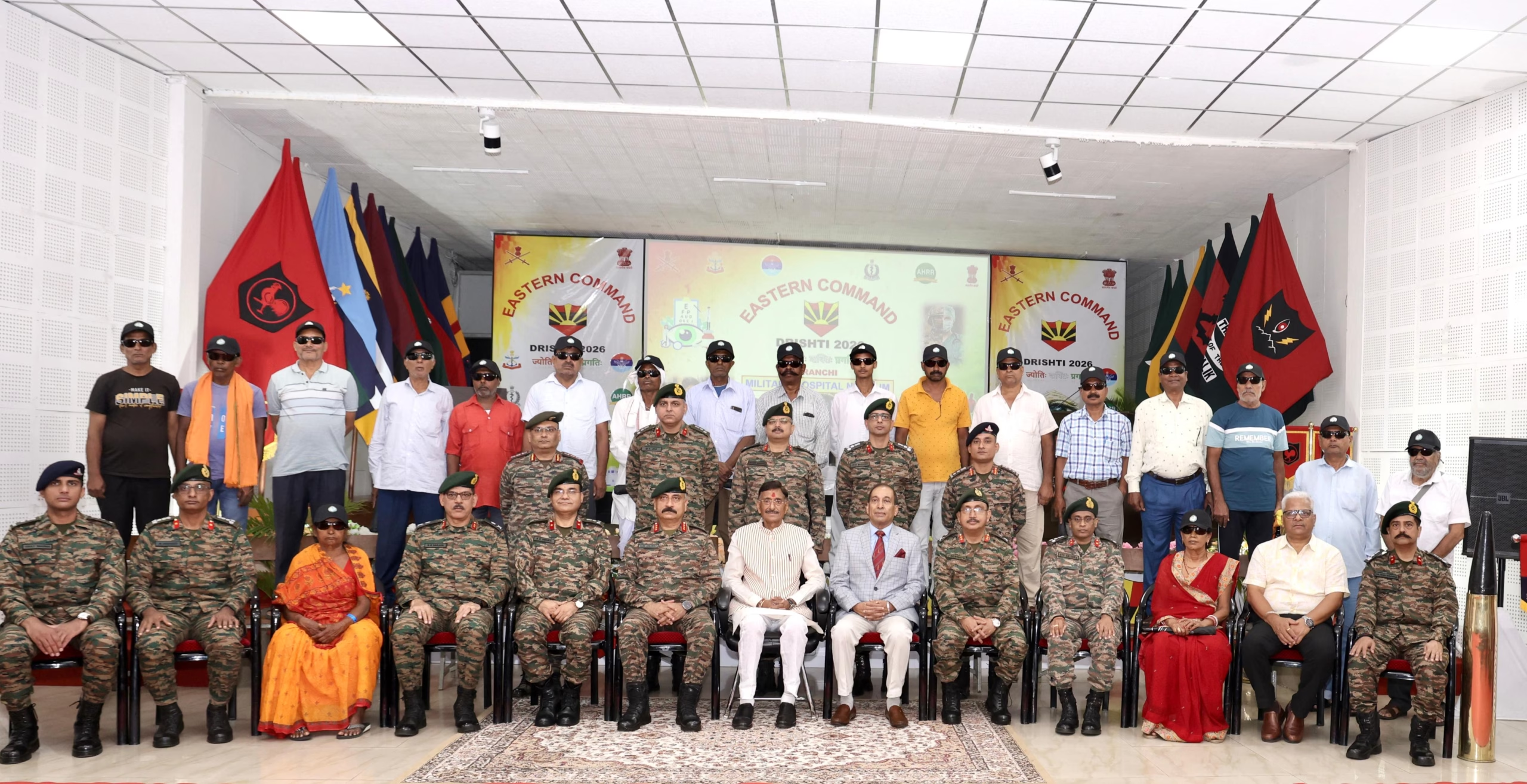
RANCHI, JHARKHAND — In a major public health milestone for eastern India, a specialized joint ophthalmic team from the Indian Army and Indian Air Force successfully concluded Jharkhand’s largest-ever mega eye surgical camp on June 19, 2026. Operating under the banner of “Operation DRISHTI” (Vision), the intensive four-day medical mission at the Military Hospital in Namkum, Ranchi, screened more than 2,500 patients and performed over 320 advanced, sight-restoring surgeries, primarily targeting underserved tribal communities and veterans’ families.
The initiative highlights a growing trend of military-civilian fusion in healthcare, leveraging advanced military medical infrastructure to address critical shortages in public ophthalmology services. According to the World Health Organization (WHO), cataracts remain the leading cause of preventable blindness globally, accounting for nearly 50% of all blindness cases, a burden disproportionately felt in rural and low-income regions.
Expanding Access to Advanced Ophthalmic Care
Launched on June 15, 2026, the Ranchi camp marked the ninth edition of Operation DRISHTI, a nationwide military medical outreach program inaugurated in late 2024. While local health camps frequently offer basic screenings, the Namkum mission stood out by providing tertiary-level, micro-surgical interventions entirely free of cost.
Of the 320 procedures performed, more than 260 were phacoemulsification surgeries—a modern cataract procedure where an ultrasonic device breaks up the cloudy natural lens before a permanent intraocular lens (IOL) is implanted. Crucially, the camp went beyond routine cataract removal to address complex, blinding eye conditions. The military surgical team successfully performed:
-
Minimally Invasive Glaucoma Surgeries (MIGS): Advanced micro-procedures designed to lower intraocular pressure with high safety profiles.
-
Surgical Management of Diabetic Retinopathy: Interventions to treat damage to the retina’s blood vessels caused by complications of diabetes.
-
Anti-VEGF Injections: Specialized intraocular injections that halt the progression of wet age-related macular degeneration and diabetic macular edema.
“Providing this level of advanced vitreoretinal and glaucoma care in a temporary camp setting is highly unusual and requires an extraordinary standard of sterile protocol and surgical skill,” said Dr. Ananya Mukherjee, an independent ophthalmologist and public health consultant based in Kolkata, who was not involved in the camp. “In many rural sectors, patients with diabetic retinopathy or glaucoma face permanent vision loss simply because micro-surgical eye care is concentrated exclusively in distant tier-one cities.”
The Human Impact of Inclusive Healthcare
The socio-economic impact of the camp is reflected in its diverse patient demographics. While the Armed Forces Medical Services (AFMS) primarily serve military personnel, veterans, and their dependents, Operation DRISHTI intentionally opened its doors to civilian populations, particularly marginalized tribal groups who make up over 26% of Jharkhand’s population. More than 100 underprivileged tribal patients received free surgical care during the four-day window.
Among those treated was Smt. Ekka, a 68-year-old widow of a late Ex-Havildar from the Bihar Regiment. Suffering from a dense cataract that had severely limited the vision in her right eye, she underwent a successful phacoemulsification procedure, restoring her independence.
The camp extended the identical clinical standard to non-entitled civilians. Eliza Beth, 63, and Ashok Deshmukh, 50, both tribal residents of Jharkhand with no military affiliations, received the same advanced phacoemulsification and IOL implantations as veteran families. For individuals facing severe financial constraints, these surgeries eliminate the steep out-of-pocket costs—often ranging from ₹20,000 to ₹50,000 per eye in private facilities—that frequently delay necessary medical interventions.
The Scale of the Challenge: National and Regional Context
The success of the Ranchi camp occurs against the backdrop of India’s ongoing battle against visual impairment. Data from the National Programme for Control of Blindness and Visual Impairment (NPCB&VI) indicates that India needs to perform millions of cataract surgeries annually to clear the existing backlog and keep pace with an aging population. Rural states like Jharkhand face compounded challenges, including geographical barriers, low awareness, and a shortage of trained ophthalmologists in district-level hospitals.
Presiding over the closing ceremony, Raksha Rajya Mantri (Minister of State for Defence) Shri Sanjay Seth lauded the dedication of the medical team, describing the mission as a tangible expression of Seva Paramo Dharmah (Service is the Highest Duty). Seth noted that since its inception in Dehradun in December 2024, Operation DRISHTI has screened over 75,000 patients and performed more than 3,000 surgeries across diverse landscapes, including remote areas like Lakshadweep, Bhuj, and Leh-Ladakh.
The initiative was conceptualized and driven by Vice Admiral Arti Sarin, Director General Armed Forces Medical Services (DGAFMS), and the surgical teams in Ranchi were led by Brigadier (Dr.) Sanjay Kumar Mishra, Head of Ophthalmology at Army Hospital (Research & Referral) in Delhi.
Public Health Implications and Clinical Limitations
Public health experts view short-term surgical camps as vital mechanisms for clearing localized backlogs of blinding eye diseases. However, they also emphasize the need for integrated, long-term post-operative care.
While phacoemulsification boasts a success rate exceeding 95%, post-operative follow-ups are critical to monitor for potential complications such as endophthalmitis (severe intraocular infection), secondary glaucoma, or posterior capsule opacification (PCO), often referred to as a “second cataract.”
“Mega camps are highly effective at reducing immediate backlogs, but the ultimate success of any surgical eye camp depends on the robustness of its follow-up ecosystem,” noted Dr. Mukherjee. “Patients who undergo advanced treatments like anti-VEGF injections or glaucoma surgeries cannot rely on a single intervention; they require structured, long-term monitoring over months and years to preserve their sight.”
To mitigate these limitations, organizers confirmed that the local medical infrastructure at Military Hospital Namkum, alongside regional health authorities, will handle the necessary post-operative evaluations and follow-up care for the treated patients, ensuring that the short-term successes of the camp translate into lasting visual health.
References
-
Government Document: Press Information Bureau (PIB) Delhi. “Jharkhand’s Largest-Ever Mega Eye Surgical Camp Concludes Under Operation DRISHTI.” Published June 19, 2026.
Medical Disclaimer
Medical Disclaimer: This article is for informational purposes only and should not be considered medical advice. Always consult with qualified healthcare professionals before making any health-related decisions or changes to your treatment plan. The information presented here is based on current research and expert opinions, which may evolve as new evidence emerges.