 0
0
 0
0
Kolkata, West Bengal — June 13, 2026
KOLKATA — In an unprecedented display of global health solidarity, a coalition of 21 countries has mobilized a coordinated scientific assault on the Andes virus (ANDV)—the rare and lethal hantavirus strain behind a deadly outbreak aboard a commercial cruise liner earlier this spring. Officially launched yesterday, the Natural History Study of Andes Virus (NAVIS) initiative aims to fundamentally dismantle critical blind spots surrounding how the virus transmits, its exact incubation timelines, and the biological triggers that cause severe disease. Public health leaders emphasize that this fast-tracked research framework is a vital prerequisite for building future diagnostic tests, specialized therapeutics, and preventative vaccines.
The Cruise Ship Outbreak That Shook Global Health
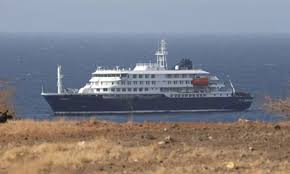
The international urgency stems from a sobering cluster of infections that began at sea. In early April 2026, passengers aboard the Dutch-flagged expedition vessel MV Hondius began presenting with severe, rapid-onset respiratory distress after departing from Ushuaia, Argentina.
According to data formalized by the World Health Organization (WHO) on May 8, 2026, the shipboard cluster grew to eight cases—including six laboratory-confirmed ANDV infections—and resulted in three deaths. The figures reveal a devastating case fatality ratio of 38%.
[Index Case: Adult Male Traveler]
       │
       ├─► (April 11) Deceased Onboard (No initial micro-testing)
       │
       ├───► Close Traveling Companions (Infected)
       │
       ├───► Ship Crew & Staff (Infected)
       │
       └───► Disembarked Passengers (Spread to remote Atlantic islands)
The virus quickly achieved global real estate. Because passengers traveled onward before the full scope of the cluster was recognized, cases have now been tracked across eight separate nationalities, including citizens of the Netherlands, South Africa, Switzerland, Germany, and the United Kingdom.
Why the Andes Strain Keeps Scientists Awake at Night
While hantaviruses as a broader family are well-known to virologists, the Andes strain is uniquely dangerous. Out of dozens of recognized hantavirus species worldwide, Andes virus is the only strain scientifically proven to spread directly between humans.
Standard hantaviruses require a rodent vector; humans typically contract them by breathing in aerosolized particles from infected rodent urine, saliva, or droppings. However, ANDV can cut out the middleman. It spreads through close, prolonged interpersonal contact via respiratory droplets.
To put the virus in perspective, its behavior contrasts sharply with more common pathogens:
| Virological Characteristic | Andes Virus (ANDV) | Classic Environmental Hantaviruses |
| Human-to-Human Spread | Confirmed (Typically via household/intimate contact) | Not documented |
| Primary Route | Rodent excreta and respiratory droplets | Rodent excreta inhalation only |
| Case Fatality Rate | 35% to 40% across the Americas | Up to 50% depending on strain |
| Primary Geographic Range | Argentina, Chile, parts of Bolivia/Brazil | Global distribution |
| Clinical Syndrome | Hantavirus Pulmonary Syndrome (HPS) | HPS or Hemorrhagic Fever with Renal Syndrome (HFRS) |
Public health agencies note a crucial silver lining: human-to-human transmission is not casual. Spreading the virus requires sustained, close contact, usually during the earliest days of symptoms when an individual’s viral load is at its peak. Brief interactions, like passing someone in a hallway, have not been shown to pass the infection.
NAVIS: Activating the Pandemic Playbook
The rapid stand-up of the NAVIS platform is being hailed as a triumph for modern epidemic preparation. Rather than starting from scratch, the initiative utilizes the WHO’s pre-existing R&D Blueprint framework—a system designed to keep scientific networks on “warm standby” so they can deploy standardized research tools the moment a dangerous pathogen emerges.
Engineered through an emergency scientific consultation via the UKHSA-led Hantavirus Collaborative Open Research Consortium (CORC), NAVIS has mobilized a staggering 1,600 experts spanning 130 countries. The study will rely on a synchronized tracking protocol designed by the Hospital Germans Trias i Pujol in Badalona, Spain.
[WHO R&D Blueprint Network] ──► [CORC Consultation (1,600+ Experts)] ──► [NAVIS Initiative Deployed]
By conducting longitudinal evaluations—tracking exposed individuals and survivors systematically over time—researchers intend to map out three critical areas:
-
The exact boundaries of incubation periods and droplet transmission dynamics.
-
The human immune system’s timeline of viral clearance (viral kinetics).
-
The precise cellular mechanisms that cause a mild infection to suddenly deteriorate into severe respiratory failure.
“Closing gaps in our scientific knowledge is key to the development of medical countermeasures, and through international coordination we ensure this is accelerated,” explained Yper Hall of the UK Health Security Agency (UKHSA). “Preparedness, therefore, must include the ability to rapidly generate scientific evidence during outbreaks, not only respond to them.”
An International Research Matrix
The sheer geographic scale of the project underscores the perceived gravity of the outbreak. The 21 participating nations bridge six continents, pooling resources from world-class public clinics and elite academic laboratories alike.
[NAVIS Global Network Includes]:
 ├── Americas: Sinai Health System (Canada), Emory University (USA)
 ├── Europe: Inserm (France), Hellenic Pasteur Institute (Greece), University Hospital Zurich (Switzerland)
 ├── Asia-Pacific: Australian CDC, National Centre for Infectious Diseases (Singapore)
 └── Coordination Support: ANRS-MIE under the EU-funded 'BE READY' Initiative
Operationally, the infrastructure leverages the International Severe Acute Respiratory and Emerging Infection Consortium (ISARIC). This setup guarantees that clinical data gathered from a patient in Zurich can be seamlessly compared with data from a patient in Singapore without structural friction.
Expert Perspectives: A Shift in Global Defense
Independent medical experts say the swiftness of this launch marks a defining moment for international health surveillance.
“The rapid launch of NAVIS across 21 countries shows what is possible when research networks are established before outbreaks occur,” observed Yazdan Yazdanpanah of ANRS Emerging Infectious Diseases (ANRS-MIE).
Sylvie Briand, Chief Scientist at the World Health Organization, pointed out that this represents a much-needed operational pivot for global medicine. “Scientific evidence generation during outbreaks must become operational, coordinated, and immediately deployable,” Briand stated. “Future outbreak responses should begin by activating research systems that already exist rather than trying to build them during crises.”
Dr. Emily Oler, a clinical associate at the University of Michigan and an independent hantavirus expert, added vital perspective on the virus’s biology: “There are 20 to 30 different hantavirus species globally that can result in human disease, but only one—the Andes Virus found in Argentina and Chile—has been associated with human-to-human transmission.”
Context, Limitations, and the True Level of Risk
Despite the high mortality rate documented aboard the MV Hondius, the WHO currently assesses the general global public health risk as low.
Epidemiologists emphasize that Andes virus is not the next COVID-19 or influenza. It lacks the highly volatile, casual transmissibility required to fuel rapid, community-wide pandemics. However, the scientific community faces profound limitations that NAVIS must work to resolve:
-
Zero Targeted Countermeasures: There are currently no licensed vaccines or specific antiviral treatments approved for Hantavirus Pulmonary Syndrome. Medical treatment is purely supportive, relying on early intensive care, mechanical ventilation, and cardiac monitoring.
-
A Scarcity of Historical Data: Because human-to-human transmission events are naturally rare and isolated to remote South American valleys, collecting large-scale clinical data has historically been almost impossible. The 2026 maritime outbreak represents one of the most geographically diverse cohorts of ANDV patients ever studied.
-
The Diagnostic Mask: Early stages of the illness are notoriously hard to spot. Symptoms mirror basic influenza, COVID-19, dengue, or early sepsis. Confirming a case requires highly specialized serological testing or RT-PCR blood work during the sharp, acute phase of infection.
What This Means for Your Daily Health: Practical Actionable Advice
While the risk to the everyday citizen remains minimal, the outbreak serves as a reminder of how human travel and zoonotic (animal-born) viruses intersect.
For Travelers and Cruise Passengers
Routine vacation activities do not put you at risk for hantaviruses unless your itinerary involves direct exposure to rural rodent habitats. However, if you develop a sudden high fever, severe muscle aches, headaches, or unexplained shortness of breath within a few weeks of traveling to South America, seek medical attention immediately. Ensure you explicitly tell your doctor exactly where you traveled.
For Home and Property Management
Because all hantaviruses are rooted in rodent populations, basic environmental hygiene is your best defense:
-
Seal up structural holes or crevices that could allow mice or rats into your home.
-
Keep food storage areas sealed in airtight plastic or metal containers.
-
Crucial Cleaning Protocol: If cleaning out an area showing signs of mice (like a garage or shed), do not dry sweep or vacuum. This stirs up dangerous viral particles into the air. Instead, thoroughly drench the area with a disinfectant or bleach solution, let it soak, and wipe it up while damp using protective gloves.
For Frontline Healthcare Professionals
Clinicians are urged to maintain a high index of suspicion for severe respiratory illness linked to South American travel history.
-
Early transfer to an intensive care unit (ICU) remains the single most effective indicator for patient survival.
-
Implement standard patient care precautions alongside transmission-based barriers for suspected cases.
-
Utilize full airborne precautions—including fitted N95 respirators—during any aerosol-generating medical procedures.
The Big Picture: Research as an Active Shield
With global hantavirus infections estimated to range anywhere from 10,000 to well over 100,000 cases annually—bearing heavily on rural populations across Europe and Asia—cracking the code on the Andes variant yields far-reaching benefits.
By understanding the exact structural switches that allow ANDV to pass between humans, the global scientific community isn’t just investigating a single cruise ship outbreak; they are mapping the genetic blueprints required to intercept the next highly contagious zoonotic threat before it finds its footing.
Medical Disclaimer
This article is for informational purposes only and should not be considered medical advice. Always consult with qualified healthcare professionals before making any health-related decisions or changes to your treatment plan. The information presented here is based on current research and expert opinions, which may evolve as new evidence emerges.
References
Study & Institutional Citations
-
World Health Organization. (June 12, 2026). Twenty-one countries launch coordinated Andes virus research initiative following hantavirus outbreak. WHO Press Release. [https://www.who.int/news/item/12-06-2026-twenty-one-countries-launch-coordinated-andes-virus-research-initiative-following-hantavirus-outbreak]