 0
0
 0
0
Published: August 1, 2026
LANSING, Mich. — Michigan public health officials reported an unprecedented 10,773 confirmed cases of cyclosporiasis as of July 31, 2026, marking one of the largest single-state foodborne parasite outbreaks in United States history.
The widespread outbreak, which began in late June, has led to 160 hospitalizations across Michigan, though no deaths have been reported to date, according to the Michigan Department of Health and Human Services (MDHHS). Federal agencies, including the Centers for Disease Control and Prevention (CDC) and the U.S. Food and Drug Administration (FDA), continue to work alongside state investigators to trace the contamination source, which has raised national concerns regarding produce distribution safety.
An Unprecedented Surge in Parasitic Illness
The scale of the current outbreak represents a dramatic escalation compared to Michigan’s baseline public health metrics. The state typically reports approximately 50 cases of cyclosporiasis annually. The current caseload represents a more than 200-fold increase over expected historical averages.
While confirmed cases span nearly every county across Michigan, urban and suburban hubs in the southeastern region remain the epicenter. Wayne, Ingham, Oakland, Monroe, and Washtenaw counties have recorded the highest concentrations of infection.
       MICHIGAN ANNUAL CYCLOSPORIASIS CASES: HISTORICAL VS. CURRENT

 Typical Baseline (Annual) █ 50 cases

 2026 Current Outbreak    ████████████████████████████████████████████ 10,773 cases
The health crisis extends beyond state borders. The CDC reported 4,173 laboratory-confirmed domestic cases across 41 states as of July 24, with an additional 7,400 suspected cases under active federal review. Public health officials emphasize that because surveillance reporting often lags behind real-time clinical diagnoses, the true nationwide burden may exceed 11,500 cases.
Understanding Cyclosporiasis: Pathology and Symptoms
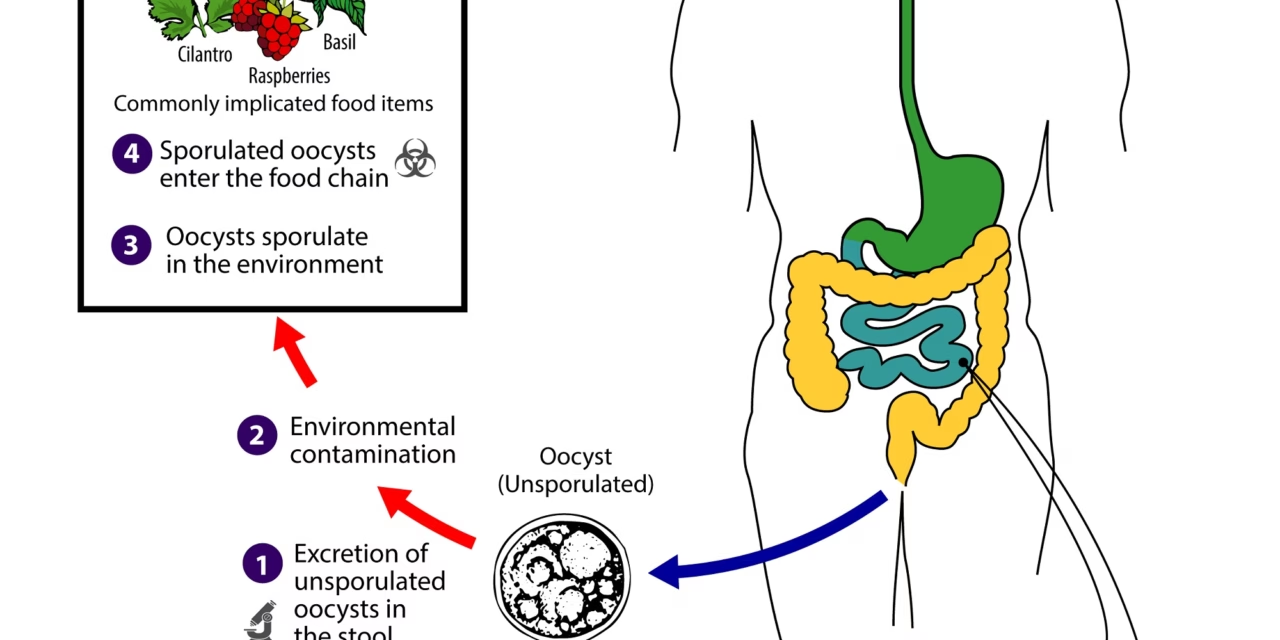
Cyclosporiasis is an intestinal infection caused by Cyclospora cayetanensis, a microscopic, single-celled parasite. Transmission occurs primarily through the fecal-oral route, typically when food or water contaminated with human microscopic fecal matter is consumed. Unlike many bacterial pathogens, Cyclospora requires days to weeks outside the host to become infectious, meaning direct person-to-person transmission is extremely rare.
Symptoms generally manifest roughly one week after ingesting contaminated produce, though the incubation period can range from 2 to 14 days.
┌─────────────────────────────────────────────────────────────────────────┐
│                       COMMON CYCLOSPORIASIS SYMPTOMS                   │
├────────────────────────────┬────────────────────────────────────────────┤
│ Gastrointestinal           │ Systemic                                   │
├────────────────────────────┼────────────────────────────────────────────┤
│ • Frequent, watery diarrhea│ • Prolonged, severe fatigue                │
│ • Abdominal cramping/cramps│ • Low-grade fever                          │
│ • Severe bloating & gas    │ • Generalized body aches                   │
│ • Nausea and vomiting      │ • Significant weight loss & appetite loss  │
└────────────────────────────┴────────────────────────────────────────────┘
If left untreated, symptoms can follow a relapsing course—disappearing and returning multiple times over several weeks or months. While healthy individuals typically recover without long-term sequelae, severe complications such as dehydration, electrolyte imbalance, and weight loss can occur in young children, older adults, and immunocompromised populations.
Investigation Trajectory: Traceback Challenges and Retractions
The epidemiological investigation into the outbreak’s source has yielded complex, shifting findings:
-
July 13: MDHHS announced that early patient interview patterns pointed to pre-packaged salad greens and lettuce as potential vectors, though investigators cautioned that other raw produce items remained under consideration.
-
July 17: The FDA identified iceberg lettuce distributed by Taylor Farms’ facilities in central Mexico as a primary lead, following epidemiological links to meals consumed at select fast-food chains, including regional Taco Bell locations.
-
Recall Action: Taylor Farms de Mexico initiated a voluntary recall of iceberg lettuce products shipped across 28 states. Recalled items included Marketside brand bagged shredded and iceberg lettuce sold at retail locations such as Walmart (with “best by” dates between July 18 and August 3, 2026), as well as bulk shipments to commercial foodservice distributors, including Sysco and Jack in the Box.
-
July 19 Retraction: The FDA announced that a commercial lettuce sample previously flagged as positive for Cyclospora had yielded a false positive upon secondary validation testing.
As of late July, federal authorities confirmed that no active retail produce samples had tested positive for the parasite. Nevertheless, epidemiologic traceback data linking early patient clusters to central Mexico supply chains remains central to the FDA’s ongoing inquiry.
Dr. Natasha Bagdasarian, Chief Medical Executive for the State of Michigan, noted that approximately 12% of infected state residents report no exposure to commercial lettuce products or targeted restaurant chains. This finding strongly suggests the presence of secondary contamination sources or multiple distinct outbreak clusters running concurrently.
Clinical Treatment and Diagnostic Protocols
Because Cyclospora is a parasite rather than a bacterium or virus, routine over-the-counter antidiarrheal medications are generally ineffective at clearing the underlying infection.
| Clinical Parameter | Standard Medical Protocol |
| First-Line Therapy | Trimethoprim-sulfamethoxazole (TMP-SMX), commercially known as Bactrim or Septra. |
| Standard Adult Dosage | One double-strength tablet (160 mg TMP / 800 mg SMX) orally, twice daily for 7 to 10 days. |
| Alternative Therapies | Ciprofloxacin or nitazoxanide may be prescribed for patients with documented sulfa allergies, though efficacy rates are lower. |
| Diagnostic Method | Specialized stool test targeting Ova & Parasites (O&P) or molecular PCR assays; routine stool cultures often miss the organism. |
Healthcare providers urge individuals experiencing persistent, watery diarrhea lasting longer than three days to seek medical evaluation and specifically request testing for Cyclospora.
Public Health Impact and Consumer Guidance
The scale of the outbreak has significantly influenced consumer behavior. A national survey conducted on July 26 revealed that approximately 40% of Americans have temporarily reduced or eliminated fresh produce purchases due to safety concerns. Nutritionists caution that while safety precautions are vital, completely avoiding fresh fruits and vegetables can negatively impact overall dietary health.
To minimize risk while maintaining a balanced diet, public health agencies recommend strict food handling measures:
-
Rinse Thoroughly: Wash all fresh leafy greens, herbs (such as cilantro and basil), and raw vegetables under cold, running stream water before consumption.
-
Remove Outer Layers: Discard the outer leaves of whole heads of lettuce or cabbage, and peel outer layers off root vegetables and green onions prior to washing.
-
Prioritize Cooking: Heat treatment effectively neutralizes Cyclospora. Cooking leafy greens, herbs, and vegetables kills parasite oocysts that washing alone might fail to dislodge.
-
Choose Whole Produce: Opt for whole heads of fresh produce over pre-cut, pre-washed bagged salad mixes during active outbreak advisories, as processing multiple lots of greens increases cross-contamination risks.
Looking Ahead: Surveillance and Counterarguments
Federal health authorities continue to face scrutiny regarding food safety monitoring capabilities. U.S. Health and Human Services Secretary Robert F. Kennedy Jr. addressed public concerns on July 21, asserting that the outbreak response remains robustly managed and denying that recent federal regulatory shifts or budget adjustments have compromised domestic food surveillance infrastructure.
However, infectious disease experts point out that historical Cyclospora outbreaks linked to imported produce underscore persistent systemic vulnerabilities in global supply chain oversight. Because the parasite is endemic to tropical regions, agricultural water testing and sanitation protocols in international growing regions remain critical control points.
With thousands of potential cases still under investigation across 41 states, public health agencies urge both clinicians and consumers to maintain heightened vigilance as traceback investigations continue.
Medical Disclaimer
Medical Disclaimer: This article is for informational purposes only and should not be considered medical advice. Always consult with qualified healthcare professionals before making any health-related decisions or changes to your treatment plan. The information presented here is based on current research and expert opinions, which may evolve as new evidence emerges.
References
-
Reuters. “Cyclosporiasis cases in Michigan rise to 10,773 in ongoing outbreak.” Published July 31, 2026. https://www.reuters.com/business/healthcare-pharmaceuticals/cyclosporiasis-cases-michigan-rise-10773-ongoing-outbreak-2026-07-31/