 0
0
 0
0
KINSHASA, Democratic Republic of Congo — The Democratic Republic of Congo (DRC) announced on Sunday, June 7, 2026, that confirmed Ebola cases have surged to 515 following the detection of 27 new positive samples in a single 24-hour period. The rapid escalation marks one of the most volatile phases of the 17th Ebola outbreak in the nation’s history, resulting in 91 confirmed fatalities so far. Strikingly, the virus has breached international borders, spreading into neighboring Uganda and prompting international health agencies to launch a massive, multimillion-dollar containment strategy.
First officially declared on May 15, 2026, the epidemic is the fourth-largest Ebola outbreak recorded since the pathogen was identified in 1976. Unlike recent outbreaks fueled by the more common Zaire strain, this crisis is driven by the rare Bundibugyo virus. The shift presents a critical challenge: there are currently no licensed vaccines or targeted therapies available to fight it.
A Border-Spanning Crisis Across Disturbed Provinces
The epidemic is accelerating through three heavily populated eastern provinces in the DRC: Ituri, North Kivu, and South Kivu. Ituri province serves as the current epicenter, with the vast majority of infections concentrated in its remote northeastern territories.
The single-day jump of 27 cases highlights what epidemiologists call “rapid and continuous community transmission.” This means the virus is moving freely through families and neighborhoods rather than being confined to isolated clusters or clinical staff within healthcare facilities.
The geographic footprint expanded significantly when Uganda confirmed localized transmission linked to the DRC epicenters. According to the World Health Organization (WHO), combined data across both nations showed 471 confirmed cases and 84 deaths as of June 6, though the DRC’s subsequent Sunday update quickly pushed the caseload past the 500 mark. The Uganda Ministry of Health has verified 19 cases and 2 deaths, noting that new infections are appearing among known contacts of prior patients.
Health Officials Playing “Catch-Up”
International and regional health bodies acknowledge that containment efforts have lagged behind the virus’s movement. WHO Director-General Tedros Adhanom Ghebreyesus recently traveled to the epicenter city of Bunia in eastern Congo to evaluate frontline response gaps.
“The outbreak had a big head start, and we’re still behind, but under the leadership of the Government of the DRC, we are catching up,” Tedros stated during a briefing in Geneva.
He previously cautioned the African Union that delays in initial detection forced responders into a defensive posture, warning that the situation would likely worsen before stabilizing.
Compounding the logistical friction is the high lethality of the pathogen. Dr. Anais Legand, a member of the High Threat Pathogens Team within the WHO Health Emergencies Programme, pointed out that early assessments indicate a devastating toll.
“The rate of people who died among those confirmed to have the infection is between 30% and 50%,” Legand stated. “It’s huge. It means that up to five out of 10 people are likely to die.” She added that these figures remain preliminary as investigators work through backlogged data.
The Therapeutic Vacuum: No Vaccines, No Approved Cure
The most alarming aspect of this 2026 outbreak is the total absence of specialized medical countermeasures. The two highly effective vaccines currently deployed globally—Ervebo ($rVSV-ZEBOV$) and a separate two-dose regimen—are strictly formulated to target the Zaire strain of the virus. They offer no cross-protection against the Bundibugyo strain.
The international medical humanitarian organization Doctors Without Borders (MSF) confirmed this operational bottleneck, noting that the scientific advancements made during previous West African and Congolese outbreaks cannot be leveraged here. Similarly, the monoclonal antibody treatments approved between 2018 and 2020 to reduce Zaire Ebola mortality fail to bind effectively to the Bundibugyo virus structure.
Without targeted antivirals or vaccines, medical teams must rely entirely on aggressive supportive therapy. This clinical approach includes:
-
Intensive fluid replacement to counteract severe dehydration.
-
Supplemental oxygen support to stabilize respiratory function.
-
Rigorous blood and cardiac monitoring to catch organ failure early.
Health authorities emphasize that while supportive care is basic, delivering it early in the course of infection can drastically lower the death rate. Concurrently, a WHO-sponsored clinical trial has been fast-tracked in the field to test experimental candidates. Responders are evaluating remdesivir, a broad-acting antiviral developed by Gilead Sciences, and MBP134, an investigational antibody cocktail produced by Mapp Biopharmaceuticals, to see if either can improve survival outcomes.
Conflict, Hunger, and a $518 Million Containment Plan
To starve the virus of new hosts, the WHO and the Africa Centers for Disease Control and Prevention (Africa CDC) jointly launched a $518 million, six-month continental preparedness and response plan on June 5, 2026. Running through November, this “One Response” strategy aims to harmonize cross-border surveillance, reinforce diagnostic laboratories, and standardize clinical isolation protocols.
However, health workers face non-viral obstacles. Eastern DRC is currently experiencing a catastrophic convergence of disease, armed conflict, and food insecurity. The regions experiencing the fastest viral spread are actively disrupted by militia violence and mass population displacement. Compounding this, the United Nations reports that nearly 10 million people across Ituri, North Kivu, South Kivu, and Tanganyika face acute hunger.
Outbreak Containment Metrics (Target vs. Current)
[====================>....................] Contact Tracing: 45% (Target: >90%)
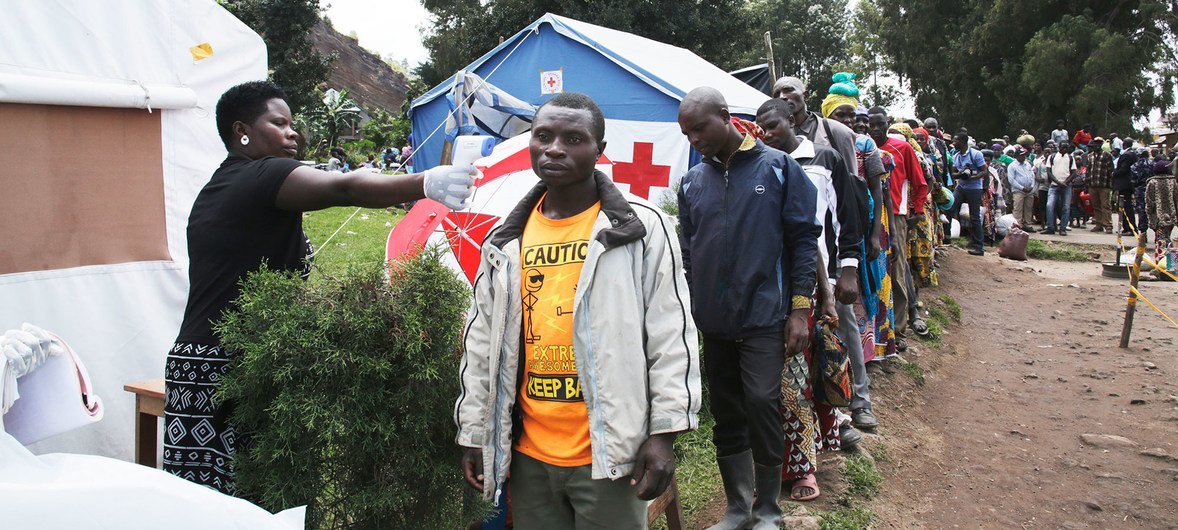
These unstable conditions severely hamper basic public health operations. The virus has successfully seeded itself across 23 distinct health zones in the DRC. Epidemiologists point out that effective containment requires tracking and monitoring at least 90% of exposed individuals; currently, teams are managing to follow up with only about 45% of contacts. Distrust of authorities and testing delays further slow the response. Demographically, the outbreak is disproportionately affecting women, who comprise two-thirds of the patients, with the majority of cases concentrated among young adults aged 20 to 39.
Distinguishing Suspected vs. Confirmed Cases
Public health data analysts urge caution when evaluating daily caseload spikes. Emerging metrics are subject to frequent adjustments as field laboratory capacity scales up.
Encouragingly, improved diagnostic access has allowed medical teams to rule out hundreds of historic cases that were initially flagged as Ebola due to overlapping symptoms like high fever, severe weakness, and abdominal pain. Over a single week, the backlog of suspected infections dropped from more than 1,000 down to 116 cases awaiting definitive lab verification.
Global Risk Assessment and Safety Guidelines
For individuals observing the crisis from afar, international public health agencies emphasize that the global threat level remains low. The U.S. Centers for Disease Control and Prevention (CDC) confirmed that no cases linked to this Central African outbreak have been detected domestically, and the risk to the general public outside the immediate impact zone is negligible.
For travelers required to visit eastern DRC or Uganda, health authorities advise strict adherence to preventative protocols:
-
Consult updated travel health notices prior to departure.
-
Avoid direct contact with individuals showing signs of illness, such as fever, vomiting, or unexplained bleeding.
-
Practice meticulous hand hygiene using alcohol-based rubs or soap and clean water.
-
Ensure absolute avoidance of raw bushmeat and contact with wild animals, particularly fruit bats and non-human primates.
The current situation represents one of the most operationally complex viral crises in recent memory. Overcoming it will require stabilizing the surrounding humanitarian environment just as much as deploying clinical medicine.
Medical Disclaimer
Medical Disclaimer: This article is for informational purposes only and should not be considered medical advice. Always consult with qualified healthcare professionals before making any health-related decisions or changes to your treatment plan. The information presented here is based on current research and expert opinions, which may evolve as new evidence emerges.
References
- https://www.reuters.com/business/healthcare-pharmaceuticals/congo-says-number-confirmed-ebola-cases-rises-515-2026-06-07/