 0
0
 0
0
Read Time:5 Minute, 26 Second
NEW DELHI — In a major public health intervention, the Union Ministry of Health and Family Welfare has deployed a National Joint Outbreak Response Team (NJORT) to Gujarat and Rajasthan. Announced on August 5, 2026, the high-level deployment comes as a premier network of national research institutions intensifies a multi-state investigation into Chandipura Virus Disease (CHPV)—a severe, vector-borne pathogen capable of triggering rapid brain inflammation in young children.
Coordinated by the National Centre for Disease Control (NCDC) alongside state health units, the response includes activating the Public Health Emergency Operations Centre (PHEOC) to coordinate field teams, laboratory investigations, and containment efforts.
High-Level Scientific Deployment Across States
The newly mobilized NJORT brings together senior specialists from the NCDC, the Indian Council of Medical Research (ICMR), and the Department of Animal Husbandry and Dairying (DAHD). Operating directly in affected districts of Gujarat and Rajasthan, the team is tasked with assessing localized epidemiology, streamlining clinical management in regional hospitals, strengthening vector control, and mapping transmission pathways.
This field mobilization operates alongside a massive multi-institutional research initiative. Scientists from five leading institutes—the ICMR-National Institute of Epidemiology (NIE, Chennai), ICMR-National Institute of Vector Control Research (NIVCR, Puducherry), ICMR-National Institute of Virology (NIV, Pune), ICMR-National Institute for Pre-Clinical Research (NIPCR, Hyderabad), and ICAR-National Institute of Veterinary Epidemiology and Disease Informatics (NIVEDI, Bengaluru)—are collaborating with state authorities to unravel the outbreak’s mechanics.
┌─────────────────────────────────────────────────────────────────────────┐
│                    NCDC PUBLIC HEALTH EMERGENCY                          │
│                     OPERATIONS CENTRE (PHEOC)                           │
└────────────────────────────────────┬────────────────────────────────────┘
                                     │
                                     ▼
┌─────────────────────────────────────────────────────────────────────────┐
│             NATIONAL JOINT OUTBREAK RESPONSE TEAM (NJORT)               │
│         (NCDC Experts  •  ICMR Scientists  •  DAHD Veterinary)          │
└──────────────┬──────────────────────────────────────────┬───────────────┘
               │                                          │
               ▼                                          ▼
┌──────────────────────────────┐          ┌──────────────────────────────┐
│       HUMAN HEALTH &         │          │     VECTOR & RESERVOIR       │
│     CLINICAL INVESTIGATION   │          │        INVESTIGATION         │
├──────────────────────────────┤          ├──────────────────────────────┤
│ • AES/AFI Active Screening   │          │ • Sandfly, Tick, Mite Surveys│
│ • Community Serosurveys      │          │ • Livestock Blood Sampling   │
│ • Whole-Genome Sequencing    │          │ • Environmental Abatement    │
└──────────────────────────────┘          └──────────────────────────────┘
Teams are currently conducting active surveillance across hospitals for Acute Febrile Illness (AFI) and Acute Encephalitis Syndrome (AES). Simultaneously, community-wide serosurveys are underway to identify asymptomatic cases and clarify the true extent of viral circulation within rural populations.
Unraveling the Transmission Web: Vectors and Animal Reservoirs
A core objective of the current investigation is resolving persistent scientific questions surrounding how Chandipura virus spreads. Historically, phlebotomine sandflies have been identified as the primary transmission vector for CHPV. However, field researchers are expanding their entomological screening to include mosquitoes, ticks, and mites.
Public health officials emphasize caution regarding vector identification. During the 2024 Chandipura outbreak in Gujarat, thousands of collected sandflies and insects were tested via reverse-transcription polymerase chain reaction (RT-PCR), yet none tested positive for CHPV genome—a reminder that vector dynamics can vary between seasonal surges.
“Identifying the specific vector driving a seasonal surge requires rigorous scientific confirmation,” noted an independent epidemiologist familiar with vector-borne diseases in Western India. “Until viral RNA is consistently isolated from field-collected vectors, public health measures must cast a wide net—targeting sandflies in mud dwellings while controlling general insect populations around cattle sheds.”
To assess potential animal reservoirs, veterinary research teams have collected approximately 70 blood and milk samples from domestic livestock, including cattle, buffaloes, and goats. These animal health checks aim to determine whether livestock maintain low-level viremia that could sustain vector transmission cycles near human habitations.
Simultaneously, genomic surveillance is progressing at the Gujarat Biotechnology Research Centre (GBRC) in Gandhinagar. While preliminary whole-genome sequencing of clinical isolates has detected minor genetic variations, geneticists state that full comparative studies are required before determining whether the circulating virus represents a mutated strain or a re-emerging ancestral lineage.
Understanding Chandipura Virus: Symptoms and Progression
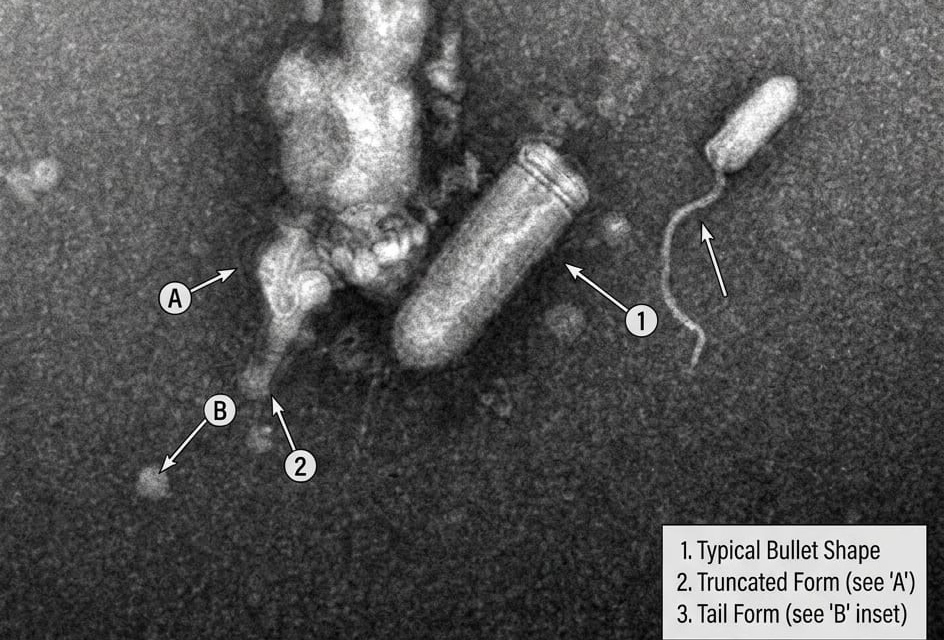
First isolated in 1965 in Chandipura village, Maharashtra, Chandipura virus belongs to the Vesiculovirus genus within the Rhabdoviridae family—the same viral family that includes the rabies virus.
CHPV disproportionately impacts children under 15 years of age. Unlike many common pediatric viral illnesses that resolve over several days, CHPV is known for its rapid clinical trajectory. After crossing the blood-brain barrier, the virus multiplies rapidly within neural tissues, triggering an intense immunopathological response.
  EARLY STAGE (Hours 0–12)           PROGRESSION (Hours 12–24)          CRITICAL STAGE (Hours 24–48)
┌───────────────────────────┐      ┌───────────────────────────┐      ┌───────────────────────────┐
│ • Sudden High Fever       │ ───► │ • Altered Consciousness   │ ───► │ • Severe Cerebral Edema   │
│ • Severe Headache         │      │ • Involuntary Seizures    │      │ • Rapid Neurological Decline│
│ • Persistent Vomiting     │      │ • Pronounced Lethargy     │      │ • High Risk of Coma / Shock│
└───────────────────────────┘      └───────────────────────────┘      └───────────────────────────┘
Because there are currently no specific antiviral medications or vaccines available for CHPV, medical management relies entirely on early supportive therapy. Early hospitalization, airway management, aggressive control of seizures, and measures to reduce brain swelling (cerebral edema) significantly improve survival rates.
Institutional Monitoring and Public Health Measures
India’s Hospital-based AES Surveillance Network—a multicentric framework spanning 15 tertiary care hospitals nationwide—is directly supporting field operations. By applying standardized diagnostic protocols, molecular assays, and selective next-generation sequencing, the network ensures that suspected encephalitis cases are evaluated for CHPV alongside other potential causes, such as Japanese Encephalitis, Dengue, and Herpes Simplex Virus.
The current multi-institutional probe exemplifies a “One Health” approach—integrating human health surveillance, animal reservoir tracking, and vector ecology into a unified defense.
                              ┌──────────────────────────┐
                              │    ONE HEALTH STRATEGY   │
                              └────────────┬─────────────┘
                                           │
         ┌─────────────────────────────────┼─────────────────────────────────┐
         ▼                                 ▼                                 ▼
┌─────────────────┐               ┌─────────────────┐               ┌─────────────────┐
│  HUMAN HEALTH   │               │ ANIMAL HEALTH   │               │  VECTOR CONTROL │
│ Early Diagnosis │               │ Reservoir Probe │               │ Indoor Spraying │
│  ICU Triage &   │               │ Livestock Sample│               │ Dusting Cracks  │
│ Support Care    │               │ Surveillance    │               │ Protective Nets │
└─────────────────┘               └─────────────────┘               └─────────────────┘
Guidance for Families and Healthcare Providers
Public health authorities advise parents and caregivers in rural and semi-urban areas of Gujarat, Rajasthan, and neighboring regions to remain vigilant during monsoon and post-monsoon months.
Key Actionable Steps:
-
Recognize Warning Signs: Seek immediate emergency medical care if a child develops a sudden high fever accompanied by persistent vomiting, unusual drowsiness, confusion, or convulsions.
-
Vector Reduction: Sandflies breed in organic matter, cracks in mud walls, and livestock shelters. Regularly dusting walls with insecticides and filling wall crevices reduces indoor breeding sites.
-
Personal Protection: Ensure children wear full-sleeved clothing, sleep under fine-mesh bed nets, and use insect repellents, particularly during dusk and dawn when vector activity peaks.
While scientific teams work to finalize genomic and vector analyses, health authorities emphasize that rapid triage and immediate referral of suspected febrile children to tertiary facilities remain the most effective tools to prevent fatal outcomes.
Medical Disclaimer: This article is for informational purposes only and should not be considered medical advice. Always consult with qualified healthcare professionals before making any health-related decisions or changes to your treatment plan. The information presented here is based on current research and expert opinions, which may evolve as new evidence emerges.
References
-
Press Information Bureau (PIB), Union Ministry of Health and Family Welfare, Government of India. (2026, August 5). Centre Deploys National Joint Outbreak Response Team as Multi-Institutional Probe Intensifies into Chandipura Virus Outbreak [Press Release].


Happy
0 %

Sad
0 %

Excited
0 %

Sleepy
0 %

Angry
0 %

Surprise
0 %