 0
0
 0
0
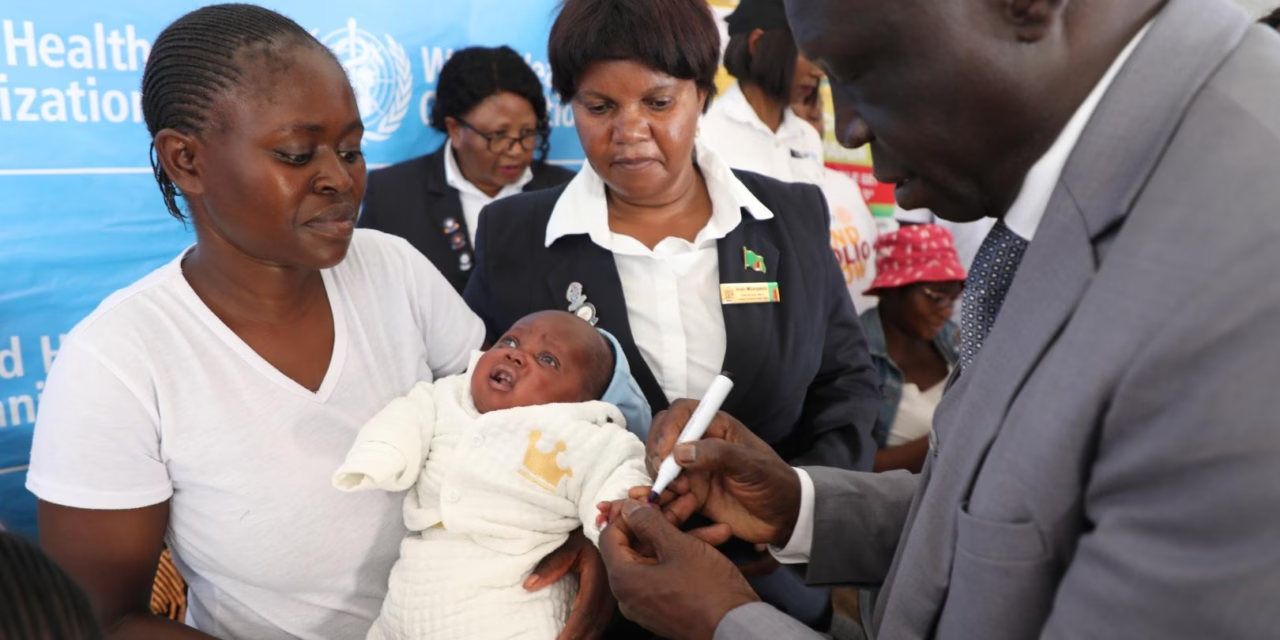
LUSAKA, Zambia — In a decisive move to preempt a potential public health crisis, the Zambian Ministry of Health, in coordination with the World Health Organization (WHO) and UNICEF, officially launched a nationwide polio vaccination campaign on April 20, 2026. The emergency initiative aims to immunize approximately 3.7 million children under the age of five after routine environmental surveillance detected the presence of poliovirus in Lusaka’s sewage system.
While no clinical cases of paralysis have been reported in the country to date, health officials warn that the detection of the virus in the environment serves as a “silent” alarm, indicating that the pathogen is circulating and could strike under-immunized children if immunity gaps are not closed immediately.
The Trigger: A “Silent” Threat in the Capital
The campaign was catalyzed by findings released in February 2026, which confirmed the presence of circulating vaccine-derived poliovirus type 2 (cVDPV2) in an environmental sample collected in the Lusaka District in late 2025.
Unlike “wild” poliovirus, cVDPV2 is a variant of the weakened virus originally contained in the oral polio vaccine (OPV). If the vaccine virus circulates in under-immunized populations for an extended period, it can undergo genetic changes and regain the ability to cause paralysis.
“Our goal is to act before a threat becomes a reality,” stated Zambia’s Minister of Health, Dr. Alex Katakwe, during the campaign launch at the University Teaching Hospital. “We are calling on every parent and caregiver to ensure their children receive this protection, regardless of their previous vaccination status.”
A High-Stakes Logistics Feat
The scale of the response reflects the urgency of the situation. Supported by the Global Polio Eradication Initiative (GPEI), the Zambian government has mobilized a massive logistical operation:
-
4.4 million doses of the novel oral polio vaccine type 2 (nOPV2) have been deployed.
-
27,400 health workers and volunteers have been trained for door-to-door and clinic-based administration.
-
Expanded Cold-Chain Infrastructure: Enhanced refrigeration equipment has been installed to ensure the vaccine remains potent during transport to remote rural provinces.
The first round of the campaign prioritizes six high-risk provinces, with two subsequent rounds planned later in 2026 to ensure robust community-wide immunity.
The Science Behind nOPV2
For this drive, Zambia is utilizing nOPV2, a next-generation vaccine specifically engineered to be more genetically stable than its predecessor. According to the WHO, which prequalified the vaccine for emergency use, nOPV2 is significantly less likely to revert into a form that can cause paralysis, making it the primary tool for stopping cVDPV2 outbreaks globally.
To date, nOPV2 has been used in more than 40 countries. Its deployment in Zambia is paired with the handover of a newly upgraded National Polio Laboratory in Lusaka. This facility allows for faster local testing and genomic sequencing, reducing the “blind spot” between virus detection and public health action.
Why Broad Campaigns are Necessary
Polio is notoriously difficult to track because it is “silent” in the majority of cases. According to the Centers for Disease Control and Prevention (CDC), approximately 70% to 95% of people infected with poliovirus show no symptoms. However, they can still shed the virus in their stool, allowing it to spread through contaminated water or food.
“Polio is a preventable tragedy,” says Dr. Saja Farooq Abdullah, UNICEF Representative to Zambia. “Because the virus spreads so easily in the shadows, we cannot wait for a child to show signs of paralysis before we respond. By then, hundreds of others may already be infected.”
For the small percentage of cases that do progress, the results can be devastating. The virus attacks the nervous system and can cause irreversible paralysis within hours.
Expert Perspectives: A Dual Milestone
Independent health experts view the Zambian response as a model for proactive surveillance. Dr. Clement Peter Lasuba, WHO Country Representative, described the launch as a “powerful dual milestone” that combines aggressive immunization with high-tech surveillance.
“The laboratory handover is just as critical as the vaccine itself,” Lasuba noted. “Surveillance tells us where the virus is moving, while vaccination closes the door behind it.”
Limitations and the Path Ahead
Despite the rigorous response, challenges remain. Health authorities emphasize that while emergency campaigns are vital for stopping outbreaks, they are not a substitute for routine immunization.
“Mop-up campaigns are a temporary shield,” says a spokesperson for the CDC. “Lasting protection depends on children receiving all their scheduled doses through regular healthcare visits. If routine coverage remains low, the virus will eventually find a way back into the community.”
Furthermore, while cVDPV2 is a serious public health threat, it is distinct from wild poliovirus (WPV1), which is now endemic only in Afghanistan and Pakistan. The global effort to eradicate all forms of polio has reduced cases by 99% since 1988, but the final 1% remains the most difficult to eliminate due to conflict, migration, and vaccine hesitancy.
Guidance for Families
For parents in Zambia, the medical guidance is clear:
-
Participate in Every Round: Even if a child has been vaccinated before, the additional doses provided during this campaign act as a “booster” to ensure peak immunity and protect the wider community.
-
Safety: The nOPV2 vaccine is administered via oral drops and has been rigorously tested for safety and efficacy.
-
Monitor Health: While the vaccine is safe, parents should always inform health workers if a child is severely ill or has a known immune deficiency.
As the first round of vaccinations rolls out across Lusaka and beyond, the eyes of the international health community are on Zambia, hoping this swift intervention will once again prove that proactive science can outpace a silent virus.
Reference Section
- https://www.afro.who.int/countries/zambia/news/zambia-launches-nationwide-polio-vaccination-campaign-protect-every-child-under-five
Medical Disclaimer: This article is for informational purposes only and should not be considered medical advice. Always consult with qualified healthcare professionals before making any health-related decisions or changes to your treatment plan. The information presented here is based on current research and expert opinions, which may evolve as new evidence emerges.