 0
0
 0
0
LANSING, Mich. — A massive foodborne parasite outbreak has escalated rapidly in Michigan, with confirmed infections surpassing a historic milestone as state and federal investigators race to trace the source of the contamination.
Michigan health officials reported a total of 5,002 confirmed cases of cyclosporiasis on July 17, 2026, marking a one-day increase of 690 cases. The outbreak has spread dramatically across 55 of the state’s counties, with Southeast Michigan bearing the brunt of the illnesses. As of July 16, at least 102 individuals have been hospitalized. What began as a localized cluster identified in Monroe County in June has now evolved into one of the largest foodborne parasite outbreaks in the state’s history. To put the scale into perspective, Michigan typically records only about 50 cases of cyclosporiasis in an entire calendar year.
State and federal health partners, including the U.S. Centers for Disease Control and Prevention (CDC) and the Food and Drug Administration (FDA), are currently coordinating a multistate investigation. The primary focus has narrowed down to fresh iceberg lettuce distributed to Taco Bell locations across five states, though officials caution that the final traceback analysis remains under active review.
Understanding the Parasite: What is Cyclosporiasis?
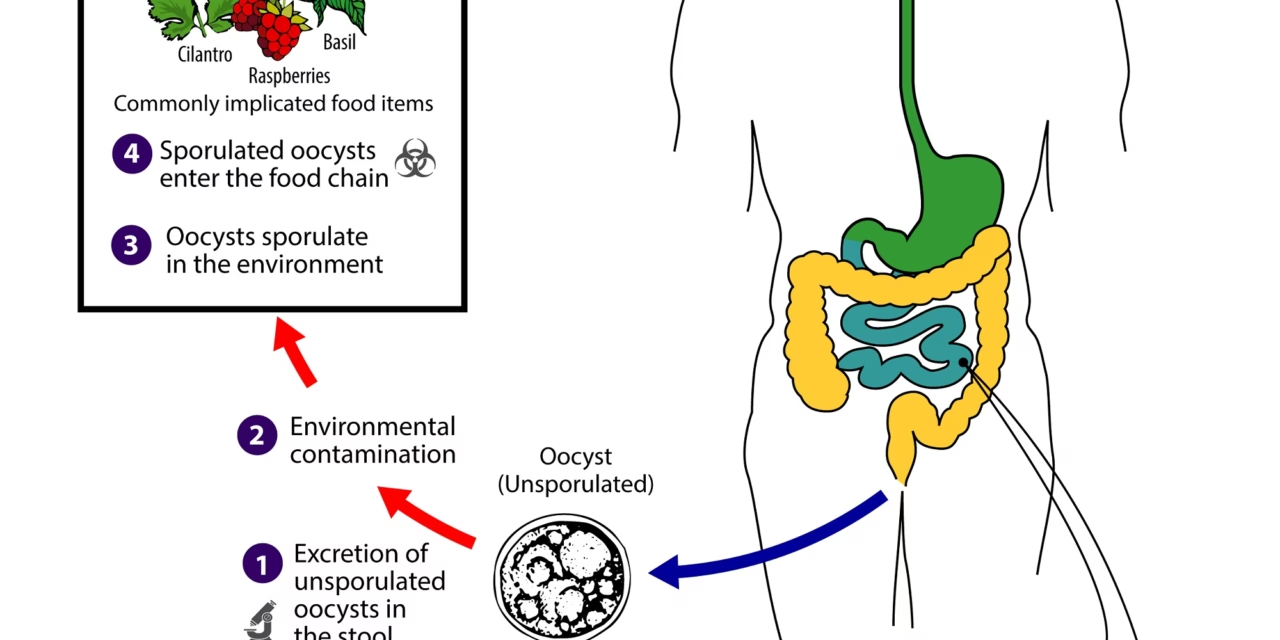
Cyclosporiasis is an intestinal illness caused by Cyclospora cayetanensis, a microscopic, single-celled parasite. According to the CDC, humans contract the infection by ingesting food or water contaminated with microscopic traces of feces carrying the parasite.
The clinical picture of a Cyclospora infection involves several distinct characteristics:
-
Incubation Period: Symptoms typically manifest about one week after consuming contaminated produce, though the timeline can range from two days to more than two weeks.
-
Primary Symptoms: The hallmark sign is severe, watery diarrhea. Other common symptoms include intense stomach cramping, bloating, nausea, profound fatigue, and loss of appetite.
-
Duration: While the infection is rarely life-threatening, it can be exceptionally persistent. Without targeted antibiotic treatment, symptoms can last from a few days to over a month, frequently clearing up only to return in repeated relapses.
Traceback Investigations Focus on Lettuce Supply Chains
Public health investigators have focused their efforts heavily on fresh produce logistics. An ongoing traceback assessment by the FDA recently identified a single prominent supplier—Taylor Farms of Salinas, California—as a potential source of the iceberg lettuce served at affected Taco Bell restaurants.
In response to the preliminary findings, corporate officials at Taco Bell announced that the chain voluntarily removed the supplier’s lettuce in select states and took steps to eliminate it from its national supply chain indefinitely. Furthermore, food distribution giant Sysco, alongside Taylor Farms, initiated measures to pull specific shipments of iceberg lettuce sourced from central Mexico.
Michigan’s Chief Medical Executive, Dr. Natasha Bagdasarian, emphasized the complexity of the ongoing investigation. While early epidemiological data strongly points to fresh lettuce as a common denominator among those infected, Dr. Bagdasarian noted that investigators have not yet entirely ruled out other potential food items.
This measured approach is typical of complex foodborne investigations. Public health agencies must frequently balance the need to issue rapid warnings to protect consumers with the rigorous laboratory and logistical cross-referencing required to finalize a traceback report.
Public Health Significance and Limitations
Unlike viral gastrointestinal illnesses, Cyclospora does not spread via direct person-to-person contact. When an infected individual excretes the parasite, it requires one to two weeks in the environment to mature into an infectious state. Because it cannot spread directly from one patient to another, identifying and eliminating the exact agricultural source is the only way to successfully halt the spread of new cases.
| Outbreak Metric | Current Status (As of July 17, 2026) |
| Total Confirmed Cases | 5,002 |
| Single-Day Case Increase | 690 |
| Total Hospitalizations | 102 |
| Geographic Spread | 55 Michigan counties |
| Typical Baseline | ~50 cases per year |
Data analysts emphasize that the current figures represent a point-in-time snapshot. Case counts in large outbreaks are fluid and subject to change as regional laboratories confirm lagging stool samples, reclassify entries, or link multi-jurisdictional data. Until the FDA and CDC officially close the investigation, the link to iceberg lettuce remains the primary working hypothesis rather than the final regulatory conclusion.
Consumer Guidance and Medical Response
For the general public, this outbreak underscores the inherent vulnerability of the fresh produce supply chain. Contamination can occur at multiple vulnerabilities, including agricultural runoff, harvesting equipment, washing facilities, or subsequent commercial handling.
Public health officials advise consumers to wash all fresh produce thoroughly under clean running water. However, it is important to understand that Cyclospora is highly resilient; standard washing practices reduce risk but cannot completely guarantee the removal of all microscopic parasites.
When to Seek Care: Individuals who experience prolonged, watery diarrhea—particularly after dining out or consuming pre-packaged salad mixes—should contact a healthcare provider promptly.
Diagnosing cyclosporiasis requires specific diagnostic action. Standard stool tests used for common bacterial or viral infections frequently miss Cyclospora oocysts. Physicians must explicitly order a specialized stool examination, such as an ova and parasite (O&P) test or a gastrointestinal polymerase chain reaction (PCR) panel. Once diagnosed, the infection is typically treated effectively with a standard course of the antibiotic trimethoprim-sulfamethoxazole (commonly known as Bactrim or Septra).
Individuals with compromised immune systems, elderly adults, and young children should exercise heightened vigilance, as they face a significantly higher risk of prolonged illness, severe dehydration, and complications.
Reference Section
-
Reuters Logistics & Commodities Report. “Taylor Farms, Sysco pull iceberg lettuce from central Mexico linked to US parasite outbreak.” Published July 17, 2026.
Medical Disclaimer: This article is for informational purposes only and should not be considered medical advice. Always consult with qualified healthcare professionals before making any health-related decisions or changes to your treatment plan. The information presented here is based on current research and expert opinions, which may evolve as new evidence emerges.