 0
0
 0
0
Published: July 24, 2026
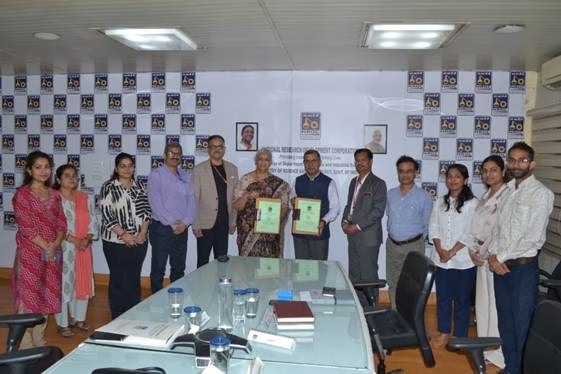
In a landmark step aimed at transforming ancient medical heritage into scientifically validated, market-ready healthcare solutions, two prominent Indian statutory and research institutions signed a strategic Memorandum of Understanding (MoU) in New Delhi.
The partnership between the National Research Development Corporation (NRDC) and the National Commission for Indian System of Medicine (NCISM)—a key statutory body operating under the Ministry of Ayush—establishes a national framework designed to safeguard intellectual property (IP), mentor medical researchers, and accelerate the commercialization of traditional healthcare technologies across India.
The formal agreement exchange occurred between Cmde. Amit Rastogi (Retd.), Chairman & Managing Director of NRDC, and Dr. Maneesha Kothekar, Chairperson of NCISM, flanked by senior leadership from the Board of Ayurveda and the Board of Unani, Siddha, and Sowa-Rigpa. The milestone venture signals a decisive shift toward bridging the longstanding divide between academic research in traditional medicine systems and public healthcare access.
Bridging the Gap Between Ancient Wisdom and Modern Markets
For decades, institutions practicing the Indian System of Medicine—comprising Ayurveda, Unani, Siddha, and Sowa-Rigpa—have produced extensive clinical and academic research. However, turning these formulations and diagnostic techniques into standardized, globally commercialized medical products has historically faced hurdles, including limited patent protection, unclear regulatory pathways, and minimal industry linkages.
The new MoU addresses these bottlenecks by combining NRDC’s decades-long expertise in technology evaluation, patent filing, and licensing with NCISM’s expansive regulatory reach over hundreds of medical colleges, research cells, and licensed practitioners nationwide.
“This collaboration creates a robust mechanism to support researchers in traditional medicine,” stated Cmde. Amit Rastogi (Retd.), CMD of NRDC. “Our goal is to take promising scientific findings and turn them into commercially deployable technologies that deliver real societal impact.”
                  ┌─────────────────────────────────────────┐
                  │              NCISM NETWORK              │
                  │   Regulated Colleges, RIED Cells &      │
                  │        Registered Practitioners         │
                  └────────────────────┬────────────────────┘
                                       │
                                       ▼
┌─────────────────────────────────────────────────────────────────────────┐
│                           STRATEGIC PARTNERSHIP                         │
│  • IP Protection & Patent Filing     • Valuation & Licensing           │
│  • Innovation Mentoring & Incubation • Industry-Sponsored Research     │
└────────────────────┬────────────────────────────────────┬───────────────┘
                     │                                    │
                     ▼                                    ▼
       ┌───────────────────────────┐        ┌───────────────────────────┐
       │   VALIDATED HEALTHCARE    │        │      PUBLIC ACCESSIBLE    │
       │        PRODUCTS           │        │         SOLUTIONS         │
       └───────────────────────────┘        └───────────────────────────┘
Under this partnership, NRDC will deploy specialized services to NCISM-regulated institutions and their Research, Innovation, and Entrepreneurship Development (RIED) Cells. These services include:
-
Intellectual Property Management: Assisting researchers in evaluating novel discoveries, managing trademark filings, and securing domestic and international patents.
-
Technology Transfer & Licensing: Valuing intellectual property and brokering licensing agreements with commercial pharmaceutical and medical device manufacturers.
-
Incubation and Entrepreneurship: Mentoring student and faculty innovators, organizing hackathons and ideathons, and facilitating industry-sponsored research.
The Public Health Push for Evidence-Based Traditional Medicine
The collaboration arrives at a critical juncture for global integrative healthcare. Worldwide demand for traditional and complementary therapies has surged, yet medical professionals and health-conscious consumers alike frequently express caution due to historical gaps in standardization, quality control, and rigorous clinical validation.
By bringing institutional IP policy and technology assessment into traditional medicine, the alliance aims to ensure that remedies undergo rigorous research and standardization before reaching consumer shelves.
Dr. Maneesha Kothekar, Chairperson of NCISM, emphasized that integrating formal innovation management with academic research will bolster the global credibility of traditional practices:
“By integrating scientific research, innovation management, and commercialization support, this collaboration encourages practitioners to develop evidence-based technologies rooted in India’s rich traditional medical heritage.”
Key Traditional Medicine Modalities Covered
| System | Primary Philosophical Basis | Geographic & Cultural Reach |
| Ayurveda | Balance of three constitutional bodily humors (Doshas) | Widely practiced across India and growing globally |
| Unani | Balance of four bodily humors (Akhlaat) | Prevalent in South Asia and Middle Eastern traditions |
| Siddha | Balance of physical humors and subtle energetic principles | Historically prominent in Southern India |
| Sowa-Rigpa | Traditional Himalayan system focusing on mind-body equilibrium | Prevalent in the Trans-Himalayan belt |
Balancing Innovation with Scientific Rigor: Expert Perspectives
Independent medical experts view the strategic partnership as a necessary evolution for modern public health, provided that safety and efficacy remain paramount.
Dr. Ananya Sharma, an independent public health analyst and former research fellow in integrative medicine (not affiliated with NRDC or NCISM), noted:
“The primary obstacle traditional medical systems face internationally isn’t a lack of interest—it’s a lack of standardized validation. When a traditional formulation is patented, rigorously tested, and manufactured under strict quality controls, it moves from the realm of alternative health into mainstream, evidence-based integrative care. This MoU establishes the legal and commercial infrastructure needed to make that transition possible.”
However, researchers emphasize that commercialization must not bypass standard scientific protocols. While IP protection shields traditional intellectual heritage from biopiracy, clinical translational pipelines must still uphold thorough safety testing, pharmacovigilance, and transparent peer review before products enter clinical practice.
What This Means for Patients and Consumers
For the everyday health-conscious consumer, this institutional push carries several practical implications over the coming years:
-
Greater Access to Standardized Products: As academic research transitions into commercial products, patients can expect better-regulated traditional health supplements, botanical therapeutics, and supportive diagnostic devices.
-
Enhanced Safety Controls: Standardized IP and manufacturing pathways reduce the risk of product contamination or inconsistent ingredient dosing.
-
Transparent Scientific Backing: Commercialized technologies emerging from this framework will offer clearer scientific documentation, helping patients and physicians make informed healthcare decisions.
As implementation unfolds, direct institutional engagements between NRDC and individual universities will begin establishing localized RIED cells, turning clinical discoveries into commercial realities.
Medical Disclaimer
Medical Disclaimer: This article is for informational purposes only and should not be considered medical advice. Always consult with qualified healthcare professionals before making any health-related decisions or changes to your treatment plan. The information presented here is based on current research and expert opinions, which may evolve as new evidence emerges.
References
-
Press Information Bureau (PIB), Government of India. (2026, July 23). NRDC and NCISM Signed MoU to Promote Innovation, Intellectual Property Management and Commercialization in the Indian System of Medicine. Ministry of Ayush / Ministry of Science & Technology. Press Release ID: 2288636.