 0
0
 0
0
WASHINGTON — Federal regulators have issued a major food safety alert after Midwest Poultry Services voluntarily initiated a recall of nearly 1.6 million dozen shell eggs due to potential contamination with Salmonella Enteritidis. Announced by the U.S. Food and Drug Administration (FDA) on July 23, 2026, the nationwide alert affects roughly 19 million individual eggs distributed across several southern states, including Texas, Oklahoma, and Louisiana.
While no illness reports or consumer complaints have been linked to the recalled inventory to date, public health officials emphasize that prompt action and proper kitchen hygiene are vital to preventing foodborne outbreaks.
What Prompted the Nationwide Recall?
The recall targets approximately 1,589,577 dozen eggs, encompassing both white shell eggs and brown cage-free shell eggs produced at regional facilities in Texas. The affected batches were laid between June 6 and July 3, 2026, and carry sell-by or best-by dates ranging from July 20 to August 17, 2026.
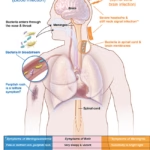
According to FDA notices, routine environmental testing identified the potential presence of Salmonella Enteritidis, a rod-shaped bacterium equipped with flagella (tail-like structures) that allow it to move through liquid environments. These microscopic pathogens can colonize the reproductive tract of egg-laying hens, contaminating the interior contents before the hard shell even forms, as well as settling on outer shell surfaces.
Understanding Salmonella: Risks and Vulnerabilities
Salmonella remains one of the leading causes of bacterial foodborne illness (salmonellosis) in the United States. When ingested, the bacterium invades the lining of the small intestine, triggering an inflammatory response that leads to gastrointestinal distress.
Key Symptoms to Monitor:
Symptoms typically manifest between 6 hours and 6 days after consuming contaminated food.
Primary signs: Watery diarrhea, abdominal cramps, moderate to high fever, nausea, and vomiting.
Duration: Most healthy individuals clear the infection naturally within 4 to 7 days without requiring specific antibiotic therapy.
High-Risk Populations
While healthy adults often recover with supportive care like oral rehydration, certain groups face significantly higher risks of severe systemic complications:
-
Young Children & Infants: Developing immune systems and smaller body masses leave young children susceptible to rapid dehydration.
-
Older Adults: Age-related changes in gut mucosa and immune function increase the likelihood of prolonged infection.
-
Pregnant Individuals: Severe illness can cause dehydration and secondary complications affecting fetal health.
-
Immunocompromised Individuals: Individuals undergoing chemotherapy or managing autoimmune conditions face elevated risks of bacteremia—a condition where Salmonella enters the bloodstream, potentially spreading to joint tissue, spinal fluid, or cardiac lining.
Expert Insights and Public Health Context
Independent food safety experts note that precautionary recalls reflect a proactive regulatory framework designed to stop foodborne illness before it takes root.
“A voluntary recall before widespread reported illnesses is a sign that industry surveillance and environmental testing protocols are operating as intended,” explains Dr. Elena Rostova, Professor of Food Microbiology and Public Health Specialist (not affiliated with the investigation). “However, because Salmonella Enteritidis can inhabit the inside of a physically intact, clean-looking egg, consumers cannot rely on visual inspection alone. Adherence to lot numbers and internal cooking temperatures remains our primary defense.”
Public health epidemiologists emphasize that even intact, grade-A shell eggs require careful handling in the kitchen.
| Handling Phase | Best Practice | Scientific Rationale |
| Storage | Store at or below 40°F (4°C) immediately | Cold temperatures suppress bacterial multiplication and slow growth cycles. |
| Preparation | Cook until whites and yolks are firm (160°F / 71°C) | High thermal exposure disrupts bacterial cell walls, destroying active pathogens. |
| Cross-Contamination | Wash cutting boards, counters, and utensils thoroughly | Prevents transfer of unseen bacterial droplets to ready-to-eat foods. |
Guidance for Consumers: Actionable Steps
If you purchase eggs in the affected Southern region, take the following precautions:
-
Check Your Cartons: Inspect egg cartons for brand names, plant codes, and sell-by dates matching the FDA recall notice (dates between July 20 and August 17, 2026).
-
Dispose or Return: Do not consume affected eggs, even if cooked thoroughly. Either safely discard them in sealed trash receptacles or return them to the retail point of purchase for a full refund.
-
Sanitize Surfaces: If recalled eggs were stored in your refrigerator or prepared on kitchen surfaces, wash those areas with warm, soapy water followed by a food-safe sanitizing solution.
-
Seek Medical Attention when Necessary: Consult a healthcare provider if you or a family member develop high fever (above 102°F), persistent vomiting, blood in the stool, or signs of severe dehydration (such as dizziness or dry mouth).
Study Limitations and Counterarguments
While the recall affects a high volume of inventory (19 million eggs), it is important to contextualize the true risk scale:
-
Precautionary Scope: Broad recall windows do not imply that every single egg within a lot contains bacteria. The FDA routinely pulls entire production cycles to maintain maximum public safety margins.
-
Absence of Illness Clusters: To date, surveillance networks like FoodNet have not identified an epidemiological spike in hospitalizations associated with this batch, indicating that potential exposure remains localized and low.
References
- https://www.reuters.com/legal/litigation/poultry-firm-recalls-nearly-16-mln-dozen-eggs-over-potential-salmonella-us-fda-2026-07-23/
Medical Disclaimer: This article is for informational purposes only and should not be considered medical advice. Always consult with qualified healthcare professionals before making any health-related decisions or changes to your treatment plan. The information presented here is based on current research and expert opinions, which may evolve as new evidence emerges.