 0
0
 0
0
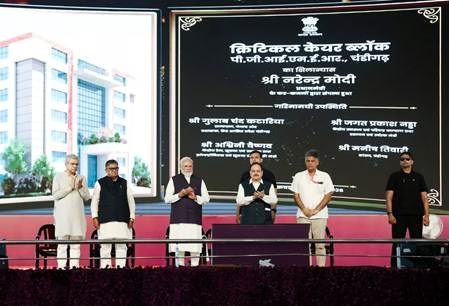
CHANDIGARH — In a major expansion of tertiary healthcare infrastructure for northern India, Prime Minister Narendra Modi on Friday inaugurated two advanced medical centres and laid the foundation for a new critical care facility at the Post Graduate Institute of Medical Education & Research (PGIMER), Chandigarh.
The developments mark a substantial capacity upgrade for one of India’s premier medical institutions. Accompanied by Union Minister of Health and Family Welfare Shri Jagat Prakash Nadda and other senior officials, the Prime Minister dedicated the Advanced Neurosciences Centre and the Advanced Mother and Child Centre to the nation. He also laid the foundation stone for a 150-bed state-of-the-art Critical Care Block under the Pradhan Mantri Ayushman Bharat Health Infrastructure Mission (PM-ABHIM).
“Twelve years ago, we resolved that no citizen should suffer due to the lack of healthcare facilities and that quality treatment should be available at affordable costs,” Prime Minister Modi said during his address, highlighting a decade-long push to scale up specialized medical services across the country.
Expanding Specialized Care: Neurosciences and Maternal Health
The newly inaugurated facilities are designed to address critical shortages in specialized medical infrastructure in the region, which serves patients from Punjab, Haryana, Himachal Pradesh, Jammu & Kashmir, and Uttarakhand.
The Advanced Neurosciences Centre
Built at a cost of ₹440 crore, the 300-bed Advanced Neurosciences Centre represents a major paradigm shift for the institution. Union Health Minister J.P. Nadda noted that since 1967, PGIMER operated with just 25 beds dedicated to neurology and neurosurgery. The new integrated hub brings neurology, neurosurgery, neuro-critical care, and advanced neuro-diagnostics under a single roof, dramatically reducing wait times for complex neurological interventions.
The Advanced Mother and Child Centre
Also featuring 300 beds, this centre focuses on high-risk pregnancies, critically ill newborns, and pediatric specialties. The facility is equipped to handle complex neonatal intensive care requirements and advanced pediatric surgeries, aiming to streamline maternal and child health outcomes under one dedicated roof.
National Health Metrics and Infrastructure Growth
The inaugurations come amid broader structural reforms outlined by health ministry officials. According to the government, India’s medical education footprint has expanded significantly over the last twelve years:
-
Medical Colleges: Total institutions increased from 387 in 2014 to 818 in 2026.
-
Medical Seats: Undergraduate (MBBS) seats have risen to over 1.38 lakh, with an additional 75,000 undergraduate and postgraduate seats cleared for creation (25,000 of which are already operational).
-
AIIMS Expansion: Fifteen new All India Institutes of Medical Sciences (AIIMS) have been approved since 2014, with 23 currently in various stages of development nationwide.
Public health campaigns have also reported measurable shifts. Data presented from the World Health Organization (WHO) indicates that tuberculosis (TB) incidence in India declined by 21 percent over the past decade, with national TB treatment coverage now exceeding 90 percent.
Furthermore, structural emphasis on institutional deliveries has helped push the national rate of births occurring in medical facilities past 90 percent, contributing to an 86 percent decline in the maternal mortality ratio over a multi-year trajectory.
Digital Health and Grassroots Delivery
The structural layout of India’s current healthcare delivery relies on a tiered system linking primary, secondary, and tertiary care. Health Minister Nadda emphasized that the National Health Policy of 2017 provided the modern blueprint for this framework.
At the primary level, over 1.75 lakh Ayushman Arogya Mandirs (formerly Health and Wellness Centres) serve as frontline screening points for non-communicable diseases like hypertension and diabetes.
Connecting these tiers is the Ayushman Bharat Digital Mission (ABDM). The digital platform has registered nearly 90 crore ABHA (Ayushman Bharat Health Account) cards, allowing individuals to maintain and securely share digital health records across participating facilities. Additionally, the government’s eSanjeevani telemedicine platform has logged more than 48 crore remote consultations to date, connecting rural populations with distant specialists.
To further boost workforce capacity at the tertiary level, the Prime Minister announced that approval has been granted for a new MBBS college at PGIMER Chandigarh, with student admissions expected to commence shortly.
Independent Medical Perspectives and Systemic Limitations
While public health experts welcome the massive expansion of physical infrastructure, independent analysts emphasize that building facilities is only the first step in solving complex healthcare challenges.
Public health specialists point out that a persistent challenge in rapidly expanding medical infrastructure is maintaining the quality of education and medical care across hundreds of new institutions. Staffing new medical colleges with adequately trained, senior faculty remains an industry-wide bottleneck.
Furthermore, while 90 percent institutional delivery is a major logistical milestone, experts note that regional disparities in healthcare quality still persist. The quality of care in remote rural health centers often lags behind premier urban tertiary hubs like PGIMER. For patients, an increase in infrastructure must be accompanied by continuous quality control, robust supply chains for essential medicines, and reduced out-of-pocket spending, which remains a primary driver of financial stress for families facing chronic illnesses.
What This Means for Patients and Consumers
For residents of Chandigarh and surrounding states, these upgrades translate to tangible changes in care access:
-
Reduced Referrals: The expansion of neurocritical and neonatal beds means fewer critically ill patients will need to be turned away or redirected to distant facilities due to lack of space.
-
Integrated Continuity: With the expansion of ABHA digital records, patients transitioning from local primary centers to PGIMER can share diagnostic history seamlessly, reducing duplicate testing.
-
Local Emergency Preparedness: The upcoming 150-bed Critical Care Block, funded under PM-ABHIM, is specifically intended to improve the region’s trauma response and disaster management capabilities, providing localized intensive care during emergencies.
References
-
Press Information Bureau (PIB) Delhi: “Prime Minister Shri Narendra Modi Inaugurates Advanced Mother and Child Centre and Advanced Neurosciences Centre at PGIMER, Chandigarh.” Published July 17, 2026.
Medical Disclaimer: This article is for informational purposes only and should not be considered medical advice. Always consult with qualified healthcare professionals before making any health-related decisions or changes to your treatment plan. The information presented here is based on current research and expert opinions, which may evolve as new evidence emerges.