 0
0
 0
0
Read Time:5 Minute, 29 Second
NEW DELHI — In a major development for maternal and child health governance, the Ministry of Women and Child Development (MoWCD) has unveiled the latest outcomes of its flagship digital initiative, the Poshan Tracker. Introduced as a core Information and Communication Technology (ICT) governance tool under Mission Saksham Anganwadi and Poshan 2.0, the mobile application is driving a technological shift across India’s rural public health infrastructure—replacing decades of paper-based record-keeping with real-time, data-driven health tracking.
The statement, presented to the Lok Sabha on August 7, 2026, by Minister of State for Women and Child Development Smt. Savitri Thakur, highlights an independent outcome-based evaluation by NITI Aayog’s Development Monitoring and Evaluation Office (DMEO). The evaluation confirms that digitalizing service delivery at Anganwadi Centres (AWCs) has yielded a multi-dimensional impact across four critical areas: early childhood nutrition monitoring, Early Childhood Care and Education (ECCE), beneficiary identity verification, and last-mile distribution efficiency.
Moving Beyond Paper: Real-Time Nutrition and Growth Tracking
Historically, India’s Supplementary Nutrition Programme (SNP) relied heavily on physical registers maintained by local Anganwadi Workers (AWWs). These manual systems often faced challenges with data lagging, reporting errors, and delayed interventions for malnourished children.
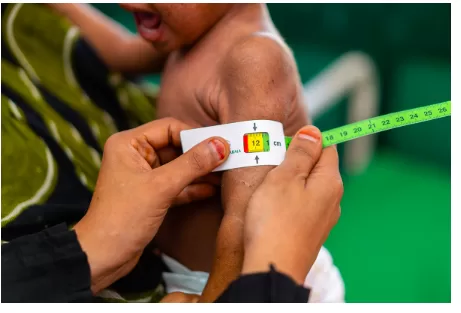
The Poshan Tracker fundamentally restructures this framework. By enabling digital tracking at both the Anganwadi Centres and during home visits, the platform provides real-time visibility into key growth and health parameters, including:
-
Growth Monitoring: Real-time tracking of height, weight, and age metrics to screen for stunting, wasting, and underweight status among infants and young children.
-
Maternal Health Supervision: Monitoring nutritional supplementation and health check-ups for pregnant women and lactating mothers.
-
Targeted Delivery: Ensuring Take-Home Rations (THR) and hot cooked meals reach verified beneficiaries directly.
       ┌─────────────────────────────────────────────────────────────┐
       │                POSHAN TRACKER ECOSYSTEM                     │
       └──────────────────────────────┬──────────────────────────────┘
                                      │
           ┌──────────────────────────┼──────────────────────────┐
           ▼                          ▼                          ▼
┌────────────────────┐    ┌────────────────────┐    ┌────────────────────┐
│ Nutrition & Growth │    │   Early Education  │    │ Transparent Delivery│
│  Real-time height, │    │ Early Childhood    │    │ Aadhaar/FRS e-KYC  │
│  weight, & status  │    │ Care & Education   │    │  verification &    │
│  monitoring        │    │ (ECCE) tracking    │    │ offline sync mode  │
└────────────────────┘    └────────────────────┘    └────────────────────┘
“Transitioning from aggregate paper reporting to real-time, individual-level digital monitoring represents a vital advancement for public health,” notes Dr. Sunita Deshmukh, a senior public health researcher and community medicine consultant based in New Delhi, who was not involved in the government report. “In public health nutrition, early detection is everything. Catching severe acute malnutrition weeks earlier because data syncs instantly to a dashboard allows for timely clinical intervention before irreversible developmental delays set in.”
Overcoming Connectivity Barriers: FRS and Offline Synchronization
One of the primary challenges facing digital health initiatives in low-resource settings is uneven mobile network coverage in remote and rural regions. To maintain service continuity, the Poshan Tracker incorporates an offline functionality tailored for last-mile health workers.
The system utilizes a Facial Recognition System (FRS) and Aadhaar-based e-KYC for beneficiary authentication during ration distribution. To ensure the process remains user-friendly and accessible:
-
One-Time Authentication: OTP-based e-KYC and Aadhaar face matching are required only once during the beneficiary’s entire life cycle within the program.
-
Offline Operation: Anganwadi Workers can perform e-KYC and log service delivery even without active internet connectivity.
-
5-Day Data Sync: Information saved offline automatically synchronizes with central servers within five days once network access is re-established.
This hybrid offline-online capability mitigates server delays and connectivity dropouts, ensuring that vulnerable families receive vital nutritional supplements without administrative disruption.
Supporting the Frontline Workforce: Training and Capacity Building
Digital transformations in public health depend heavily on the frontline workers operating the technology. To support Anganwadi Workers in transitioning to digital workflows, the MoWCD—in collaboration with Digital India Corporation (DIC)—has established a multi-tiered support system:
1. Cascading Capacity Building (Poshan Bhi Padhai Bhi)
Under the Poshan Bhi Padhai Bhi (PBPB) educational scheme, state and union territory officials are trained through a cascading master-trainer model. District officers and block coordinators train frontline workers on specialized app modules, including Geo-Tagging, the Facial Recognition System, and the Home Visit Scheduler.
2. Daily Interactive Virtual Classrooms
To resolve operational technical glitches in real time, Digital India Corporation hosts interactive virtual classroom sessions every weekday:
-
3:00 PM – 4:00 PM: Open sessions for Anganwadi Workers to ask questions, resolve technical issues, and get real-time application guidance.
-
4:15 PM – 5:15 PM: Specialized updates and feature orientation sessions for supervisors and higher-level administrative staff.
3. On-Demand Digital Resources
The application includes an in-app resource section containing instructional videos and documentation, allowing health workers to refresh their operational knowledge at any time.
Public Health Implications and Potential Limitations
Public health experts view the findings of the NITI Aayog DMEO evaluation as an encouraging model for digital health governance in developing nations. By establishing transparent supply chains and accurate target identification, digital monitoring minimizes leakages and ensures public funds are directed where health needs are greatest.
However, researchers emphasize that digital tools represent a mechanism for delivery rather than a complete remedy for complex public health challenges.
| Component | Strengths & Innovations | Implementation Considerations |
| Data Collection | Replaces manual logs with instant, real-time sync. | Requires consistent device maintenance and hardware upgrades over time. |
| Authentication | One-time FRS/Aadhaar e-KYC prevents duplicate records. | Requires ongoing training to prevent user errors during initial verification. |
| Connectivity | 5-day offline window prevents service interruptions. | Complete sync relies on workers accessing network zones within the timeframe. |
“Digital tracking is an essential tool for visibility and logistics,” adds Dr. Deshmukh. “However, technology must be paired with adequate supply-side resources—such as the uninterrupted availability of micronutrient-dense foods, clean water, and access to primary health clinics—to achieve sustained reductions in childhood stunting and anemia.”
Looking Ahead
As Mission Saksham Anganwadi and Poshan 2.0 progress in alignment with Finance Commission evaluation cycles, the integration of data analytics into primary nutrition delivery sets a new baseline for evidence-based social welfare. For millions of mothers and young children across India, this digital evolution aims to turn routine data entries into timely, life-saving healthcare support.
Reference Section
Government & Official Reports
-
Ministry of Women and Child Development (MoWCD): Press Information Bureau (PIB) Statement on Mission Saksham Anganwadi and Poshan 2.0 Progress, Lok Sabha Unstarred Question Reply by Minister of State Smt. Savitri Thakur (Posted August 7, 2026).
Medical Disclaimer: This article is for informational purposes only and should not be considered medical advice. Always consult with qualified healthcare professionals before making any health-related decisions or changes to your treatment plan. The information presented here is based on current research and expert opinions, which may evolve as new evidence emerges.


Happy
0 %

Sad
0 %

Excited
0 %

Sleepy
0 %

Angry
0 %

Surprise
0 %