 0
0
 0
0
Read Time:5 Minute, 58 Second
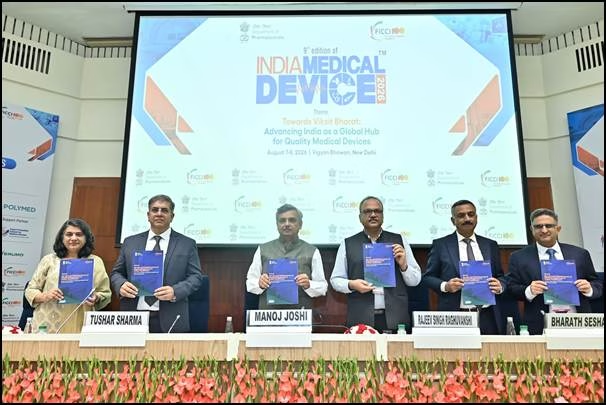
NEW DELHI — In a major push to transform India’s healthcare technology landscape, policymakers, medical regulators, and global industry leaders gathered at Vigyan Bhawan in New Delhi on August 7, 2026, for the opening of the 9th India Medical Device 2026 conference. Organised by the Department of Pharmaceuticals under the Ministry of Chemicals & Fertilizers, in collaboration with the Federation of Indian Chambers of Commerce and Industry (FICCI), the two-day landmark summit centers on the theme: “Towards Viksit Bharat: Advancing India as a Global Hub for Quality Medical Devices.”
The summit comes at a pivotal juncture for public health infrastructure. While India has historically relied on foreign suppliers for up to 80% of its high-tech medical hardware, government and industry stakeholders unveiled a unified roadmap to shift from basic import substitution toward building an export-driven, globally competitive MedTech industry. Key announcements included strategic regulatory reforms, increased domestic value addition, and the launch of a national White Paper focused on medical equipment maintenance.
Pivoting to Export-Oriented Manufacturing
Delivering the inaugural address, Shri Manoj Joshi, Secretary of the Department of Pharmaceuticals, stressed that the medical devices sector must be understood through a dual lens—balancing patient healthcare needs with industrial self-reliance.
“While healthcare providers focus on access to quality devices irrespective of their origin, domestic manufacturing is critical for generating employment, strengthening industry capabilities, and ensuring supply chain resilience especially during global disruptions,” stated Shri Manoj Joshi.
Joshi highlighted that while India has achieved strong local capacity in medical consumables, surgical disposables, and basic diagnostics, the broader opportunity lies in advanced technological integration. Pointing out the economic disparity, he noted that while India’s domestic medical device market is currently valued at approximately $16 billion, the global market exceeds $600 billion.
To capture a meaningful share of this global market, the Department of Pharmaceuticals called for a move away from simple assembly toward deep component manufacturing, cross-border integration into global supply chains, and structured incubation partnerships between medical startups and established healthcare conglomerates.
                 Global vs. Indian Medical Device Market Size (USD)

Global Market  |██████████████████████████████████████████████████ $600+ Billion
Indian Market  |█ $16 Billion
               +--------------------------------------------------+
               0                                                 600 B
Strengthening Regulatory Frameworks and Advanced Capabilities
A central bottleneck in advanced medical technology adoption has historically been regulatory complexity and the time required for clinical approvals. Addressing the delegation, Dr. Rajeev Singh Raghuvanshi, Drugs Controller General of India (DCGI), outlined an ongoing structural transition from an import-dependent ecosystem to a domestic manufacturing model.
Dr. Raghuvanshi emphasized the urgent necessity to build indigenous research and manufacturing capabilities specifically for Class C and Class D medical devices—categories encompassing high-risk, life-critical technology such as cardiac pacemakers, implantable defibrillators, advanced in-vitro diagnostics, and surgical implants. He reaffirmed the Central Drugs Standard Control Organisation’s (CDSCO) commitment to establishing predictable, transparent, and accelerated regulatory approval pathways to help local innovations reach hospitals safely and efficiently.
Highlighting the private sector’s evolving role, Shri Tushar Sharma, Chair of the FICCI Medical Devices Committee and Managing Director at Abbott Healthcare India, noted that multinational MedTech firms are increasingly establishing Global Capability Centres (GCCs), software engineering hubs, and dedicated clinical research networks in India. These infrastructure investments not only enhance patient care delivery but also build a highly skilled local technical workforce.
Adding to this perspective, Ms. Jyoti Vij, Director General of FICCI, and Shri Bharath Sesha, Co-Chair of the FICCI Committee and Managing Director of Philips Indian Subcontinent, affirmed that India’s growth phase will depend on harmonizing quality standards with international protocols and scaling digital health technologies across care networks.
Unveiling the National White Paper on Equipment Maintenance
A critical highlight of the conference’s opening day was the official release of the White Paper titled “Strengthening of Service and Maintenance of Medical Equipment in India.”
While new device adoption often dominates healthcare headlines, operational uptime remains a persistent challenge in clinical settings. Medical equipment in rural clinics and regional public hospitals frequently sits idle due to prolonged repair cycles, lack of local spare parts, or inadequate technical servicing.
The newly unveiled White Paper addresses this gap by outlining guidelines to establish a standardized, sustainable maintenance ecosystem across both urban tertiary centers and remote healthcare facilities.
┌────────────────────────────────────────────────────────────────────────┐
│               CORE GOALS OF THE 2026 EQUIPMENT WHITE PAPER              │
├────────────────────────────────────────────────────────────────────────┤
│  • Standardized Lifecycle Management  : Routine calibration standards   │
│  • Rapid Repair Networks             : Localized spare parts distribution │
│  • Patient Safety & Uptime Resilience: Reducing operational downtime    │
│  • Sustainable Asset Utilization     : Extending functional longevity   │
└────────────────────────────────────────────────────────────────────────┘
The document advocates for:
-
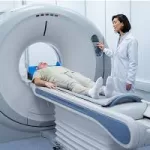
Mandatory lifecycle tracking and preventive maintenance protocols for high-capital equipment like MRI machines, CT scanners, and ventilators.
-
Standardized technical training for biomedical engineers across tier-2 and tier-3 hospital networks.
-
Robust spare parts supply chains to ensure that lifesaving equipment remains operational without costly delays.
Public Health Implications: What This Means for Patients
For healthcare providers and the general public, the policy shifts announced at India Medical Device 2026 carry direct practical benefits:
-
Lower Treatment Costs: Localized production of complex equipment and components reduces reliance on expensive foreign imports subject to foreign exchange fluctuations and tariffs, ultimately lowering out-of-pocket costs for diagnostic scans and surgical procedures.
-
Improved Equipment Reliability: Standardized equipment maintenance protocols ensure that critical diagnostic scanners and intensive care units experience minimal downtime, reducing appointment backlogs and treatment delays.
-
Enhanced Health Security: Domestic production safeguards hospitals against global supply chain bottlenecks during public health emergencies or geopolitical disruptions.
-
Wider Access in Rural Healthcare: Domestic manufacturing tailored to local conditions enables the deployment of ruggedized, portable point-of-care devices in primary care centers under national programs like Ayushman Bharat.
Counterarguments and Industry Roadblocks
Despite optimistic growth projections, medical policy analysts point to significant structural hurdles that could slow India’s transition into a global MedTech leader.
| Key Industry Challenge | Impact on Healthcare Sector | Proposed Mitigation Strategy |
| Component Import Reliance | High-end core components (e.g., X-ray tubes, micro-sensors) remain heavily imported. | Deepening value addition through dedicated component manufacturing parks. |
| R&D Funding Gaps | Domestic startups frequently face capital shortages when transitioning from prototype to clinical trial stages. | Fostering joint venture incubators between large industrial players and MedTech startups. |
| Regulatory Compliance Friction | Small and medium enterprises (SMEs) struggle with compliance costs for complex international standards. | Implementing predictable, streamlined CDSCO approval timelines. |
| Service Disparities | Tier-3 and rural medical facilities face severe shortages of trained biomedical maintenance personnel. | Executing national maintenance guidelines outlined in the newly unveiled White Paper. |
Healthcare economists note that while government initiatives like the Production Linked Incentive (PLI) scheme have successfully boosted domestic assembly, achieving true independence will require sustained investment in fundamental research, raw material processing, and advanced component fabrication over the next decade.
Medical Disclaimer: This article is for informational purposes only and should not be considered medical advice. Always consult with qualified healthcare professionals before making any health-related decisions or changes to your treatment plan. The information presented here is based on current research and expert opinions, which may evolve as new evidence emerges.
References
-
Press Information Bureau (PIB), Ministry of Chemicals & Fertilizers, Government of India. (2026, August 7). 9th India Medical Device 2026 Kicks Off in New Delhi; Focus on Building India as a Global MedTech Hub. Release ID: 2296028.


Happy
0 %

Sad
0 %

Excited
0 %

Sleepy
0 %

Angry
0 %

Surprise
0 %