 0
0
 0
0
Read Time:5 Minute, 12 Second
NEW DELHI — India’s flagship child and maternal nutrition scheme, Mission Saksham Anganwadi and Poshan 2.0, is undergoing a pivotal transformation from simple caloric provision to a comprehensive, micronutrient-dense approach aimed at combating persistent malnutrition, stunting, and anemia.
In a statement submitted to the Lok Sabha on August 7, 2026, Minister of State for Women and Child Development Savitri Thakur announced comprehensive new guidelines for the Supplementary Nutrition Programme (SNP). The revised framework moves away from old, calorie-heavy metrics toward balanced diets rich in quality proteins, healthy fats, and essential micronutrients—including iron, zinc, calcium, dietary folate, and vitamins A, B6, and B12.
The initiative serves millions of beneficiaries across India, including children aged 6 months to 6 years, pregnant women, lactating mothers, and adolescent girls (14–18 years), delivered via Take-Home Rations (THR), morning snacks, and Hot Cooked Meals (HCM).
A Shift from Caloric Fillers to Quality Nutrition
Historically, global supplementary nutrition programs focused primarily on meeting daily energy requirements through basic staples. However, public health experts have long pointed out that filling stomachs with carbohydrates alone does not solve the problem of “hidden hunger”—a widespread deficiency in vital vitamins and minerals that impairs physical and cognitive development.
The revised norms, aligned with Schedule-II of the National Food Security Act, 2013 (revised January 2023) and the Indian Council of Medical Research – National Institute of Nutrition (ICMR-NIN) Dietary Guidelines for Indians (2024), mandate a shift toward dietary diversity.
Key Nutritional Mandates in the New Guidelines:
-
Targeted Micronutrient Delivery: Focus on bioavailable Iron, Zinc, Calcium, Folate, and essential B-vitamins.
-
Specialized Care for SAM Children: Severely Acute Malnourished (SAM) children aged 6 months to 5 years receive fortified Take-Home Rations tailored for rapid nutritional rehabilitation.
-
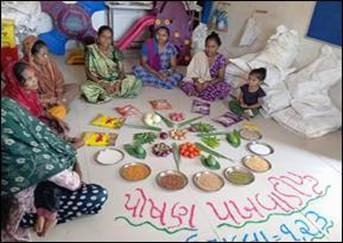
Localized, Diverse Menus: States and Union Territories now hold full flexibility to design recipes incorporating locally available cereals, millets, pulses, nuts, and indigenous vegetables.
-
Reduction of Unhealthy Ingredients: Targeted educational campaigns aim to curb household consumption of excessive edible oils, refined sugars, and salt.
“Providing adequate calories is only half the battle against childhood malnutrition,” notes Dr. Sunita Rao, a public health nutritionist and senior research fellow not affiliated with the Ministry. “A child can consume enough bulk food to feel full, yet remain severely stunted or anemic if their diet lacks quality protein and essential micronutrients. Adapting nutrition to local palates using indigenous millets and pulses dramatically improves both nutrient absorption and long-term compliance.”
Infrastructure Upgrades and Digital Tracking
To support the updated nutritional guidelines, the Ministry is upgrading 200,000 Anganwadi Centers (AWCs) located in government buildings into “Saksham Anganwadis.” These modernized centers feature improved infrastructure, including:
-
Clean Drinking Water: Advanced water filtration systems.
-
Nutritional Literacy Tools: Interactive LED screens and Building as Learning Aid (BaLA) educational paintings.
-
Poshan Vatikas: Local nutrition gardens planted directly at AWCs to supply seasonal fruits and vegetables.
-
Standardized Growth Monitoring Devices (GMDs): Infantometers, stadiometers, and specialized mother-and-child weighing scales to track growth accurately.
Parallel to physical upgrades, the program leverages the Poshan Tracker, a mobile application used by frontline Anganwadi Workers (AWWs) equipped with smartphones. The tool dynamically monitors growth indicators—such as stunting, wasting, and underweight prevalence—among children under five.
To streamline last-mile delivery, the application incorporates a Facial Recognition System (FRS) alongside Aadhaar-based authentication. This digital layer helps ensure that Take-Home Rations reach their intended recipients while reducing leakage and duplicate records.
Community-Led Behavioral Change
Addressing deep-rooted nutritional deficits requires shifting daily domestic practices. Under Mission Poshan 2.0, community mobilization forms a core pillar.
Through nationwide awareness drives known as Jan Andolans—celebrated during Poshan Maah (September) and Poshan Pakhwada (March–April)—more than 1.5 billion sensitization activities have been carried out since 2018. Furthermore, Anganwadi workers regularly conduct localized Community-Based Events (CBEs), with approximately 105 million events logged on the Poshan Tracker between April 2022 and June 2026.
These events focus on critical health behaviors, including exclusive breastfeeding for the first six months, age-appropriate complementary feeding practices, and structured home visits for pregnant women and young mothers.
Evaluating the Impact: Progress and Challenges
Third-party evaluations indicate positive structural momentum for India’s child health interventions:
| Evaluation Body | Year | Key Findings & Indicators |
| NITI Aayog | 2020 | Confirmed high relevance and foundational efficacy of Poshan Abhiyaan in tackling malnutrition. |
| World Bank Survey | 2021 | Surveyed 11 high-burden states (including Andhra Pradesh); found program messaging reached >80% of women, with 81% practicing exclusive breastfeeding for the first 6 months. |
| DMEO, NITI Aayog | 2025 | Assessed 12 States and 1 UT; documented strong uptake of supplementary nutrition, growth monitoring, and counselling services driving sustained behavioral change. |
Operational Limitations and Nuances
While institutional evaluations highlight structural progress, independent health policy analysts note ongoing operational challenges:
-
Supply Chain Consistency: Ensuring a steady supply of fresh, perishable micronutrient sources (like vegetables from Poshan Vatikas) across remote rural terrains remains a logistical hurdle.
-
Digital Divide & Literacy: Reliance on app-based tracking requires continuous data connectivity and technical troubleshooting support for frontline Anganwadi workers in low-connectivity zones.
-
Socio-Economic Factors: Supplementary nutrition delivered at centers often competes with underlying household poverty, food insecurity, and sanitation quality, which also heavily influence child growth outcomes.
What This Means for Public Health
For families and caregivers, the updated guidelines mark a transition from passive food distribution to active, localized healthcare support. By incorporating traditional foods and millets into daily meals, families receive culturally familiar, nutrient-dense diets that are easier to sustain at home.
Healthcare providers view the convergence of early childhood care, regular growth monitoring, and fortified supplementary nutrition as a vital step toward reducing severe acute malnutrition morbidity, improving child survival rates, and boosting cognitive outcomes nationwide.
Medical Disclaimer
This article is for informational purposes only and should not be considered medical advice. Always consult with qualified healthcare professionals before making any health-related decisions or changes to your treatment plan. The information presented here is based on current research and expert opinions, which may evolve as new evidence emerges.
References
-
Government Statements & Official Release:
-
Ministry of Women and Child Development, Government of India. Press Information Bureau (PIB) Releases on Mission Saksham Anganwadi and Poshan 2.0. Published August 7, 2026.
-


Happy
0 %

Sad
0 %

Excited
0 %

Sleepy
0 %

Angry
0 %

Surprise
0 %