 0
0
 0
0
Read Time:4 Minute, 50 Second
NEW DELHI — In a major effort to combat child malnutrition and streamline public health delivery across India, the Ministry of Women and Child Development (MoWCD) has expanded its flagship digital architecture, the Poshan Tracker. Grounded in Information and Communication Technology (ICT), the application now provides near-real-time monitoring of critical developmental outcomes for millions of children under five, while integrating new supervisory mechanisms to ensure data integrity.
The latest developments were formally presented in the Rajya Sabha on August 5, 2026, by Minister of State for Women and Child Development, Smt. Savitri Thakur. The updates highlight a national shift toward data-driven maternal and child health interventions under Mission Saksham Anganwadi and Poshan 2.0.
Moving Beyond Paper: The Real-Time Advantage
Malnutrition during the early years of life—specifically the first 1,000 days—can inflict permanent physical and cognitive damage on a developing child. Historically, public health initiatives across developing nations have struggled with delayed, paper-based reporting systems, making rapid clinical or nutritional interventions difficult.
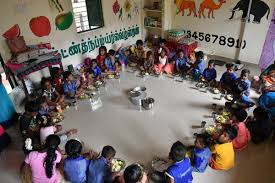
The Poshan Tracker addresses this lag by digitizing daily operations across the nation’s network of Anganwadi Centres (AWCs). Through dedicated smartphones provided to frontline Anganwadi Workers (AWWs), the platform records real-time updates on key health and operational metrics:
-
Daily AWC Operations & Attendance: Verification of centre opening times and child participation.
-
Early Childhood Care and Education (ECCE): Tracking learning activities for physical and social development.
-
Nutritional Delivery: Monitoring the distribution of Hot Cooked Meals (HCM) and Take-Home Rations (THR).
-
Anthropometric Growth Monitoring: Regular recording of length, height, and weight to screen for early signs of growth faltering.
+-------------------------------------------------------------------------+
|                  CORE POSHAN TRACKER MONITORING METRICS                 |
+------------------------------------+------------------------------------+
| Anthropometric Indicators          | Service Delivery Operations        |
+------------------------------------+------------------------------------+
| • Stunting (Height-for-Age)        | • Daily AWC Opening & Attendance   |
| • Wasting (Weight-for-Height)      | • Hot Cooked Meals (HCM)           |
| • Underweight (Weight-for-Age)     | • Take-Home Rations (THR)          |
| • Growth Velocity Tracking         | • ECCE Activity Delivery           |
+------------------------------------+------------------------------------+
Precision Diagnostics: Growth Monitoring Devices at Scale
Evaluating a child’s nutritional status requires standardized, accurate measurement tools. Under Mission Poshan 2.0, the Ministry has provisioned every Anganwadi Centre with a standard kit of four basic Growth Monitoring Devices (GMDs):
-
Infantometers for measuring length in infants.
-
Stadiometers for standing height in older toddlers.
-
Infant Weighing Scales for precise infant weight checks.
-
Mother & Child Weighing Scales for combined dynamic measurements.
Funded on a cost-sharing basis between the Central Government and States/UTs, these tools allow frontline workers to calculate clinical standard indicators—such as stunting (low height-for-age, indicating chronic malnutrition), wasting (low weight-for-height, indicating acute malnutrition), and underweight status.
When an Anganwadi worker logs these measurements into the app, algorithms immediately flag children falling below World Health Organization (WHO) growth standard cut-offs. This automation allows local healthcare teams to arrange therapeutic food supplements or medical referrals before mild wasting progresses to severe acute malnutrition (SAM).
Data Integrity and the “Supportive Supervision” Framework
A persistent challenge in large-scale public health databases is data accuracy. To tackle human error and reporting lag, the MoWCD introduced the Supportive Supervision Module directly into the Poshan Tracker platform.
Designed for administrators across hierarchy levels—Supervisors, Child Development Project Officers (CDPOs), and District Programme Officers (DPOs)—this module transforms traditional auditing into active, digital mentoring. Officers can cross-verify field data during physical visits, validate measurement logs, and provide on-the-spot technical assistance to frontline workers.
“In large-scale public health programs, software alone cannot fix systemic inaccuracies without structured human oversight,” notes Dr. Sunita Rao, a Senior Public Health Specialist and Epidemiologist based in New Delhi, who is not affiliated with the project. “By linking field monitoring with executive oversight in a unified application, the platform reduces reporting artifacts. This creates a trustworthy foundation for targeted micro-planning.”
Infrastructure Upgrades: Saksham Anganwadis
Digital tools require supporting physical infrastructure. Over the last five years, 1,29,415 Anganwadi Centres have been upgraded to “Saksham Anganwadis.” These modernized facilities feature improved sanitation, clean drinking water access, smart learning equipment, and reliable power connections—creating an environment capable of sustaining both nutritional programming and digital data entry.
Public transparency remains an integral component of the ecosystem. Aggregate figures tracking national beneficiary coverage, distribution metrics, and growth monitoring rates are updated continuously on the application’s public dashboard.
               MISSION POSHAN 2.0 IMPLEMENTATION PIPELINE

   [ Frontline AWW ] --------> [ Growth Measurement ]
  (Smartphones & GMDs)          (Height, Weight, Age)
           |                              |
           v                              v
   [ Poshan Tracker App ] ----> [ Supportive Supervision ]
   (Real-Time Analytics)        (Supervisors, CDPOs, DPOs)
           |                              |
           +--------------+---------------+
                          |
                          v
         [ Dynamic Public Health Response ]
       (Targeted HCM/THR & Medical Referrals)
Challenges, Limitations, and Road Ahead
While the platform represents progress in digital health architecture, independent health policy analysts emphasize that technology is an enabler, not a standalone cure for structural malnourishment.
Potential challenges include:
-
Connectivity and Hardware Constraints: In remote rural or tribal pockets, sporadic cellular connectivity and hardware wear-and-tear can interrupt daily uploads.
-
Measurement Error: Even with standardized GMDs, proper technique is essential. Ongoing hands-on training for Anganwadi workers is crucial to avoid inaccurate measurements.
-
Broader Determinants: Malnutrition is deeply intertwined with maternal anemia, sanitation access, clean drinking water, and household socioeconomic stability. Real-time data helps identify vulnerable children, but resolving underlying causes requires sustained inter-departmental action.
Nevertheless, transition to near-real-time digital surveillance marks a shift away from reactive policy toward active, preventive health management for India’s youngest populations.
Medical Disclaimer
This article is for informational purposes only and should not be considered medical advice. Always consult with qualified healthcare professionals before making any health-related decisions or changes to your treatment plan. The information presented here is based on current research and expert opinions, which may evolve as new evidence emerges.
References
-
Official Government Source: Press Information Bureau (PIB) Delhi. Update on Poshan Tracker & Mission Poshan 2.0. Ministry of Women and Child Development, Published August 5, 2026.


Happy
0 %

Sad
0 %

Excited
0 %

Sleepy
0 %

Angry
0 %

Surprise
0 %