 0
0
 0
0
Published: April 27, 2026
DHANBAD, INDIA — Researchers at the Indian Institute of Technology (ISM) Dhanbad have unveiled a prototype medical device that integrates artificial intelligence (AI) and virtual reality (VR) to accelerate the diagnosis of heart conditions. Announced in late April 2026, the system, dubbed EchoPulse, seeks to address the critical bottleneck in cardiovascular care by providing clinicians with a 3D, interactive look at a patient’s heart function. While the development marks a significant step in indigenous medical technology, experts emphasize that rigorous clinical validation remains the necessary hurdle before the device can be used in routine patient care.
The Innovation: Moving Beyond the ‘Black Box’
Developed by Professor A.C.S. Rao and his team, EchoPulse is designed to automate the analysis of traditional heart scans. By utilizing advanced algorithms, the system estimates key metrics such as ejection fraction—a primary measure of how much blood the left ventricle pumps out with each contraction—and identifies structural abnormalities.
Unlike many contemporary AI tools that require massive, pre-labeled datasets to “learn,” EchoPulse reportedly employs a more efficient data-processing model. A standout feature of the device is its commitment to “Explainable AI” (XAI). In the medical field, AI is often criticized for being a “black box” where a result is given without a clear rationale. EchoPulse is intended to provide clinicians with the “why” behind its findings, potentially increasing trust and diagnostic accuracy.
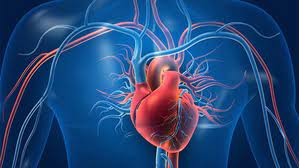
The virtual reality component allows doctors to step inside a 3D reconstruction of the patient’s heart. By visualizing the organ’s motion and structure in a spatial environment, clinicians may be able to spot complex valve issues or wall-motion abnormalities that are sometimes difficult to discern on flat, 2D monitors.
The Public Health Imperative
The timing of this innovation is critical. Cardiovascular diseases (CVDs) remain the leading cause of mortality in India. According to the World Health Organization (WHO), CVDs accounted for 27% of all deaths in India as of 2016, with a staggering 45% of deaths occurring in the productive 40–69 age group.
Furthermore, the burden of heart failure is rising. Data from the National Heart Failure Registry of India (2025) indicated a one-year mortality rate of 22.1% among heart failure patients, highlighting a desperate need for tools that can identify cardiac decline early.
“In a country where the patient-to-cardiologist ratio is heavily skewed, any tool that can provide a ‘second set of eyes’ or speed up the initial screening process is a massive win for public health,” says one independent public health analyst.
Expert Perspectives: Promise vs. Performance
While the medical community is optimistic about AI’s role in cardiology, seasoned specialists urge a balanced view. The American College of Cardiology (ACC) has noted that AI can significantly improve workflow—from image acquisition to disease flagging—but emphasizes that these tools are assistants, not replacements.
There is also a growing debate regarding “explainability.” While EchoPulse aims to show its work, a January 2026 study published in PubMed regarding AI-assisted myocardial infarction diagnosis found that visual explanations, such as heat maps, did not always improve a doctor’s performance. In some instances, they even led to “automation bias,” where clinicians were distracted by the AI’s highlights, slightly reducing overall accuracy.
“We must be careful,” cautions a cardiac imaging specialist not involved in the IIT Dhanbad project. “A 3D VR image looks spectacular in a presentation, but we need to prove that seeing the heart in VR actually changes the treatment plan or improves the patient’s outcome compared to high-quality 2D echocardiography.”
Current Status and Limitations
Despite the excitement, EchoPulse is currently in the research-and-development phase. The project received approximately ₹47 lakh in funding from the Anusandhan National Research Foundation, signaling government support for its potential. However, several questions remain:
-
Peer-Reviewed Data: As of April 2026, comprehensive data on the device’s sensitivity (ability to correctly identify those with disease) and specificity (ability to correctly identify those without disease) has not yet been published in major journals.
-
Generalizability: AI models often perform well in the lab but struggle when faced with “noisy” images from different brands of ultrasound machines or patients with diverse body types.
-
Clinical Utility: It remains to be seen if the VR component adds measurable value in a fast-paced emergency room or if it serves primarily as an educational or surgical planning tool.
What This Means for Patients
For the general public, the development of EchoPulse is a sign of a more “tech-forward” healthcare future. However, it does not change current medical protocols.
Practical Takeaways:
-
AI is a Support Tool: If you undergo a heart scan in the future involving AI, remember it is designed to help your doctor be more efficient, not to replace their clinical judgment.
-
Symptoms Matter: Technology headlines should not replace medical consultation. If you experience chest pain, shortness of breath, palpitations, or unexplained fatigue, seek immediate care at a hospital.
-
Validation is Key: A “breakthrough” in a lab is only a “treatment” after it passes rigorous clinical trials.
Bottom Line
EchoPulse represents the vanguard of Indian medical innovation, blending AI and VR to tackle a major killer. While the technology is promising and addresses the need for interpretable AI, its ultimate success will depend on clinical trials that prove it can save lives in the real world. For now, it is a significant “watch this space” development in the fight against heart disease.
References
-
PTI. “IIT prof develops AI-VR device for faster heart disease diagnosis.” April 24, 2026.
Medical Disclaimer: This article is for informational purposes only and should not be considered medical advice. Always consult with qualified healthcare professionals before making any health-related decisions or changes to your treatment plan. The information presented here is based on current research and expert opinions, which may evolve as new evidence emerges.