 0
0
 0
0
ATLANTA — A multi-state outbreak of cyclosporiasis linked to contaminated iceberg lettuce has infected thousands across the United States, prompting a recall and urgent public health warnings. The Centers for Disease Control and Prevention (CDC) confirmed that as of July 2026, domestically acquired, laboratory-confirmed cases reached 4,173 since tracking began on May 1. Investigators are actively monitoring more than 7,400 additional reported gastrointestinal illnesses to determine if they stem from the same parasitic strain.
Federal tracebacks from the CDC and the U.S. Food and Drug Administration (FDA) have pinpointed a major cluster to iceberg lettuce supplied by Taylor Farms de Mexico, used in fast-food outlets including Taco Bell across several states.
Anatomy of the Outbreak: What Contaminated the Supply Chain?
Epidemiologic and supply chain data highlight a severe burden in a specific five-state regional cluster. Within this group alone, 1,644 individuals infected with Cyclospora reported eating at Taco Bell locations. The outbreak has resulted in at least 94 hospitalizations, though no fatalities have been reported.
In response to the growing epidemiological link, Taylor Farms de Mexico initiated a voluntary recall on July 17, pulling all iceberg lettuce sourced from central Mexico from commercial distribution networks.
State authorities noted early warning signs prior to federal coordination. In Michigan, public health officials recorded a steep rise in gastrointestinal infections in early July, identifying salad greens as a primary vector before nationwide tracebacks pointed to central Mexican processing fields.
“When tracking foodborne outbreaks across national lines, establishing direct causal linkage requires comprehensive sampling,” noted a public health epidemiologist not affiliated with the CDC investigation. “While traceback methodology isolates supply hubs, complex agricultural networks mean contamination points can occur anywhere from irrigation streams to washing facilities.”
The international scope has drawn scrutiny. Mexico’s Ministry of Health stated that preliminary testing within their jurisdiction showed no conclusive evidence that domestic lettuce crops caused the U.S. outbreak. Public health authorities emphasize that joint investigations across international supply lines often involve evolving evidence as testing continues.
What Is Cyclosporiasis? Understanding the Parasite
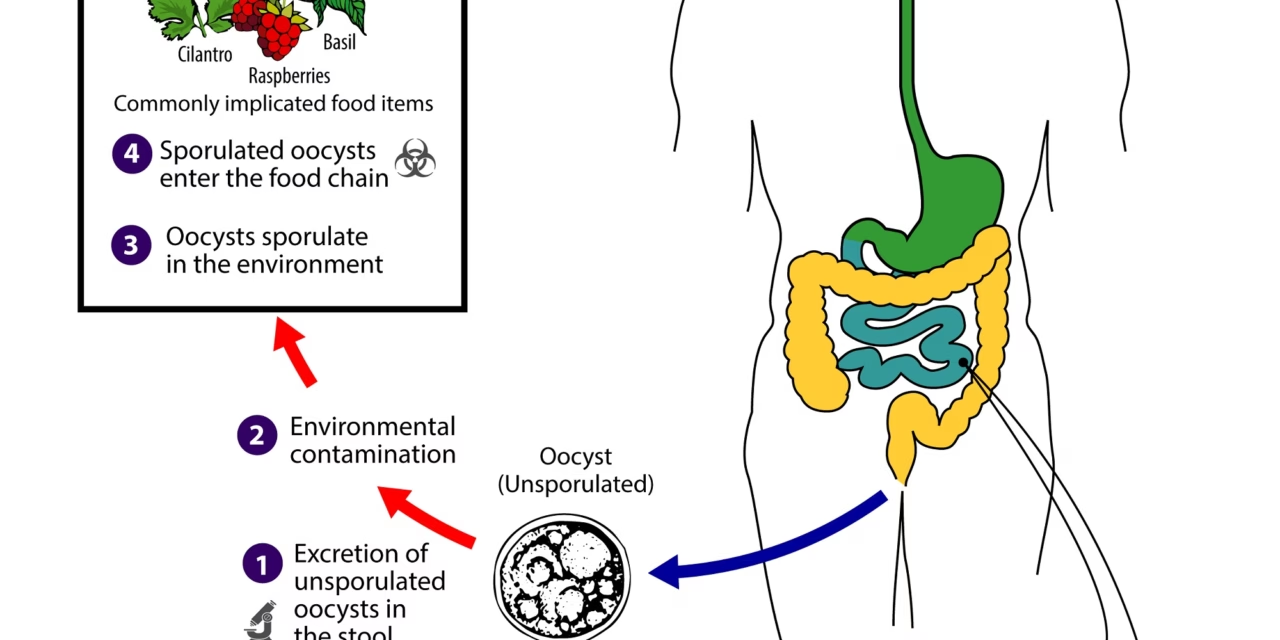
Cyclosporiasis is an intestinal illness caused by Cyclospora cayetanensis, a microscopic single-celled parasite. Infection occurs when a person ingests food or water contaminated with microscopic amounts of human fecal matter containing the parasite.
Unlike common bacterial infections that develop rapidly, Cyclospora requires days or weeks outside the human host to become infectious, meaning direct person-to-person transmission is exceptionally rare.
       [ Contaminated Water / Soil ]
                     │
                     ▼
       [ Produce (e.g., Raw Lettuce) ]
                     │
                     ▼
       [ Ingestion by Host ]
                     │
                     ▼
    [ Incubation Period: ~1 to 2 Weeks ]
                     │
                     ▼
  [ Symptoms: Severe Watery Diarrhea & Fatigue ]
Key Clinical Symptoms
-
Primary Indicator: Severe, watery diarrhea lasting several days to weeks
-
Systemic Symptoms: Profound fatigue, abdominal cramping, bloating, and gas
-
Metabolic Impact: Nausea, persistent loss of appetite, involuntary weight loss, and low-grade fever
While immunocompetent individuals may eventually clear the parasite without intervention, the infection frequently follows a relapsing course—improving for a few days before symptoms return. For older adults, infants, and immunocompromised individuals, prolonged diarrhea poses a risk of severe dehydration and electrolyte imbalances.
According to CDC clinical guidance, the primary treatment of choice is a targeted antibiotic regimen of trimethoprim-sulfamethoxazole (TMP-SMX). Standard over-the-counter anti-diarrheal medications or broad-spectrum antibiotics often fail to clear the parasitic cyst.
The Raw Produce Vulnerability
Leafy greens such as iceberg lettuce, romaine, cilantro, and spinach remain persistent vectors for foodborne parasitic outbreaks. Because these greens are primarily consumed raw, they bypass heat treatments that eliminate pathogens.
| Mitigation Method | Impact on Cyclospora Parasites |
| Standard Cold-Water Rinse | Reduces surface soil; cannot reliably dislodge microscopic parasitic oocysts. |
| Commercial Produce Washes | Minimal effectiveness against tough, outer oocyst walls. |
| Heat Cooking ($\ge 158^\circ\text{F}$ / $70^\circ\text{C}$) | Completely destroys the parasite and eliminates risk of infection. |
Because consumers rarely cook iceberg lettuce, public health strategy relies on rigorous supply-chain monitoring, early detection, and public recall notices.
Guidance for Consumers and Food Vendors
Federal health authorities advise the public, restaurant managers, and distributors to follow these precautionary protocols until the outbreak is contained:
-
Check Produce Supplies: Immediately discard or return any recalled iceberg lettuce originating from Taylor Farms de Mexico.
-
Inquire at Food Outlets: Consumers with heightened risk factors should ask food establishments about the origin of their raw salad greens if sourcing is unclear.
-
Practice Food Hygiene: Thoroughly wash all fresh fruits and vegetables under cold running water. While washing does not kill Cyclospora, it reduces overall microbial load.
-
Seek Early Evaluation: Individuals experiencing prolonged diarrhea, gastrointestinal distress, or dehydration after consuming raw produce should consult a healthcare provider promptly and request specific stool testing for parasites.
Health agencies will continue updating advisories as traceback analysis advances across affected distribution networks.
Reference Section
-
Reuters Health News. “US cyclosporiasis cases top 4,100 as CDC investigates lettuce-linked outbreak.” Published July 21, 2026.
Medical Disclaimer: This article is for informational purposes only and should not be considered medical advice. Always consult with qualified healthcare professionals before making any health-related decisions or changes to your treatment plan. The information presented here is based on current research and expert opinions, which may evolve as new evidence emerges.