 0
0
 0
0
NEW DELHI — The postponement of the highly anticipated Fourth India-Africa Forum Summit has cast a stark spotlight on a deepening global health crisis, while simultaneously cementing India’s role as an indispensable healthcare ally to the African continent. Originally scheduled to host nearly 54 African heads of state and government in New Delhi late last month, the historic summit was delayed following joint consultations between India and the African Union. The reason: a rapidly escalating outbreak of the rare Bundibugyo Ebola virus strain in the Democratic Republic of Congo (DRC) and Uganda. Rather than pausing bilateral relations, the delay has triggered an aggressive, multimillion-dollar emergency medical and financial deployment from India to the heart of the outbreak zone.
The Outbreak: A Growing Public Health Emergency
The crisis reached a critical threshold on May 17, 2026, when the World Health Organization (WHO) declared the Ebola virus disease outbreak a Public Health Emergency of International Concern (PHEIC)—the highest level of global health alert. The declaration followed initial reports of over 80 fatalities in the DRC’s Ituri province.
Since then, the epidemiological trajectory has grown significantly more severe. According to data from the WHO and the DRC Ministry of Public Health, as of June 17, 2026, the outbreak has surged to 896 confirmed cases and 232 deaths spanning 31 health zones in the DRC. Neighboring Uganda has confirmed 19 cases and two deaths, with transmission directly linked to cross-border travel from the DRC.
While the current case fatality rate hovers around 25.9%, historical data from past Bundibugyo outbreaks indicates that mortality can climb between 30% and 50%.
Bundibugyo Ebola Outbreak Status (as of June 17, 2026)
┌─────────────────────────────────┬─────────────────────────────────┐
│ Democratic Republic of Congo    │ 896 Confirmed Cases | 232 Deaths│
├─────────────────────────────────┼─────────────────────────────────┤
│ Uganda                          │ 19 Confirmed Cases  | 2 Deaths  │
├─────────────────────────────────┼─────────────────────────────────┤
│ Current Case Fatality Rate      │ 25.9%                           │
└─────────────────────────────────┴─────────────────────────────────┘
India’s Swift Response: Medical Aid and Financial Commitment
India’s humanitarian machinery mobilized immediately following the WHO’s emergency declaration. On May 24, 2026, the Indian government dispatched its first tranche of emergency medical assistance directly to the Africa Centres for Disease Control and Prevention (Africa CDC), focusing heavily on personal protective equipment (PPE) and specialized safety kits.
A second massive consignment weighing 43 tonnes arrived in Kampala, Uganda, on June 2, 2026. This shipment expanded the relief matrix to include:
-
Infection prevention supplies and sample transport kits
-
Advanced diagnostic and patient monitoring equipment
-
Essential pharmaceuticals and targeted nutritional supplements
Furthering this commitment, Union Health Minister JP Nadda announced a USD $10 million financial pledge during the African Union’s virtual summit on June 16, 2026. Minister Nadda confirmed that a cumulative 45 tonnes of medical supplies had been successfully delivered, promising continued capacity-building and technological support to bolster Africa’s long-term health security. External Affairs Minister S. Jaishankar reinforced the initiative publicly, sharing logistical updates of the cargo and reaffirming India’s solidarity with African nations during this public health emergency.
Expert Commentary: India’s Growing Global Health Leadership
International analysts note that the postponement of the diplomatic summit has paradoxically amplified India’s status as a proactive leader in global health. By shifting focus from diplomacy to direct crisis intervention, India has targeted the most vulnerable links in the outbreak response.
A primary vulnerability is the extreme risk faced by local clinical teams. Dr. Marie Roseline Belizaire, WHO Emergency Director, revealed the stark toll the virus is taking on the front lines:
“Seventy-five healthcare workers have contracted Ebola since the outbreak was officially declared on May 15, and 17 of them have died.”
This high infection rate among medical staff underscores why India’s prioritization of specialized safety kits and protective gear is so critical to sustaining the containment workforce.
However, the operational environment presents unprecedented friction. Dr. Jean Kaseya, Director General of Africa CDC, emphasized the compound nature of the crisis:
“This outbreak is occurring in one of the continent’s most complex operational environments, marked by insecurity, population mobility, fragile health systems, and the limited availability of medical countermeasures for the Bundibugyo strain.”
Critical Challenge: No Vaccines or Therapeutics Available
What makes this outbreak uniquely perilous—and distinguishes it from recent high-profile Zaire strain Ebola epidemics—is the total absence of specialized biomedical tools.
“This epidemic is caused by the Bundibugyo virus, a species of Ebola virus for which there are no approved vaccines or therapeutics,” stated WHO Director-General Dr. Tedros Adhanom Ghebreyesus during an emergency committee briefing.
Without a vaccine to establish ring-immunization or monoclonal antibodies to treat infected patients, clinical management relies entirely on early supportive care, such as aggressive intravenous rehydration and symptom-specific medication. A recent analysis published in the journal Nature emphasized that because of this therapeutic deficit, “public health fundamentals matter more than border closures,” highlighting that rigorous contact tracing, isolation, and community education are the only viable ways to break the chain of transmission.
Summit Delay and Domestic Preparedness
The decision to delay the Fourth India-Africa Forum Summit, which was to be the first such gathering in over a decade, underscores that health security currently supersedes routine geopolitics. The Ministry of External Affairs and the African Union concurred that a delay was necessary to allow African leaders to remain in their respective capitals to manage the crisis.
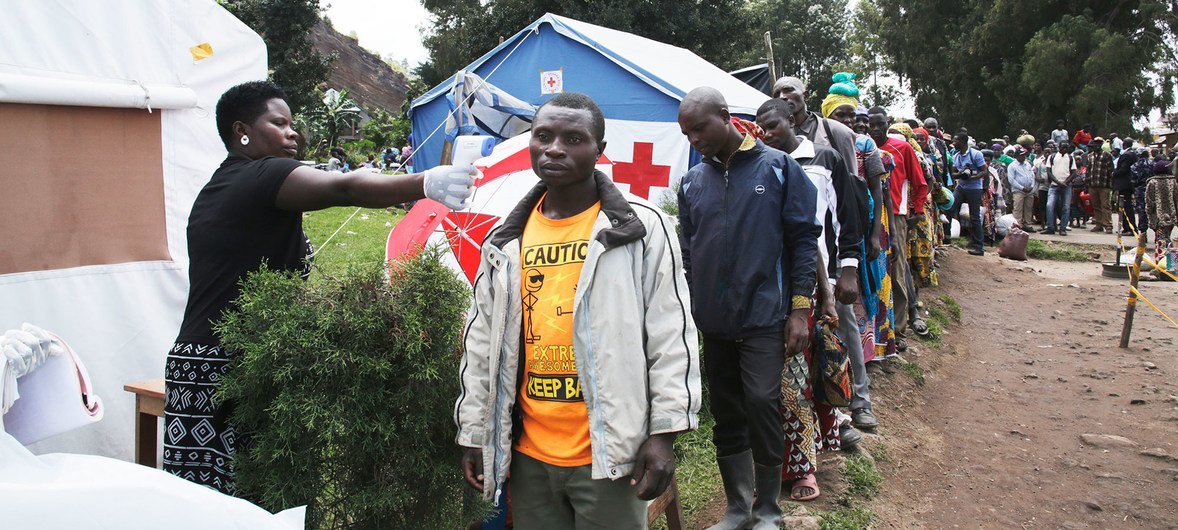
Concurrently, India has fortified its own domestic defenses. Although no cases of the Bundibugyo strain have been detected outside the affected African regions, the Government of India has instituted rigid precautionary protocols:
-
Point-of-Entry Screening: Intensified health screening protocols have been established at all international airports and maritime ports.
-
State-Level SOPs: The central government has distributed comprehensive Standard Operating Procedures detailing screening, strict quarantine mechanisms, and laboratory testing workflows to all states.
-
Travel Advisories: A formal advisory remains in effect urging Indian citizens to avoid non-essential travel to the DRC, Uganda, and South Sudan.
-
Clinical Readiness: Strict hospital infection control guidelines were issued to prepare isolation facilities and prevent potential nosocomial (hospital-acquired) transmission.
Public Health Implications & Limitations
The path to containment faces steep systemic hurdles. Large swaths of the outbreak’s epicenter in eastern DRC are active conflict zones, some controlled by rebel groups like the M23 militia. This geopolitical instability severely limits humanitarian access, disrupts contact tracing, and leaves massive displacement camps—characterized by poor sanitation—highly vulnerable to explosive viral spread. Furthermore, international aid cuts and historically underfunded local health systems mean that the true magnitude of the epidemic remains highly uncertain.
| Risk Factor | Public Health Impact |
| Active Conflict Zones | Impedes humanitarian access; limits tracing in rebel-held territories. |
| High Population Mobility | Fuels cross-border transmission, as seen in recent Ugandan cases. |
| Therapeutic Deficit | Complete reliance on fundamental hygiene, PPE, and supportive care. |
| Data Uncertainty | Fragmented local infrastructure obscures the true scale of the epidemic. |
Despite these local challenges, the WHO currently assesses the public health risk as “high” at national and regional levels, but “low” at the global level. Crucially, the Africa CDC and the WHO are advising against international travel or trade restrictions, noting that exit screening at major transit hubs is sufficient and less economically damaging than blanket border closures.
What This Means for Readers
For the general public, health authorities emphasize that the immediate risk of contracting Bundibugyo Ebola remains extremely low, particularly outside of East and Central Africa.
For individuals planning international travel, it is highly recommended to defer non-essential trips to the DRC, Uganda, and South Sudan. Travelers returning from these regions should remain vigilant for any unexplained febrile illnesses (such as sudden high fever, severe muscle pain, weakness, or sore throat) and seek immediate medical attention, disclosing their full travel history to healthcare providers. For medical professionals within India, maintaining a high index of suspicion and adhering strictly to standard barrier nursing and infection control guidelines remain the absolute frontline defense against global infectious threats.
Medical Disclaimer
Medical Disclaimer: This article is for informational purposes only and should not be considered medical advice. Always consult with qualified healthcare professionals before making any health-related decisions or changes to your treatment plan. The information presented here is based on current research and expert opinions, which may evolve as new evidence emerges.
References
- https://ommcomnews.com/india-news/india-emerges-as-crucial-partner-in-africas-ebola-response-after-summit-delay-report/