 0
0
 0
0
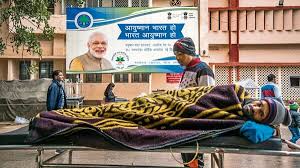
NEW DELHI — In a historic development for India’s public healthcare infrastructure, the Government of West Bengal is officially set to sign a Memorandum of Understanding (MoU) today to implement the Ayushman Bharat Pradhan Mantri Jan Arogya Yojana (AB PM-JAY). This landmark agreement makes West Bengal the 36th and final state/union territory to adopt the world’s largest publicly funded health assurance initiative, achieving complete geographic integration of the flagship national program.
The official signing ceremony, held at Vigyan Bhawan in New Delhi, is presided over by Union Minister for Health and Family Welfare, Shri J.P. Nadda, alongside the Chief Minister of West Bengal, Shri Suvendu Adhikari. The event is attended by key health administrators, including Shri Pratap Rao Jadhav, Union Minister of State for Health and Family Welfare (Ministry of Ayush), Smt. Anupriya Patel, Union Minister of State for Health and Family Welfare, and Union Health Secretary Smt. Punya Salila Srivastava, signifying a major turning point in center-state healthcare cooperation.
Expanding the Safety Net: What PM-JAY Brings to West Bengal
The AB PM-JAY framework provides a comprehensive health cover of up to ₹5 lakh per family per year for secondary and tertiary care hospitalizations. Designed primarily to shield economically vulnerable households from the devastating financial impact of severe medical crises, the program covers all pre-existing conditions from day one of enrollment.
+-------------------------------------------------------------+
|               AB PM-JAY CORE BENEFIT STRUCTURE              |
+-------------------------------------------------------------+
|  Annual Coverage      :  ₹5 Lakh ($5,985 USD) per family    |
|  Care Level Provided  :  Secondary & Tertiary Hospitalization|
|  Medical Inclusions   :  Pre-existing illnesses, diagnostics,|
|                          surgeries, and post-care drugs     |
|  Operational Model    :  100% Cashless and Paperless        |
+-------------------------------------------------------------+
For the millions of eligible residents in West Bengal, this integration bridges a significant gap in healthcare access. Prior to this agreement, local beneficiaries relied on state-specific insurance models that lacked domestic portability. By aligning with the national matrix, West Bengal residents can now access treatment across a vast ecosystem of over 36,000 empanelled public and private hospitals across India.
Data Insights: The National Footprint
To contextualize the scope of the program West Bengal is entering, consider the latest cumulative data verified by the National Health Authority (NHA) as of mid-2026:
| Indicator | National Metrics (As of May/June 2026) |
| Total Verified Ayushman Cards | 43.98 Crore (~440 Million) |
| Authorized Hospital Admissions | 10.71 Crore (~107 Million) |
| Total Empanelled Hospitals | 36,218 (19,659 public / 16,559 private) |
| Total Healthcare Expenditure Incurred | Over ₹1.26 Lakh Crore |
| Out-of-Pocket Expenditure (OOPE) Shift | Reduced from ~62% down to 38% nationally |
According to independent health financing assessments by the World Health Organization (WHO), India’s historical out-of-pocket medical expenditure hovered at an alarming 67.78%, significantly higher than the global average of approximately 18.2%. The massive expansion of PM-JAY has been instrumental in systematically reducing this financial burden, converting catastrophic personal health costs into structured public funding.
Expert Perspectives on Public Health Impact
Public health professionals view West Bengal’s inclusion as an essential step toward achieving true universal health coverage (UHC) in the South Asian subcontinent.
“The true victory of this MoU is national portability,” explains Dr. Arisudan Dev, a New Delhi-based health policy analyst and community medicine specialist not involved in the negotiations. “A substantial percentage of West Bengal’s domestic labor force migrates to industrial hubs in western and southern India. Previously, if a migrant worker required advanced cardiac or oncological surgery in Mumbai or Bengaluru, their local state health cards were invalid. National integration fixes this fragmentation.”
Medical administrators also stress the impact on tertiary care delivery. The infusion of PM-JAY budgetary resources—supported by a centralized allocation that increased to ₹9,500 crore in the Union Budget—is expected to significantly upgrade West Bengal’s district-level medical colleges and public hospitals through standardized package rate reimbursements.
Balancing the Equation: Implementation Hurdles and Critical Viewpoints
While the policy development marks a major legislative milestone, structural health economists urge cautious optimism, pointing out systemic challenges that demand close monitoring during rollout:
-
Package Rate Disparities: Private hospital networks have routinely voiced concerns that PM-JAY reimbursement rates for complex clinical procedures (such as neurosurgery or advanced cardiothoracic interventions) fall below actual operational costs. Ensuring high-quality care without compromising private sector participation remains a delicate balancing act.
-
Infrastructure Stress: West Bengal’s public healthcare tiers already handle intense patient volumes. Integrating millions of new cardholders could exacerbate wait times for elective procedures unless public medical infrastructure is expanded concurrently.
-
Preventive vs. Curative Focus: Public health purists note that while insurance mitigating tertiary hospital costs is vital, it must not cannibalize resources meant for primary, preventive health interventions at the grassroots level.
Practical Implications for Citizens
For health-conscious citizens and eligible families in West Bengal, the immediate next steps involve transition awareness. The NHA utilizes an entitlement-based system based on socio-economic deprivation indices rather than a complex enrollment process.
Frontline health service professionals known as Ayushman Mitras will be deployed across institutional kiosks in empanelled hospitals. Armed with identity matching tools, these representatives assist families in authenticating their status via ration cards, biometric validation, or mobile numbers, ensuring that medical emergencies are addressed via paperless, cashless workflows without upfront out-of-pocket outlays.
References
https://www.pib.gov.in/PressReleasePage.aspx?PRID=2270056®=48&lang=1
Medical Disclaimer
Medical Disclaimer: This article is for informational purposes only and should not be considered medical advice. Always consult with qualified healthcare professionals before making any health-related decisions or changes to your treatment plan. The information presented here is based on current research and expert opinions, which may evolve as new evidence emerges.