 0
0
 0
0
India’s Health Ministry Launches Data-Driven Performance Framework to Prevent Next Pandemic
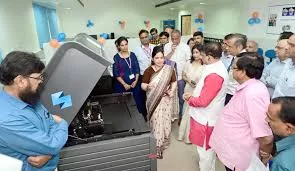
NEW DELHI — In a major step toward shielding the nation from future health crises, the Union Ministry of Health and Family Welfare concluded a high-level, two-day National Review Meeting on Disease Surveillance and Public Health Programmes today. The summit, held on July 16–17, 2026, gathered senior health officials from all 36 States and Union Territories (UTs) to revamp India’s front-line defenses against emerging viral threats, climate-driven ailments, and drug-resistant superbugs. The structural centerpiece of the meeting was the unanimous adoption of a strict Key Performance Indicator (KPI) framework, binding both central and state governments to rigorous monthly performance audits.
Public health experts view the development as a critical pivot away from retrospective firefighting and toward active, data-driven governance. By unifying all regions under standardized metrics, the ministry aims to patch operational vulnerabilities before they escalate into localized outbreaks or national emergencies.
A Uniform Shield Against Emerging Threats
The national convergence arrives at a time when global health agencies are warning of increased spillover risks from animals to humans. To address these vulnerabilities, the review meeting zeroed in on several specialized initiatives, most notably the National One Health Programme for Prevention and Control of Zoonoses. “One Health” is an integrated approach recognizing that human health is inextricably linked to the health of animals and our shared environment.
According to the World Health Organization (WHO), roughly 60% of existing infectious diseases in humans are zoonotic—meaning they originate in animals—and 75% of emerging infectious diseases trace their roots back to wildlife.
During the summit, delegates mapped out strategies covering a wide spectrum of public health priorities:
-
Vector-Borne and Zoonotic Emergencies: Accelerated implementation guidelines for the National Rabies Control Programme and initiatives targeting Leptospirosis.
-
Environmental and Climate Pressures: Targeted interventions under the National Programme on Climate Change and Human Health, alongside a dedicated framework for the National Bio-Monitoring Programme for Chemical Toxicants.
-
Neglected Tropical Conditions: Strategic overhauls for the National Programme for Prevention and Control of Snakebite Envenoming.
Enforcing Accountability Through the KPI Framework
Historically, India’s massive geographical and administrative diversity has created uneven patches in disease reporting. While some states maintain robust electronic health registries, others face delays due to infrastructural bottlenecks. The newly adopted KPI framework is designed to bridge this gap.
+-----------------------------------------------------------------------+
|                      DATA-DRIVEN GOVERNANCE CYCLE                     |
+-----------------------------------------------------------------------+
|                                                                       |
|   [1. Standardized KPIs] ---> Adopted uniformly across 36 States/UTs  |
|              ▲                                            │           |
|              │                                            ▼           |
|   [4. Corrective Action] <--- Triggered by monthly evaluations        |
|                                                                       |
+-----------------------------------------------------------------------+
Under the new agreement, states will undergo monthly performance reviews to track indicators such as outbreak response times, data upload consistency within the Integrated Disease Surveillance Programme (IDSP), and the enrollment rate of medical officers in the Field Epidemiology Training Programme (FETP).
Inaugurating the event, Dr. Rakesh Gupta, Additional Secretary (Public Health), emphasized that real-time, high-quality data collection is no longer optional. Senior health leadership, including Dr. Loveneesh G. Krishna, Director General of Health Services (DGHS), and Dr. Arti Bahl, Additional Director at the National Centre for Disease Control (NCDC), noted that these regular checks will rely heavily on ground insights provided by Supportive Supervision (SPOT) teams to identify and clear operational blockages quickly.
Tackling the “Silent Pandemic” of AMR
Beyond immediate viral threats, a major portion of the convention was dedicated to Antimicrobial Resistance (AMR)—often referred to by medical professionals as the “silent pandemic.” AMR occurs when bacteria, viruses, fungi, and parasites change over time and no longer respond to medicines, making common infections harder to treat.
“AMR is one of the top global public health threats facing humanity today,” says Dr. Anita Sharma, an independent infectious disease specialist not involved in the ministry’s meeting. “Without stringent surveillance of antibiotic use and prescription patterns across every state, standard medical procedures like surgeries and cancer therapies will become increasingly risky.”
Data from the Indian Council of Medical Research (ICMR) has consistently highlighted rising resistance trends in common pathogens. The review meeting sought to integrate AMR tracking deeper into local hospital networks, ensuring that regional laboratory findings feed directly into national surveillance databases to catch superbug mutations early.
Balancing Expectations: The Road Ahead
While the consensus across all 36 States and UTs marks a significant political and bureaucratic milestone, public health observers note that execution will determine its ultimate success.
Independent analysts point out that smaller states and rural districts frequently grapple with deep-seated challenges, including shortages of trained epidemiologists, erratic internet connectivity in remote primary health centers, and laboratory supply chain gaps. For these regions, meeting strict monthly KPIs will require sustained financial and technical support from the central government, rather than just administrative oversight.
Furthermore, shifting from a passive reporting structure to an active, preventative one requires deep behavioral changes among local health workers, who must balance data entry with active patient care.
What This Means for Public Health and Daily Life
For the general public, a more responsive and accountable disease surveillance system acts as an early warning shield. Faster tracking of contaminated water sources, localized viral clusters, or chemical spikes in the environment translates to quicker community alerts and timely medical interventions.
By building a resilient, interconnected network that treats human, animal, and environmental health as a unified whole, the updated surveillance framework aims to catch health hazards at their source—keeping localized outbreaks from turning into wider disruptions.
References
-
Official Press Release: Statement on the National Review Meeting on Disease Surveillance and Public Health Programmes, Press Information Bureau (PIB) Delhi, Ministry of Health and Family Welfare, Government of India. Published July 17, 2026.
- Medical Disclaimer: This article is for informational purposes only and should not be considered medical advice. Always consult with qualified healthcare professionals before making any health-related decisions or changes to your treatment plan. The information presented here is based on current research and expert opinions, which may evolve as new evidence emerges.