 0
0
 0
0
DELHI — A pioneering study conducted in the high-altitude Himalayan region reveals that even the most remote, pristine mountain environments are no longer untouched by human-caused air pollution. Researchers tracking atmospheric changes have identified a concerning shift from clean to polluted air in these sensitive ecosystems, presenting a potential long-term threat to public health.
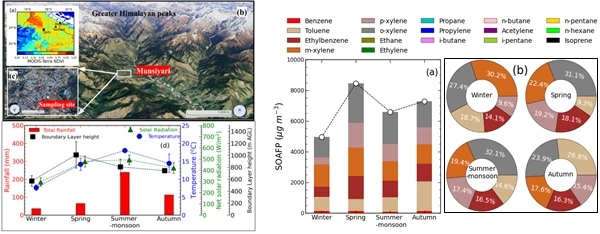
The year-long study, conducted between 2022 and 2023, focused on measuring non-methane hydrocarbons (NMHCs) in Munsyari, a popular high-altitude tourist destination in Uttarakhand. NMHCs are a group of highly reactive gases emitted primarily through human activities such as fuel combustion, vehicular exhaust, and construction. Once released, these compounds act as critical precursors in the formation of ground-level ozone and secondary organic aerosols—pollutants known to induce respiratory issues and alter regional climate dynamics.
Toxic footprints in the clouds
The research was spearheaded by scientists at the Aryabhatta Research Institute of Observational Sciences (ARIES), an autonomous institute under the Department of Science and Technology (DST), Government of India. By setting up continuous monitoring infrastructure at Munsyari, the team successfully captured a comprehensive, four-season dataset tracking how local tourism and regional air mass transport dictate mountain air quality.
The data revealed clear seasonal fluctuations, with NMHC concentrations dropping significantly during the winter and monsoon periods, only to spike sharply during the spring and autumn months. The researchers isolated three dominant sources fueling this trend:
-
Local construction activities and dust generation.
-
Vehicular emissions from a steady influx of tourist transport.
-
Domestic and commercial fuel use, specifically liquefied petroleum gas (LPG) and diesel generators.
Crucially, the study highlighted elevated concentrations of specific aromatic hydrocarbons, namely benzene and xylene. In the lower atmosphere (troposphere), these specific gases undergo chemical reactions that accelerate the formation of secondary pollutants like ozone. While ozone in the upper atmosphere shields the Earth from ultraviolet radiation, ground-level and near-surface ozone is a potent respiratory irritant that can exacerbate asthma, reduce lung function, and trigger chronic obstructive pulmonary disease (COPD).
Assessing the long-term health implications
To understand what these findings mean for the average person, a regional comparison provides vital geographic context. The levels of NMHCs recorded at Munsyari were found to be higher than those observed at Nainital, another high-altitude site, though they remain lower than the concentrations seen in densely populated urban hubs like Haldwani or Delhi.
[Urban Centers (Delhi / Haldwani)]
       ▲
       │ (Significantly Higher)
       ▼
[Munsyari (Tourist Hub Destination)]
       ▲
       │ (Measurably Higher)
       ▼
[Nainital (High-Altitude Reference)]
Public health experts stress that while the immediate, short-term health risks for tourists visiting Munsyari remain exceptionally low, the local population faces a stealthier, cumulative threat. The study warns that long-term, chronic exposure to atmospheric benzene in these zones poses a lifetime cancer risk that exceeds established international safety limits.
According to the World Health Organization (WHO), benzene is classified as a Group 1 human carcinogen (Alves et al., 2022). Chronic inhalation of even low levels of benzene over several decades is known to damage the hematopoietic (blood-forming) system, potentially leading to bone marrow depression, aplastic anemia, and hematological malignancies such as acute myeloid leukemia (AML) (Paul, 2024).
“The dangerous aspect of volatile organic compounds like benzene is that they evaporate rapidly and are easily inhaled,” explains Dr. Katrina Steiling, a pulmonary health specialist who reviewed the broader implications of environmental benzene studies (Steiling & Kathuria, 2024). “In high-altitude regions, where the air is thinner and individuals may naturally breathe at a higher minute ventilation rate during physical exertion, long-term exposure to toxic air masses can subtly compromise respiratory and cardiovascular health over generations.”
Balanced perspectives and study limitations
While the findings serve as a stark wake-up call, independent atmospheric scientists urge a balanced interpretation of the data. One key limitation of the study is its relatively tight geographic scope, focusing heavily on Munsyari during a single 12-month window. Weather patterns, seasonal forest fires across Northern India, and varying tourist volumes can cause baseline pollution numbers to fluctuate widely from year to year.
Furthermore, counterarguments exist regarding the absolute risk levels. Some environmental epidemiologists point out that the overall air quality in Munsyari remains significantly superior to almost any metropolitan area in South Asia. The cancer risk metrics used in environmental modeling assume continuous outdoor exposure over a 70-year lifetime, which may overestimate the real-world danger for individuals who spend a significant portion of their time indoors or experience seasonal variations in exposure.
A call for targeted conservation and daily action
The broader public health implication of the ARIES study is clear: waiting for a remote region to show visible signs of heavy smog before acting is a failed policy design. Human-caused pollution is successfully breaching some of the highest geographical barriers on the planet. To preserve both the delicate mountain ecosystem and the health of indigenous communities, the study highlights an urgent need for permanent air quality monitoring networks across the Himalayan belt, alongside targeted pollution mitigation strategies.
For health-conscious consumers, travelers, and residents, these findings offer practical takeaways for daily life:
-
Promote Clean Energy Transitions: Supporting the adoption of electric transport and cleaner cooking fuels in hilly terrains can dramatically cut down local NMHC spikes.
-
Be Mindful of Seasonal Risks: Travelers and vulnerable individuals (such as the elderly or those with preexisting respiratory conditions) should remain aware that spring and autumn bring higher chemical pollutant concentrations due to stagnant weather patterns and peak tourist traffic.
-
Encourage Regulated Tourism: Supporting local eco-tourism initiatives that mandate vehicle emission checks and restrict heavy diesel usage can actively protect sensitive holiday destinations.
As urban air sheds continue to saturate, saving the world’s remaining pristine sanctuaries will require strict localized regulations and continuous scientific vigilance.
Medical Disclaimer
This article is for informational purposes only and should not be considered medical advice. Always consult with qualified healthcare professionals before making any health-related decisions or changes to your treatment plan. The information presented here is based on current research and expert opinions, which may evolve as new evidence emerges.
References
-
Press Information Bureau (PIB) Delhi. (2026, June 17). Researchers tracking air quality risks in the Himalaya, identify shift from clean to polluted air. Department of Science and Technology, Government of India.