 0
0
 0
0
NEW DELHI — In a major development ahead of the International Day of Yoga on June 21, Union Minister Dr. Jitendra Singh released a seminal text outlining how a structured regimen of Yoga can reduce the risk of progressing to Type 2 diabetes by nearly 40 percent.
The book, titled “Yoga and Prevention of Type 2 Diabetes: An Integrated Approach to Wellness,” is edited by the eminent Indian endocrinologist Dr. S. V. Madhu. The publication synthesizes findings from the landmark Indian Prevention of Diabetes Study (IPDS) — a comprehensive, multi-center randomized controlled trial that provides robust scientific validation for integrating traditional lifestyle practices into modern preventive medicine.
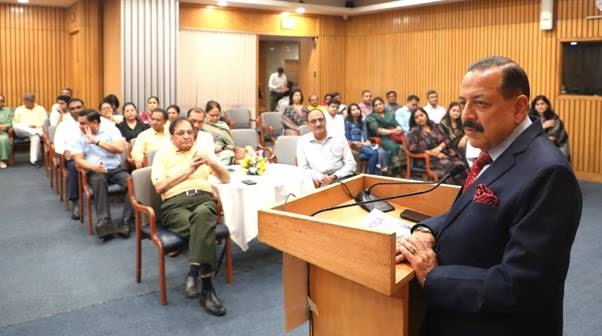
Speaking at the launch event in New Delhi on June 17, 2026, Dr. Singh emphasized that India is leading a global shift toward evidence-based holistic health.
“Growing scientific evidence validating the health benefits of Yoga reflects India’s unique ability to combine its ancient wisdom with modern scientific research,” Dr. Singh stated. “Yoga is no longer viewed merely as a traditional wellness practice but is increasingly emerging as an evidence-based preventive healthcare intervention with global relevance.”
The Science Behind the 40% Reduction
At the core of the new publication is the Indian Prevention of Diabetes Study (IPDS). The clinical trial represents the first long-term, randomized controlled investigation designed specifically to evaluate Yoga’s efficacy in halting the progression of diabetes.
Study Design and Scale
The IPDS was a multi-center study that followed approximately 1,000 high-risk individuals diagnosed with prediabetes — a condition where blood sugar levels are higher than normal but not yet high enough to be classified as Type 2 diabetes.
-
Duration: The trial monitored participants over a three-year period.
-
Intervention: The active group engaged in a structured, 40-minute daily Yoga protocol alongside standard lifestyle modifications (such as basic dietary counseling).
-
Control Group: The comparison group followed standard lifestyle modifications alone.
By the conclusion of the three years, researchers observed that the cohort practicing the structured Yoga routine experienced a near 40 percent relative risk reduction in progressing from prediabetes to full-onset Type 2 diabetes compared to the control group.
Biological Mechanisms
Endocrinologists note that Yoga functions as a multi-system intervention. The publication reviews several physiological and metabolic pathways through which these benefits are achieved:
-
Neuroendocrine Regulation: Mind-body practices lower chronic psychological stress, reducing the production of cortisol and catecholamines — hormones that raise blood glucose and promote insulin resistance.
-
Direct Autonomic Influence: Specific twisting and stretching postures (asanas) and regulated breathing exercises (pranayama) stimulate hepatic and pancreatic blood flow, potentially improving insulin sensitivity.
-
Inflammatory Reductions: Regular practice is associated with lower markers of systemic inflammation, such as C-reactive protein (CRP), which is known to impair insulin signaling.
Public Health Implications and Global Themes
The release of this clinical data aligns directly with the 2026 International Day of Yoga theme, “Yoga for Healthy Ageing.” As global lifespans extend, public health agencies face the compounding challenge of managing age-related chronic diseases.
Type 2 diabetes currently affects more than 500 million people worldwide, a figure projected by the World Health Organization (WHO) to climb significantly by 2045. The disease places a massive financial burden on public healthcare systems and significantly elevates the risks of cardiovascular disease, chronic kidney disease, and cognitive decline in older adults.
Dr. Singh noted that healthy aging must mean ensuring a life free from preventable chronic disability. “The future of healthcare lies not merely in treatment but in prevention,” he remarked, positioning evidence-based traditional practices as a highly scalable solution for low- and middle-income nations.
Independent Medical Context and Limitations
While the IPDS results are promising, independent medical experts urge a balanced and cautious interpretation of the findings.
Dr. Nikhil Tandon, Director of the All India Institute of Medical Sciences (AIIMS), New Delhi, who attended the launch as the Guest of Honour, emphasized the absolute necessity of maintaining rigid clinical standards. He noted that while rigorous research bridges the gap between tradition and modern medicine, Yoga must be viewed as an adjunct to, rather than a replacement for, established medical care.
Independent lifestyle medicine experts point out several nuances and potential limitations inherent to lifestyle clinical trials:
-
Adherence and Supervision: The 40% risk reduction was achieved under a highly structured, monitored environment. In real-world settings, maintaining a daily 40-minute regimen without professional supervision can be challenging for many individuals.
-
The Synergistic Effect: The study combined Yoga with standard dietary and lifestyle advice. It remains difficult to perfectly isolate the biological impact of the physical postures from the broader behavioral changes and stress reduction inherent to a wellness routine.
-
Genetic and Diversity Demographics: Because the IPDS was conducted within an Indian cohort — a population with a distinct genetic predisposition to early-onset Type 2 diabetes and high visceral adiposity (belly fat) — further international, multi-ethnic studies are required to confirm if identical risk reductions apply globally.
Practical Takeaways for Consumers
For individuals currently managing prediabetes or those with a strong family history of metabolic disease, this research offers a practical, low-cost tool to incorporate into their preventive health strategy.
Experts recommend that individuals looking to utilize Yoga for metabolic health focus on consistency rather than intensity. A balanced routine should incorporate:
-
Gentle Stretching (Asanas): Postures that engage large muscle groups to aid glucose uptake.
-
Controlled Breathing (Pranayama): Practices like Nadi Shodhana (alternate nostril breathing) to actively reduce stress markers.
-
Regular Consultation: Patients should never discontinue prescribed medications or alter existing medical treatments without discussing these changes directly with their primary care physician or endocrinologist.
As India continues its push toward the scientific validation of traditional systems, this text serves as a foundational resource for healthcare providers seeking to build comprehensive, integrated care models for chronic disease prevention.
Medical Disclaimer
This article is for informational purposes only and should not be considered medical advice. Always consult with qualified healthcare professionals before making any health-related decisions or changes to your treatment plan. The information presented here is based on current research and expert opinions, which may evolve as new evidence emerges.
References
-
Press Information Bureau (PIB) Delhi: Government of India official communique, Posted June 17, 2026.