 0
0
 0
0
NEW DELHI — In a major push to address the growing public health challenge of substance abuse, the Union Ministry for Social Justice and Empowerment launched the nationwide “Nasha Mukt Bharat Saptah” (Drug-Free India Week) on Wednesday. Running from June 17 to June 26, 2026, the campaign is timed to coincide with the global observance of the International Day Against Drug Abuse and Illicit Trafficking.
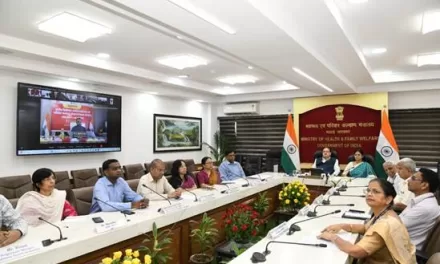
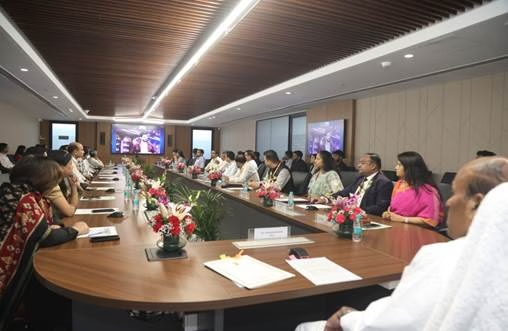
Presiding over a massive virtual inauguration that brought together hundreds of representatives from state governments, union territories, district administrations, and grassroots organizations, Union Minister Dr. Virendra Kumar called for a “whole-of-government and whole-of-society approach” to eliminate substance dependency. To drive this community-led effort, the government unveiled new digital tracking tools and public awareness media designed to transform the anti-drug campaign into a digitized, mass movement.
Digital Reinforcements for Grassroots Volunteers
The centerpiece of this year’s launch is the introduction of the Personal Dashboard for Nasha Mukti Mitras (Friends of the Drug-Free Campaign). These volunteers form the foundational infrastructure of India’s demand-reduction strategy, working directly within local communities to identify at-risk individuals and provide support.
The newly launched dashboard serves as a decentralized monitoring system. It allows volunteers to log their daily outreach activities, track local community engagement, and measure the direct impact of localized awareness drives. Alongside the dashboard, the Ministry released an official short film detailing the multi-pronged strategies utilized across various states, aiming to standardize outreach methods and reduce the stigma associated with seeking treatment.
“Achieving the vision of a developed India requires healthy, aware, and empowered citizens,” Dr. Virendra Kumar stated during his address. He emphasized that the technological upgrades are meant to empower the youth and streamline inter-ministerial convergence, ensuring that education, health, and law enforcement agencies operate in tandem.
The Public Health Landscape: Understanding the Numbers
The structured framework of the Nasha Mukt Bharat Abhiyaan (NMBA) arrives against a backdrop of complex substance use dynamics in India. Public health experts note that data-driven approaches are essential to addressing dependency effectively.
According to the comprehensive national survey conducted by the Ministry of Social Justice and Empowerment in collaboration with the National Drug Dependence Treatment Centre (NDDTC) at AIIMS, New Delhi, substance use spans multiple demographics:
-
Alcohol: Remains the most commonly used psychoactive substance in India, with over 14.6% of the population between ages 10 and 75 consuming it. Of these, a significant proportion require active medical intervention for dependent use.
-
Cannabis and Opioids: Follow alcohol as the next most prevalent substances, with synthetic opioids emerging as a growing concern among urban and semi-urban youth populations.
-
Vulnerable Demographics: The survey highlighted that early exposure among adolescents significantly increases the risk of developing severe substance use disorders later in life.
“Substance use disorder is not a moral failing; it is a chronic, relapsing brain disease,” explains Dr. Pratima Murthy, Director and Professor of Psychiatry at the National Institute of Mental Health and Neurosciences (NIMHANS), who was not directly involved in the launch event. “When campaigns focus heavily on community awareness and early identification through volunteers like the Nasha Mukti Mitras, they create a vital bridge between hidden individual suffering and formal medical psychiatric care.”
Ten Days of Multi-Sectoral Mobilization
The ten-day itinerary mapping out the Nasha Mukt Bharat Saptah is designed to utilize existing rural and urban healthcare networks. Rather than relying solely on top-down media broadcasts, the campaign activates local health workers on the ground.
Activities scheduled across the country include structured youth webinars, school and college street plays (nukkad nataks), and localized pledge drives. Crucially, the Ministry is leveraging established networks such as Anganwadi (rural child care) workers, ASHA (Accredited Social Health Activist) workers, and the newly formed MY Bharat volunteer groups.
[National Health Networks Active in NMBA 2026]
       │
       ├─► ASHA Workers (Maternal/Community Health)
       ├─► Anganwadi Networks (Early Nutrition & Family Outreach)
       ├─► MY Bharat Volunteers (Youth Peer-to-Peer Engagement)
       └─► Panchayati Raj Institutions (Local Rural Governance)
By embedding substance abuse screening and awareness into the standard workflows of ASHA and Anganwadi workers, the initiative attempts to normalize conversations around dependency in rural spheres, where seeking psychological or rehabilitative help carries severe social taboos.
Balancing Awareness with Healthcare Infrastructure: The Challenges Ahead
While independent health policy experts praise the scale and digital integration of the 2026 campaign, they caution that demand-reduction efforts must be matched by a robust medical infrastructure.
A primary limitation often raised by public health researchers is the variable quality of de-addiction facilities across different states. While the digital dashboard tracks volunteer awareness, critics point out that it does not solve the immediate shortage of certified psychiatrists, clinical psychologists, and regulated rehabilitation beds in remote tier-3 districts.
Furthermore, clinical guidelines from organizations like the World Health Organization (WHO) emphasize that while community awareness reduces the initiation of drug use, individuals already experiencing severe substance use disorders require evidence-based medical treatment—including Medication-Assisted Treatment (MAT) for opioid dependence—alongside cognitive behavioral therapies. Health systems must ensure that when a volunteer identifies an individual in need, an accessible, high-quality medical pipeline is ready to receive them.
Practical Action and Public Participation
For health-conscious consumers and families looking to protect their households, medical professionals recommend focusing on early behavioral indicators. Changes in sleep patterns, abrupt shifts in social circles, academic or professional decline, and unexplained mood swings warrant supportive, non-punitive interventions.
The Department of Social Justice and Empowerment has opened public participation channels for citizens to join the national initiative:
-
The Digital e-Pledge: Citizens can formally commit to a drug-free lifestyle and download an official certificate via the government portal at nmba.dosje.gov.in/pledge.
-
Volunteer Registration: Individuals interested in active community outreach can register to become certified volunteers through the official link at nmba.dosje.gov.in/volunteer/registration.
By combining digital tracking tools with India’s extensive rural healthcare infrastructure, the 2026 initiative hopes to transition anti-addiction efforts from an institutional program into a community-sustained public health priority.
Medical Disclaimer
This article is for informational purposes only and should not be considered medical advice. Always consult with qualified healthcare professionals before making any health-related decisions or changes to your treatment plan. The information presented here is based on current research and expert opinions, which may evolve as new evidence emerges.
References
-
Government Announcement: Press Information Bureau (PIB) Delhi, Department of Social Justice and Empowerment, Government of India. “Union Minister Dr. Virendra Kumar Launches ‘Nasha Mukt Bharat Saptah 2026’ Personal Dashboard for Nasha Mukti Mitra and NMBA Short Film.” Published June 17, 2026.