 0
0
 0
0
Read Time:5 Minute, 45 Second
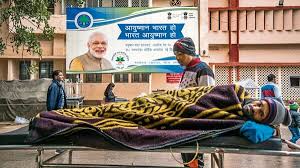
MUMBAI — In a major crackdown on systemic healthcare corruption, the Maharashtra state government has constituted a high-level Special Investigation Team (SIT) to probe 15,407 suspicious health insurance claims submitted under India’s flagship public health coverage programs.
The investigation targets widespread irregularities under two major government-funded initiatives: the national Ayushman Bharat-Pradhan Mantri Jan Arogya Yojana (AB-PMJAY) and the state-sponsored Mahatma Jyotirao Phule Jan Arogya Yojana (MJPJAY). A preliminary audit revealed an estimated ₹1.79 crore in fraudulent claims involving three private medical facilities in Nashik, alongside widespread pattern abnormalities across the state—including billed treatments for deceased individuals, phantom procedures, and inflated medical packages.
The state’s decision underlines a growing movement across public health systems to protect tax-funded safety nets designed for economically vulnerable populations.
Anatomy of the Fraud: How the Scam Unfolded
The probe stems from an extensive review of state healthcare portal data collected between July 2024 and February 2026. Data scientists and health auditors flagged alarming statistical anomalies, such as multiple unrelated claim profiles tied to identical mobile phone numbers and individual policyholders claiming over ₹5 lakh within a single calendar year—far exceeding standard baseline costs for secondary and tertiary care.
To confirm the digital red flags, District Civil Surgeons and Public Health Officers launched physical verification campaigns across several districts. In Nashik district alone, officials cross-examined 4,200 beneficiaries out of 9,242 logged claims, uncovering hundreds of falsified or phantom entries.
Primary Hospitals Named in Criminal Investigation
Following physical audits, an official First Information Report (FIR) was registered at the Worli Police Station in Mumbai. The complaint specifically names founders, directors, and administrators across three private medical centers in Nashik, alleging 361 combined fraudulent transactions totaling ₹1.79 crore:
-
Shiv Multi-speciality and Criticare Hospital: 163 flagged claims totaling ₹71.83 lakh.
-
Grace Hospital: 126 flagged claims totaling ₹62.13 lakh.
-
Hrishikesh Hospital: 72 flagged claims totaling ₹45.45 lakh.
Police authorities have cited key administrative personnel under provisions of the Bharatiya Nyaya Sanhita (BNS), including charges related to criminal breach of trust, cheating, forgery, and passing falsified medical documents as authentic records.
Scope and Mandate of the SIT
According to a Public Health Department resolution issued on August 5, 2026, the newly formed SIT will be led by Nashik Divisional Commissioner Dr. Pravin Gedam. The multi-agency panel integrates medical regulators, state IT and artificial intelligence experts, and cybercrime specialists from the Economic Offences Wing (EOW).
| Investigation Domain | Specific Focus Areas |
| Clinical Audits | Identifying medically unnecessary procedures, phantom billing, and claims filed post-mortem. |
| Administrative Integrity | Inspecting hospital empanelment criteria, license renewals, and third-party oversight. |
| Digital Intermediaries | Tracking unauthorized registration agents, repeated phone numbers, and identity theft. |
| Institutional Accountability | Examining potential collusion among district coordinators, insurance agency staff, and hospital management. |
The SIT has been given a strict 30-day mandate to submit a comprehensive report detailing systemic weaknesses and proposing binding policy changes for empanelment and claim verification.
A Recurring Challenge for Universal Health Coverage
While the Maharashtra crackdown represents a decisive administrative step, medical experts note that billing fraud remains a persistent challenge for universal health coverage programs globally.
A landmark 2023 Comptroller and Auditor General (CAG) audit of PMJAY highlighted significant structural vulnerabilities across India, identifying over 2.25 lakh national cases where patient surgical dates were logged after their official discharge dates. Over 1.79 lakh of those flagged entries occurred within Maharashtra, accounting for more than ₹300 crore in disputed disbursements.
       [ Regional Audit Flags ] ➔ [ Data Anomaly Detection ]
                                            │
                                            ▼
[ Prosecution / De-empanelment ] ◄─ [ Physical Verification ]
Health policy analysts emphasize that when private providers exploit public insurance frameworks, the primary victims are underprivileged patients who rely on public funds for life-saving care.
“Government health insurance schemes like Ayushman Bharat and MJPJAY are lifelines for millions of low-income families,” explains Dr. Sunita Reddy, Director of the Centre for Social Medicine and Community Health at Jawaharlal Nehru University. “When fraud occurs, it not only wastes public funds but also erodes public trust. Robust verification systems, AI-enabled monitoring, and swift accountability are crucial to keep these programs sustainable.”
Emerging Solutions: AI and Flying Squads
To combat systemic fraud without disrupting patient care, public health departments are increasingly turning to technology. In mid-2026, Maharashtra deployed artificial intelligence algorithms via its updated KMS 2.0 platform alongside specialized mobile “flying squads” tasked with unannounced hospital inspections.
These predictive AI models flag abnormal treatment patterns—such as sudden spikes in specific high-cost surgeries or identical billing codes across distinct demographics—allowing regulators to intervene before claims are paid rather than relying solely on post-payment recovery.
Consumer Guidance: Protecting Your Health Coverage
For citizens utilizing government health programs, understanding beneficiary rights is vital to preventing medical exploitation. Both AB-PMJAY and MJPJAY provide cashless treatment up to specified annual caps for eligible families (up to ₹5 lakh per family annually under AB-PMJAY).
   EMPANELMENT CHECK            ZERO OUT-OF-POCKET          RECORD ACCURACY
Verify hospital credentials   Ensure no extra payments    Verify procedures match
 on official portals before    are demanded for covered    written discharge summaries
     taking treatment.                services.               before signing off.
Key Steps for Beneficiaries
-
Verify Empanelment: Always confirm that the treating hospital is officially listed on the state or central scheme portal prior to elective procedures.
-
Refuse Unofficial Fees: Empanelled hospitals are contractually barred from charging extra out-of-pocket fees for covered conditions.
-
Audit Your Records: Carefully review discharge summaries and treatment bills to confirm that listed procedures match the care actually received.
-
Report Suspicious Demands: If a facility demands upfront cash or attempts to bill for free services, report the incident immediately to official government helplines (155388 or 1800-233-2200).
Nuance in Enforcement: Balancing Protection and Access
While rigorous anti-fraud measures are essential, health administrators caution that enforcement must be precise. Not all flagged claims stem from deliberate fraud; clinical documentation errors, administrative delays, and software glitches can mimic deceptive billing patterns.
Overly aggressive enforcement without clear administrative safeguards risks discouraging ethical private hospitals from enrolling in public safety-net programs. Public health experts stress that maintaining a balance between stringent fraud prevention and a broad network of accessible care facilities remains the ultimate goal for sustainable healthcare infrastructure.
As the Special Investigation Team prepares its final report, Maharashtra’s proactive approach offers a blueprint for how state governments can leverage data analytics, inter-agency collaboration, and legal enforcement to safeguard public health funds.
Medical Disclaimer: This article is for informational purposes only and should not be considered medical advice. Always consult with qualified healthcare professionals before making any health-related decisions or changes to your treatment plan. The information presented here is based on current research and expert opinions, which may evolve as new evidence emerges.
References
- https://www.thip.media/news/maha-govt-forms-sit-to-probe-suspicious-claims-under-ayushman-bharat-and-mahatma-phule-jan-arogya-schemes/150630/


Happy
0 %

Sad
0 %

Excited
0 %

Sleepy
0 %

Angry
0 %

Surprise
0 %