 0
0
 0
0
Read Time:5 Minute, 33 Second
DELHI — India’s flagship public health umbrella, the National Health Mission (NHM), has driven significant improvements in rural healthcare and primary infrastructure over the last two decades. However, its long-term viability is threatened by severe human resource shortages, administrative funding delays, and fragmented digital infrastructure.
These findings form the core of a critical report presented to Parliament on August 7, 2026, by the Parliamentary Standing Committee on Health and Family Welfare. Detailing its evaluation across three interconnected reports (the 175th, 176th, and 177th), the committee conducted a comprehensive SWOT (Strengths, Weaknesses, Opportunities, and Threats) analysis of the NHM, issuing a clear mandate: incremental tweaks are no longer sufficient to meet India’s Universal Health Coverage (UHC) goals and Sustainable Development Goals (SDGs).
To bridge the gap between policy intent and healthcare delivery, lawmakers have called on the Ministry of Health and Family Welfare (MoHFW), the Ministry of Ayush, and state governments to execute a structured overhaul of the mission.
High Achievements Shadowed by Systemic Vulnerabilities
Since its inception, the NHM—comprising both the National Rural Health Mission (NRHM) and the National Urban Health Mission (NUHM)—has served as the primary backbone of public healthcare for over 1.4 billion people. The committee recognized the mission’s undeniable success in upgrading primary health centers into Ayushman Arogya Mandirs (formerly Health and Wellness Centres) and expanding maternal and child health interventions.
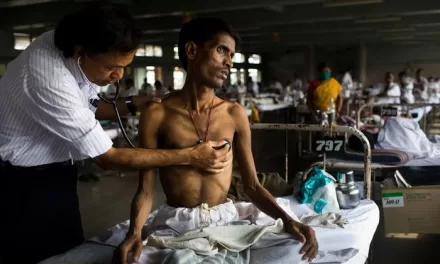
Despite these strides, structural weaknesses continue to leave millions of patients vulnerable, particularly in rural and underserved belts. The panel highlighted that operational upgrades mean little if frontline facilities lack trained doctors, reliable drug supplies, or seamless transfer pathways to higher-tier hospitals.
“The transformation of primary care infrastructure under Ayushman Bharat is commendable,” the committee noted in its findings. “However, the failure to address fundamental human resource deficits, financial bottlenecks, and data fragmentation severely undermines the Mission’s capacity to deliver equitable healthcare and combat the rising non-communicable disease (NCD) burden.”
Three Core Directives for Systemic Reform
To address these vulnerabilities, the Parliamentary Standing Committee outlined a three-pronged strategy aimed at restructuring the NHM’s operational framework:
1. Human Resource Rationalization and Staff Security
The report identified a dual-tier workforce as one of the most critical threats to the health system. Contractual healthcare workers, including Accredited Social Health Activists (ASHAs), Auxiliary Nurse Midwives (ANMs), and contract medical officers, frequently work alongside permanent staff under unequal pay structures, lacking job security and career progression pathways.
The committee recommended:
-
Uniform National Policy: Standardizing terms between contractual and permanent personnel to end pay disparities and job instability.
-
Hardship Allowances: Instituting “hard-duty” financial incentives and clear career progression tracks to attract and retain specialists, doctors, and paramedics in remote, hilly, and conflict-prone regions.
-
Digital Skill Building: Systematically scaling up mobile-based, digital training modules for frontline workers (ASHAs and ANMs) to equip them for modern diagnostic and community outreach tools.
2. Fiscal Streamlining and Absorptive Capacity
Financial delays between central fund allocations and state-level deployment continue to bottleneck local health activities. To prevent healthcare funds from sitting idle due to bureaucratic delays, the panel recommended establishing a real-time, Direct Benefit Transfer (DBT)-linked fund disbursement tracking system.
Additionally, the committee urged the Union Health Ministry to provide technical handholding to smaller states, Union Territories, and the North-Eastern region. These areas often struggle with low “fiscal absorptive capacity”—the administrative bandwidth required to process, utilize, and report on central health grants efficiently.
3. Data Convergence and Continuity of Care
Health workers currently rely on multiple, overlapping software platforms for tracking immunization, maternal health, communicable diseases, and patient records. This creates reporting fatigue and leads to fragmented medical records.
The panel recommended merging these duplicate tools into a single, unified architecture integrated directly with the Ayushman Bharat Digital Mission (ABDM). This unified platform must establish digital referral pathways linking primary Ayushman Arogya Mandirs with secondary Community Health Centres, District Hospitals, and tertiary AB-PMJAY networks to preserve patient records across their lifetime.
Public Health Implications: What This Means for Patients
For everyday citizens—especially those living in semi-urban and rural areas—the committee’s recommendations point toward noticeable shifts in care quality if implemented effectively.
+-----------------------------------------------------------------------------------+
|                         IMPACT OF PROPOSED NHM REFORMS                            |
+------------------------------------+----------------------------------------------+
| Core Focus Area                    | Expected Impact on Patient Care              |
+------------------------------------+----------------------------------------------+
| Staff Retention & Incentives       | Greater presence of qualified doctors and    |
|                                    | specialists in rural clinics.                |
+------------------------------------+----------------------------------------------+
| Real-Time Fiscal Tracking          | Reduced medicine shortages and better        |
|                                    | equipped primary health centers.             |
+------------------------------------+----------------------------------------------+
| Unified Digital Architecture (ABDM)| Uninterrupted medical histories during hospital|
|                                    | transfers, reducing duplicate testing.       |
+------------------------------------+----------------------------------------------+
Unifying digital records and establishing automated referral channels directly targets the growing burden of non-communicable diseases (NCDs) like hypertension, type 2 diabetes, and cardiovascular conditions. NCDs require continuous monitoring rather than episodic treatments. A patient screened for high blood pressure at a primary village health clinic should have their health data instantly accessible if they require advanced care at a district hospital miles away.
Counterarguments and Implementation Hurdles
While public health experts have broadly welcomed the Parliamentary Standing Committee’s recommendations, policy analysts urge realistic expectations regarding federal and financial implementation.
Healthcare in India is constitutionally a State subject, meaning the Central Government can provide policy frameworks and partial funding through the NHM, but execution relies entirely on state administrative machinery. Reconciling pay disparities between contractual and permanent staff involves vast financial commitments that state budgets may struggle to support without sustained central grants.
Furthermore, integrating multi-layered software across remote regions faces infrastructure constraints, including intermittent electricity and low high-speed internet penetration in primary health centres.
Looking Ahead
The Parliamentary Standing Committee’s 175th, 176th, and 177th reports serve as a key roadmap for public health policy in India. By focusing on workforce stability, administrative efficiency, and digital continuity, the panel has outlined the structural changes needed to turn health infrastructure expansion into high-quality, reliable medical care for every citizen.
References
Government & Parliamentary Reports
-
Parliamentary Standing Committee on Health and Family Welfare. (2026, August 7). 175th, 176th, and 177th Reports on the SWOT Analysis of the National Health Mission (NHM) (Paras 3.24.3 – 3.24.5). Press Information Bureau (PIB), Ministry of Information & Broadcasting, Government of India, Delhi.
Institutional & Policy Frameworks
-
Ministry of Health and Family Welfare (MoHFW). National Health Mission Framework for Implementation. Government of India.
-
National Health Authority (NHA). Ayushman Bharat Digital Mission (ABDM) Vision and Architecture Strategy. Government of India.
Medical Disclaimer: This article is for informational purposes only and should not be considered medical advice. Always consult with qualified healthcare professionals before making any health-related decisions or changes to your treatment plan. The information presented here is based on current research and expert opinions, which may evolve as new evidence emerges.


Happy
0 %

Sad
0 %

Excited
0 %

Sleepy
0 %

Angry
0 %

Surprise
0 %