 0
0
 0
0
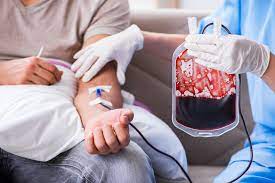
ISLAMABAD — Pakistan is grappling with a severe public health crisis as a staggering annual deficit of 2.3 million blood donations leaves hundreds of thousands of vulnerable patients without access to life-saving transfusions. According to an urgent warning issued by the World Health Organization (WHO) during World Blood Donor Day on June 14, 2026, the country requires more than 5 million blood donations annually to meet its baseline medical needs. Currently, it collects only 2.7 million units, forcing healthcare infrastructure into a dangerous bottleneck that compromises patient safety and treatment timelines nationwide.
The global theme for this year’s awareness campaign, “One Drop of Humanity. Give Blood. Save Lives,” underscores a sobering reality for Pakistan: a single donation can save up to three lives, yet the country’s current transfusion ecosystem is teetering on a precarious foundation.
The Dangerous Reliance on Family and Replacement Donors
At the heart of Pakistan’s blood shortage is a profound cultural and systemic dependency on “replacement” or family donors. WHO data reveals that a mere 18% of the country’s blood supply comes from voluntary, unpaid donors. The remaining 82%—representing approximately 1.9 million donations—is sourced from family members, friends, or proxy donors mobilized under acute emotional and logistical duress.
Pakistan Blood Donation Source Split (2026)
[████████░░░░░░░░░░░░░░░░░░░░] 18% Voluntary, Unpaid Donors
[████████████████████████████] 82% Family or Replacement Donors
This reliance stands in direct opposition to global best practices. The WHO identifies voluntary, non-remunerated blood donations as the safest and most sustainable foundation for any national healthcare system. When families are forced to source blood during a medical emergency, it delays critical care and introduces substantial safety blind spots into the supply chain.
Hidden Hazards: The Elevated Risk of Transfusion-Transmitted Infections
The health risks associated with a replacement-driven system are not merely logistical; they are viral. Peer-reviewed medical data consistently demonstrates that replacement donors have a significantly higher prevalence of transfusion-transmitted infections (TTIs) compared to altruistic, voluntary donors.
A landmark study published in late 2025 examining donor populations in the Malakand Division revealed an overall TTI seroprevalence of 2.42% among all donors. The breakdown of active infections included:
-
Hepatitis C Virus (HCV): 0.92%
-
Hepatitis B Virus (HBV): 0.67%
-
Syphilis: 0.59%
-
HIV: 0.23%
The disparity becomes starker when looking at older multi-center data. A comprehensive systematic review published in PubMed highlighted that HBV frequency was just 0.48% among voluntary, non-remunerated donors, but skyrocketed to 4.15% in replacement donor cohorts.
“Without standardized, safe transfusion practices and a shift away from replacement donation, there will be an ongoing increase in the transmission of TTIs,” the researchers warned, noting that the status quo carries a severe, long-term public health impact for the nation.
Who Suffers Most? Critical Medical Needs Left Unmet
The 2.3 million unit deficit casts a long shadow over Pakistan’s most vulnerable demographic groups. Blood transfusions are not optional luxury procedures; they are core, life-saving components of emergency and chronic clinical medicine.
According to public health data, the shortage most acutely impacts:
-
Maternal and Child Health: Complications during pregnancy, particularly postpartum hemorrhage (severe bleeding after childbirth), and severe childhood anemia.
-
Chronic Genetic Disorders: Lifelong care regimens for conditions like hemophilia and thalassemia. Pakistan is estimated to have over 100,000 active cases of thalassemia, accounting for roughly 5% of the global total. These patients depend on clean, regular transfusions to survive.
-
Oncology and Trauma: Cellular support during aggressive cancer treatments, emergency trauma management, and major surgical interventions.
Systemic Fragments and Demographics: The Structural Challenges
Independent hematologists and public health experts note that fixing the crisis requires confronting deeply entrenched systemic and cultural barriers.
A critical limitation identified in a systematic review is that Pakistan’s current blood transfusion system remains fragmented, highly decentralized, and demand-driven. Many local blood banks utilize suboptimal screening methodologies due to a lack of affordable, highly sensitive testing kits, raising fears that current TTI rates may actually be underreported.
Furthermore, the country faces a stark demographic imbalance in its donor pool. Current data indicates that donation is almost exclusively a male endeavor: men comprise 84.57% of replacement donors and 15.34% of voluntary donors. Female participation sits at a statistically negligible 0.03%, pointing to a massive, untapped segment of the population that could help alleviate the crisis if proper awareness and culturally sensitive donation spaces are established.
The Path Forward: WHO’s Call to Action
With demand projected to scale to 5.6 million donations annually by 2030, the widening gap between supply and demand requires immediate policy intervention. Dr. Luo Dapeng, the WHO Representative in Pakistan, has strongly advocated for structural overhauls, praising voluntary donors as “public health heroes” while insisting that no patient should die from a lack of safe blood.
To bridge the gap, the WHO urges Pakistani health authorities to execute a three-pronged strategy:
1. Centralize and Regulate
Strengthen national blood systems by unifying fragmented provincial networks under rigid, standardized screening protocols and strict regulatory oversight.
2. Deconstruct Myths and Mobilize
Launch robust, nationwide public health campaigns to dismantle misconceptions surrounding blood donation—particularly targeting youth and women—to convert replacement-based networks into voluntary ones.
3. Ensure Equity
Build an infrastructure where access to safe blood and blood products is determined by clinical necessity rather than a patient’s socioeconomic status or the size of their immediate family network.
Transitioning to a voluntary donation model is a challenging logistical mountain to climb. However, as global health data repeatedly proves, it is the only viable path to ensuring that when a patient in Islamabad, Karachi, or a rural clinic needs a life-saving transfusion, the health system can deliver it safely and without delay.
Medical Disclaimer
Medical Disclaimer: This article is for informational purposes only and should not be considered medical advice. Always consult with qualified healthcare professionals before making any health-related decisions or changes to your treatment plan. The information presented here is based on current research and expert opinions, which may evolve as new evidence emerges.
References
-
“Pakistan faces annual shortfall of 2.3m blood donations, WHO urges voluntary donors.” The Nation Pakistan, June 14, 2026.