 0
0
 0
0
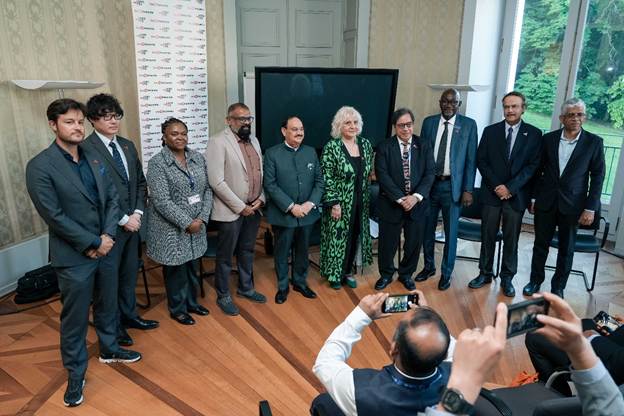
GENEVA — At a high-level assembly of international healthcare leaders on May 21, 2026, India positioned itself at the forefront of global respiratory disease management. Speaking at a Stop TB Partnership side-event during the 79th World Health Assembly, Union Health Minister Shri Jagat Prakash Nadda detailed India’s massive deployment of high-tech tools to screen, diagnose, and treat tuberculosis (TB).
Addressing a ministerial panel co-hosted by India, Japan, the Philippines, and Zambia, Nadda outlined how the world’s most populous nation is using artificial intelligence, portable hardware, and decentralized molecular testing to drastically reduce diagnostic delays.
“Timely screening, early diagnosis, and equitable access to care lie at the heart of resilient and people-centered health systems,” Nadda told the delegation. He stressed that scaling up lung health screenings is not merely a logistical goal, but a vital economic shield designed to protect vulnerable households from “catastrophic health expenditure” and generational poverty.
High-Tech on the Frontlines: The Tools Remaking TB Care
Tuberculosis remains one of the world’s deadliest infectious killers. According to the World Health Organization (WHO), TB claims more than one million lives annually worldwide, with India bearing more than a quarter of the global burden.
Under the umbrella of the National Tuberculosis Elimination Programme (NTEP) and the national vision of a TB-Mukt Bharat (TB-Free India), the country has built an infrastructure designed to actively seek out cases rather than waiting for sick individuals to visit distant hospitals.
Modern Diagnostic Deployments
-
-
Molecular Testing Platforms: Replacing slower, traditional sputum microscopy with highly accurate DNA-amplification tests.
-
Handheld & Digital X-Ray Devices: Portable units allowing mobile health vans to take chest imaging directly into remote, mountainous, or tribal regions.
-
AI-Assisted Interpretation Tools: Specialized software that scans digital X-rays within seconds to flag lung abnormalities indicative of TB, allowing rapid triage even without a radiologist on-site.
-
Independent global health analysts point out that this technological pivot addresses a historic bottleneck in respiratory care. “For decades, the biggest tragedy of TB has been the diagnostic delay,” says Dr. Arjan de Jong, an international infectious disease researcher who has studied public health delivery models in South Asia.
“When a person in a remote village has to travel hours and lose days of wages just to get an X-ray or a molecular test, they wait until they are desperately ill. By providing immediate, AI-supported screening at the village level, you interrupt transmission weeks before it would otherwise be caught,” Dr. de Jong adds.
The Digital Architecture: Connecting Patients via “Khushi”
A critical element of India’s presentation in Geneva was its focus on digital health access. The Ministry of Health has rolled out the TB Mukt Bharat application, integrated with a multilingual, AI-driven chatbot named “Khushi”.
The chatbot is intentionally optimized to run on low-bandwidth networks and entry-level smartphones. It provides users with instant, real-time guidance regarding:
-
Recognizing standard respiratory symptoms.
-
Navigating government social welfare entitlements.
-
Locating the nearest free diagnostic and treatment facilities.
Beyond digital tools, Nadda emphasized that technology alone cannot bridge the gap to treatment completion. He pointed to India’s network of Ayushman Bharat Health and Wellness Centres and its community mobilization campaign, the Ni-kshay Mitra initiative. This program allows citizens, NGOs, and corporations to adopt individual TB patients, providing them with essential nutritional baskets and monthly financial support to improve medication adherence.
Global Commitments and Local Hurdles
India has set an ambitious internal target to eliminate tuberculosis by 2025, ahead of the United Nations Sustainable Development Goal (SDG) target of 2030. While health experts praise the massive scale of India’s active case-finding drives, they note that significant public health hurdles remain.
Global TB Distribution vs. India's Burden (WHO Data)
=====================================================
[██████████████████████████████████] Total Global Cases
[█████████] India's Share (~27%)
Public health epidemiologists frequently emphasize that finding cases through digital screening is only half the battle. The ultimate success of any elimination program depends heavily on managing structural issues:
-
Drug-Resistant Strains: Safely managing Multi-Drug Resistant TB (MDR-TB), which requires longer, more expensive, and complex medication regimens.
-
Social Determinants: Overcoming underlying economic drivers, such as undernutrition and overcrowded housing, which lower immunity and increase transmission rates.
-
Sustained Funding: Maintaining massive domestic financial commitments to keep decentralized diagnostics free of charge for millions of citizens.
Addressing these shared international challenges, Health Minister Nadda called on the World Health Assembly to mainstream lung health within wider Universal Health Coverage frameworks. He urged global partners to lower the costs of high-tech screening tools through local manufacturing and cross-border technology transfers.
“The fight against TB can become a gateway to stronger health systems, better diagnostics, cleaner environments, improved nutrition, and more equitable societies,” Nadda concluded, reiterating India’s willingness to share its scalable digital health models with other developing nations.
Reference Section
- https://www.pib.gov.in/PressReleasePage.aspx?PRID=2263532®=3&lang=1
Medical Disclaimer: This article is for informational purposes only and should not be considered medical advice. Always consult with qualified healthcare professionals before making any health-related decisions or changes to your treatment plan. The information presented here is based on current research and expert opinions, which may evolve as new evidence emerges.