 0
0
 0
0
SHIMLA, India — A groundbreaking multi-center randomized clinical trial has found that feeding infants whole goat milk formula instead of standard cow milk formula may substantially reduce their risk of developing atopic dermatitis (commonly known as eczema) during the first year of life. Published in the June 2026 issue of Clinical Nutrition, the Goat Infant Formula Feeding and Eczema (GIraFFE) study revealed a remarkable 64% reduction in eczema diagnoses among infants with a parental history of the condition. The findings offer a highly anticipated, evidence-based alternative for families seeking to prevent this chronic, distressing skin disease when breastfeeding is not an option.
Behind the GIraFFE Trial: Key Findings
Led by researchers from LMU Munich, the GIraFFE study stands as one of the largest double-blind randomized controlled trials on infant feeding and eczema prevention to date. The rigorous research tracked more than 2,100 healthy, term-born infants across ten specialized study centers in Spain and Poland.
The trial carefully monitored infants over their first 12 months, comparing those fed whole goat milk formula (WGF) against those fed standard cow milk formula (CF). The data revealed that the formula choice had a profound impact, particularly among genetically predisposed infants:
| Infant Population Group | Risk Reduction in Eczema (AD) | Statistical Significance |
| All formula-fed infants (Per-Protocol Analysis) | 34% Reduction | Significant ($P < 0.05$) |
| Infants with a parental history of AD | 64% Reduction | Highly Significant ($P = 0.007$) |
| All infants (Strict UKWP Diagnostic Criteria) | No significant difference | Not Significant ($P = 0.991$) |
While the formula did not show a statistically significant preventative effect across the entire general infant population when measured against the strict United Kingdom Working Party (UKWP) diagnostic criteria, the per-protocol analysis—which looks at infants who strictly adhered to the feeding guidelines—showed a notable 34% baseline risk reduction. The most dramatic breakthrough, however, was reserved for the highest-risk group: infants with at least one parent suffering from eczema saw their clinical diagnosis rates plunge by nearly two-thirds.
Expert Commentary: What the Numbers Mean for Families
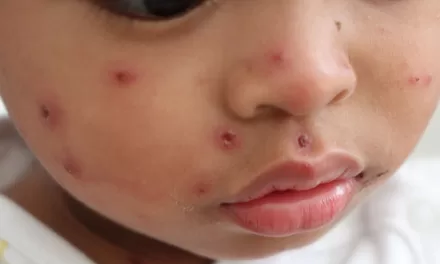
Medical experts view these findings as a major milestone in pediatric preventative care. Eczema is notorious for disrupting early childhood development, characterized by intense itching, dry red patches, and localized skin inflammation that frequently leads to secondary infections.
“Chronic eczema can pose serious burdens for the affected child and the whole family, with itching, scratching, disturbed sleep, and mood changes,” noted Professor Berthold Koletzko of the Dr. von Hauner Children’s Hospital at the University of Munich, the study’s lead investigator.
Dr. Chen-Jial, MPH, an independent public health expert not involved in the trial, highlighted the sheer clinical utility of the 64% reduction.
“In practical terms, this means selecting whole goat milk formula could potentially prevent eczema in six out of ten formula-fed infants who have a family history of the condition. That is a highly meaningful public health impact for a disease that has been steadily rising in global prevalence over recent decades.”
Compositional Differences: Why Goat Milk Behaves Differently
For years, laboratory and animal model research has suggested that goat milk might be less inherently allergenic than cow milk due to its distinct protein architecture, which triggers fewer inflammatory immune pathways. The GIraFFE trial provides the robust, large-scale human clinical data that earlier, smaller trials lacked.
The specific whole goat milk formula utilized in this trial features several critical structural deviations from traditional cow milk formulas:
-
Whey-to-Casein Ratio: The goat milk formula maintains a natural 20:80 whey-to-casein balance, compared to the modified 60:40 ratio typical of standard cow milk options.
-
The Lipid Matrix: Approximately 50% of the fat content in the goat milk formula comes directly from whole goat milk fat. Conversely, standard cow milk formulas completely strip the dairy fat, relying on 100% vegetable oils for their lipid source.
-
Nutritional Parity: Despite these structural differences, both formulas were designed to deliver identical caloric energy and core nutrient levels, ensuring normal infant growth.
Scientists hypothesize that the preservation of natural milk fats alongside distinct casein protein profiles may support better gut barrier development and less systemic immune reactivity, though the exact cellular mechanisms are still being actively investigated.
Real-World Limitations and Technical Considerations
While the results are being celebrated, independent pediatricians urge parents to view the data with a balanced perspective, noting several built-in study limitations:
-
Diagnostic Discrepancies: The reduction in eczema did not achieve statistical significance under the universal UKWP diagnostic criteria for the overall group. This suggests that how a doctor defines and measures skin irritation heavily influences whether the formula shows a benefit.
-
Adherence vs. Real World: The most powerful data emerged from the “per-protocol” group. Real-world adherence to strict formula feeding regimens can vary, which may dilute the preventative effects observed in a clinical environment.
-
Geographic Scope: The trial took place exclusively in Spain and Poland. Because environmental factors, maternal diets, and regional genetics play heavy roles in immune development, further trials are necessary to confirm if these results apply globally.
-
The Timeline: While the GIraFFE trial protocol tracks long-term secondary developments up to age five, this primary breakthrough only confirms eczema prevention up to 12 months of age. It remains unclear if the protective effect lasts into later childhood.
Furthermore, this study builds upon previous international research, such as a post-hoc analysis of the TIGGA study and earlier Australian safety trials. Those older papers observed a similar trend—roughly a one-third lower cumulative incidence of eczema in goat milk-fed infants—but lacked the massive sample size ($N > 2,100$) required to prove the finding wasn’t just a statistical fluke.
Practical Guidance for Parents and Providers
For families navigating infant nutrition, the GIraFFE study provides a clear, evidence-based roadmap:
-
Breastfeeding Remains the Gold Standard: All participating researchers and independent health authorities reiterate that breastfeeding provides the absolute best immunological and nutritional foundation for infants.
-
Evaluate Family History: If breastfeeding is not possible or a family chooses to use formula, parents should look closely at their immediate family medical history. If parents or siblings have a history of eczema, asthma, or severe allergies, goat milk formula should be strongly considered.
-
Consult a Pediatrician: Parents should never switch formulas blindly. An informed conversation with a qualified healthcare provider ensures that the chosen formula satisfies all specific health requirements of the infant.
As future research moves toward pinning down the exact biological mechanisms and tracking these children past their toddler years, the GIraFFE trial gives healthcare providers an effective, proactive tool to recommend right now—potentially saving thousands of infants from the painful cycle of chronic skin inflammation.
Medical Disclaimer
Medical Disclaimer: This article is for informational purposes only and should not be considered medical advice. Always consult with qualified healthcare professionals before making any health-related decisions or changes to your treatment plan. The information presented here is based on current research and expert opinions, which may evolve as new evidence emerges.
References
- https://www.medscape.com/viewarticle/goat-milk-formula-associated-less-risk-atopic-dermatitis-2026a1000ksu