 0
0
 0
0
June 4, 2026
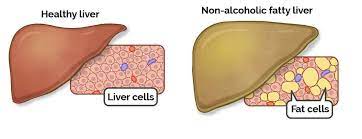
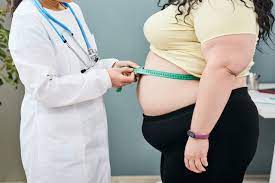
MARGAO, GOA — Nearly half of Goa’s adult population is now overweight or obese, marking a sharp escalation that underscores the state’s deepening lifestyle disease burden. According to data from the newly released National Family Health Survey (NFHS-6) for 2023–24, published by the Union Ministry of Health and Family Welfare, $43.6\%$ of men and $45.1\%$ of women in Goa present a body mass index (BMI) of $25.0 \text{ kg/m}^2$ or above. These metrics significantly outpace the national averages of $27.3\%$ for men and $30.7\%$ for women, thrusting the country’s smallest state by area into the center of an unfolding metabolic health crisis.
A Steep Upward Trend
The finalized NFHS-6 figures demonstrate a dramatic upswing from the preceding NFHS-5 cycle (2019–21). Over a span of just a few years, weight-related issues in Goa escalated by 11 percentage points among men and nearly 9 percentage points among women, up from baseline figures of $32.6\%$ and $36.1\%$, respectively.
This unprecedented surge establishes Goa as one of the most obese states in India. Regionally, it trails only a handful of urbanized territories, such as Puducherry ($46.3\%$), Chandigarh ($44.0\%$), and Delhi ($41.4\%$), in female weight prevalence metrics.
Diabetes and Hypertension Reach Critical Thresholds
Public health officials emphasize that weight accumulation does not occur in a physiological vacuum. The survey notes a parallel trajectory in secondary metabolic biomarkers, specifically blood glucose and arterial blood pressure.
-
Blood Sugar Elevation: In Goa, $32.1\%$ of adult men and $27.5\%$ of adult women present random blood glucose readings exceeding $140 \text{ mg/dL}$ or are actively taking corrective medication. This stands in sharp contrast to the national baselines of $20.9\%$ for men and $17.8\%$ for women. Goa’s male population now exhibits the highest diabetes and pre-diabetes prevalence in the country, marginally surpassing Kerala ($31.9\%$).
-
Hypertension Prevalence: Elevated blood pressure or active reliance on antihypertensive medications affects $27.5\%$ of men and $26.2\%$ of women in the state. Nationally, these figures sit lower, at $22.1\%$ and $19.4\%$.
Expert Commentary: A Silent Metabolic Epidemic
Independent medical professionals express significant concern regarding the speed of these lifestyle shifts.
“The NFHS-6 release serves as a timely reminder of a troubling nutrition paradox that India cannot afford to ignore,” states Dr. Shalini Joshi, Additional Director of Internal Medicine and Preventive Health at Fortis Hospital, Bengaluru.
Dr. Parmeet Kaur, former Chief Dietitian at the All India Institute of Medical Sciences (AIIMS), New Delhi, connects these findings to broader environmental shifts.
“The rise in non-communicable diseases (NCDs) is driven not just by excess calories, but by rapidly changing food systems and lifestyles,” Dr. Kaur notes. She points to the globalization of dietary habits, a high reliance on ultra-processed foods, excess sodium and refined sugar intake, chronic psychological stress, poor sleep hygiene, and a steadily aging local demographic as primary catalysts.
Adding a clinical warning, Dr. Rakesh Gupta, Senior Consultant in Internal Medicine at Indraprastha Apollo Hospital, Delhi, notes that metabolic syndromes rarely show immediate symptoms:
“In many cases, these conditions develop silently and remain undiagnosed for years. Clinicians must shift focus beyond basic weight management alone to comprehensive, early screening of overall metabolic health.”
India’s Dual Nutrition Burden
The macro data outlines what epidemiologists categorize as a “dual nutrition burden” or a “nutrition paradox”—a developmental phase where an emerging economy battles persistent undernutrition and skyrocketing overnutrition at the same time.
The nationwide NFHS-6 sampling framework was extensive, evaluating more than 710,000 women and 100,000 men across 679,000 households spanning 715 districts. The resulting dataset highlights a glaring urban-rural divide across India:
| Demographic | Urban Overweight/Obese Rate | Rural Overweight/Obese Rate |
| Women (India) | $42.8\%$ | $25.5\%$ |
| Men (India) | $36.3\%$ | $23.0\%$ |
High C-Section Rates Raise Concerns
Beyond lifestyle disorders, the NFHS-6 data spotlights a continuing escalation in obstetric interventions within Goa. Caesarean section (C-section) deliveries account for $46.2\%$ of all births in the state, substantially higher than the national benchmark of $27.2\%$.
This trend is particularly acute within private healthcare delivery systems, where the C-section rate reaches $69.7\%$, compared to a national private-sector average of $54.1\%$. This marks a nearly 7 percentage point increase from the $39.5\%$ baseline reported in Goa during the NFHS-5 period.
Bright Spots: Maternal and Child Health Excellence
While non-communicable disease indicators present clear challenges, Goa continues to lead the nation in primary maternal and infant health outcomes. The state’s public health infrastructure has yielded several notable successes:
-
Institutional Deliveries: Achieved a near-universal threshold of $99.6\%$.
-
Early Antenatal Care: $92.1\%$ of pregnant individuals secured a medical check-up within the first trimester, compared to the national average of $76.2\%$.
-
Pediatric Immunization: Full vaccination coverage among children aged 12–23 months rose to $93.8\%$, up from $81.9\%$ in the previous survey cycle.
-
Malnutrition Reductions: Childhood stunting (low height-for-age) fell from $25.8\%$ to $19.4\%$. Concurrently, severe wasting (low weight-for-height) dropped from $7.5\%$ to $2.4\%$.
What This Means for Consumer Health Decisions
For health-conscious individuals, these epidemiological insights demonstrate the high value of early, preventive medical screenings. Clinical experts suggest implementing a multi-tiered approach to mitigate individual metabolic risk factors:
-
Physical Activity: Engaging in at least 150 minutes of moderate-intensity aerobic exercise (such as brisk walking, swimming, or cycling) every week.
-
Dietary Quality: Reducing the intake of packaged snacks, sugary beverages, fast food, and highly refined carbohydrates. Nutritionists advise returning to regional, whole-food eating patterns that emphasize complex fibers, lean proteins, and micronutrient-dense vegetables.
-
Rest and Recovery: Ensuring 7 to 8 hours of continuous sleep per night to maintain optimal hormonal and insulin sensitivity.
-
Routine Diagnostics: Scheduling annual blood pressure tracking and fasting blood glucose screenings to capture metabolic deviations before they advance to chronic clinical diagnoses.
Study Limitations and Demographic Context
To maintain objective journalistic reporting, certain methodology limitations within the NFHS-6 dataset must be acknowledged. Portions of the survey’s secondary health metrics rely on self-reported patient histories, which can introduce personal reporting or recall bias.
Furthermore, the standard BMI cutoff of $25.0 \text{ kg/m}^2$ utilized in the report aligns with standard World Health Organization (WHO) international guidelines. However, prominent domestic clinical bodies, including the National Academy of Medical Sciences (NAMS), note that South Asian populations often exhibit higher visceral adiposity (internal belly fat) and metabolic vulnerability at lower BMI thresholds ($23.0 \text{ kg/m}^2$). Consequently, true metabolic risk across the population may be underrepresented.
Additionally, Goa is experiencing a distinct demographic transition. Individuals aged 60 and older now constitute $17.2\%$ of the state’s population, up from $14.2\%$ during NFHS-5. Because non-communicable diseases naturally correlate with advancing age, this shifting demographic profile explains a portion of the rising statistical curves.
The survey also noted mixed societal trends: reported instances of spousal violence rose slightly to $11.3\%$ (up from $8.3\%$), while adult male alcohol consumption dropped significantly from $36.8\%$ to $22.4\%$.
Public Health Implications and Policy Responses
The Union Government’s Economic Survey 2025–26 previously highlighted adult obesity as a major threat to public health and economic productivity, warning of its role in accelerating early cardiovascular mortality.
In response, national health systems have scaled up screening frameworks. Under the National Programme for Prevention and Control of Non-Communicable Diseases (NPCDCS), more than 8.47 crore adults identified as overweight or obese have been triaged into systemic screening funnels for diabetes and hypertension.
As Dr. Kaur concludes, reversing these trends will require structural interventions:
“Strengthening direct nutrition education, mandating clearer front-of-pack food warning labels, and lowering the age bar for community-level metabolic screenings are essential steps. Re-emphasizing regional, traditional eating habits alongside active living will be crucial for protecting India’s future public health.”
Medical Disclaimer
Medical Disclaimer: This article is for informational purposes only and should not be considered medical advice. Always consult with qualified healthcare professionals before making any health-related decisions or changes to your treatment plan. The information presented here is based on current research and expert opinions, which may evolve as new evidence emerges.
References
-
Times of India. (2026, June 1). “Goa among most obese states in country: National Family Health Survey.” The Times of India.