 0
0
 0
0
June 4, 2026 | Ahmedabad, India
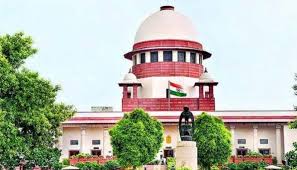
AHMEDABAD — As the Central Bureau of Investigation (CBI) deepens its nationwide probe into the cancelled May 3 National Eligibility-cum-Entrance Test (NEET-UG) 2026, fresh online rackets have emerged across India, aggressively exploiting the anxiety of millions of medical aspirants. With a mandated re-examination scheduled for June 21, 2026, anonymous syndicates operating via encrypted social media networks are targeting desperate students—offering allegedly leaked re-exam papers for $\text{Rs } 60,000$ to $\text{Rs } 1 \text{ lakh}$ and promising guaranteed, elite scores of 620+ out of 700 for up to $\text{Rs } 20 \text{ lakh}$.
The discovery, formalized in a cybercrime complaint filed in Gujarat on June 2, has sparked deep concern among public health officials and medical educators. Beyond the immediate crisis of academic integrity, experts warn that the intersection of systemic exam fraud and chronic, high-stakes academic pressure is fueling a severe youth mental health epidemic while threatening the long-term quality of India’s healthcare workforce.
The Mechanics of the “Re-NEET” Scam
According to a formal complaint lodged with the Ahmedabad cybercrime police by local activist Shubham Thaker on June 2, 2026, the newly surfaced fraud operates heavily through invite-only, shifting Telegram channels. These groups maintain strict digital anonymity, admitting members primarily through peer referrals to evade law enforcement tracking.
The operations vary from simple document sales to elaborate, institutionalized cheating configurations. Investigating journalists posing as parents of NEET candidates uncovered sophisticated operational blueprints used by these syndicates:
-
The Blank-OMR Strategy: One network operator based in Bengaluru instructed an undercover reporter to pay a $\text{Rs } 50,000$ upfront token amount. Candidates were told to leave their Optical Mark Recognition (OMR) sheets entirely blank on exam day. The operators claimed to possess “internal settings” within key testing agencies to fill in correct answers post-examination, demanding a final payout of $\text{Rs } 20 \text{ lakh}$ once a score above 620 was secured.
-
The Institutional Leak Claim: Another channel operator, claiming affiliation with a prominent coaching center in New Delhi, asserted his network had already purchased half of the upcoming June 21 question paper for $\text{Rs } 35 \text{ lakh}$, promising the remaining sections closer to the test date. Transactions were requested exclusively via un-traceable QR code transfers.
Cybercrime authorities are currently evaluating whether these networks possess actual examination materials or are running opportunistic financial scams capitalizing on student panic.
Anatomy of a Broken System: The May 3 Leak
The emergence of these secondary rackets follows the unprecedented cancellation of the primary NEET-UG 2026 exam. Conducted on May 3, 2026, the test saw 22.79 lakh candidates compete for fewer than 110,000 MBBS and BDS seats nationwide.
The National Testing Agency (NTA) officially invalidated the test on May 12 after law enforcement uncovered undeniable proof of compromise. Investigators found a 60-page handwritten “guess paper” circulating prior to the exam that precisely matched 120 to 140 questions across the chemistry and biology sections of the actual test sheet.
The subsequent CBI investigation led to the filing of a First Information Report (FIR) under charges of criminal conspiracy, cheating, breach of trust, and violations of the Public Examination (Prevention of Unfair Means) Act, 2024.
NEET-UG 2026 PRIMARY LEAK: KEY INVESTIGATION DATA
├── Total Affected Candidates: 22.79 Lakh Students
├── Primary Leak Origin: Sikar, Rajasthan
├── Bribe Infrastructure Range: Rs 30,000 to Rs 28 Lakh per student
└── Key Enforcement Actions:
    ├── 10 Core Arrests across 7 major educational hubs
    ├── Arrest of PV Kulkarni (Alleged Kingpin; Retired NTA Paper Setter)
    └── Arrest of Manisha Gurunath Mandhare (NTA-Appointed Biology Expert)
CBI raids stretching into Nanded and Latur have confirmed that middle-class families frequently paid between $\text{Rs } 5 \text{ lakh}$ and $\text{Rs } 10 \text{ lakh}$ to middlemen, routing personal savings into illicit channels to secure admissions.
The Silent Epidemic: A Youth Mental Health Crisis
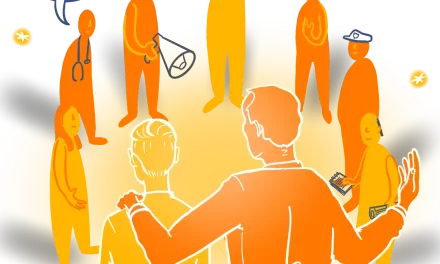
The compounding trauma of a massive exam leak, sudden cancellation, and a compressed three-week re-preparation window has triggered an unprecedented psychological crisis among Indian youth. Psychiatrists and counselors report a massive influx of students suffering from severe acute stress, clinical depression, and localized panic disorders.
Tragically, the human cost has already turned lethal. At least three medical aspirants have allegedly died by suicide in Delhi, Uttar Pradesh, and Rajasthan following the cancellation announcement, underscoring the lethal nature of this academic pressure cooker.
“The sudden cancellation of NEET-UG 2026 has induced profound shock, acute stress, and structural uncertainty among lakhs of young minds,” states Dr. Samir Parikh, a prominent national mental health expert. “It is vital that students understand they must not internalize or blame themselves for a systemic breakdown that is entirely beyond their individual control.”
Clinical Observations in Aspirants Ahead of June 21:
-
Somatic Distress: Widespread reports of persistent nightmares, sleep fragmentation, and sudden panic attacks during timed practice sessions.
-
Academic Burnout: Severe cognitive fatigue and emotional exhaustion, particularly pronounced in “dropper” candidates (repeat test-takers) who have spent 3 to 4 consecutive years in isolation preparing for a single three-hour exam block.
-
Severe Devaluation: Profound feelings of hopelessness and suicidal ideation driven by the perception that honest merit cannot compete with systemic corruption.
Dr. Avinash Desouza, a Mumbai-based psychiatrist specializing in adolescent care, emphasizes the urgency of immediate clinical support. “Students are battling intense performance anxiety, a crippling fear of failure, and diminished self-confidence. Early psychological intervention is no longer optional; prolonged exposure to this level of systemic stress induces severe wear-and-tear on both the neuroendocrine and cardiovascular systems.”
Medical professionals advise students to strictly avoid “doom-scrolling” on social media platforms, disregard unverified Telegram leaks, maintain consistent sleep hygiene, and seek immediate professional psychiatric evaluation if experiencing prolonged crying spells or absolute hopelessness.
The Downstream Public Health Risks
While public discourse frequently focuses on the political and educational fallout of the paper leaks, the crisis carries deep, long-term implications for public health infrastructure. The NEET-UG framework is the sole gatekeeper for medical training in India; the individuals selected via this filter will directly manage the health outcomes of millions of citizens over the next four decades.
| Risk Dimension | Long-Term Public Health Impact |
| Workforce Competency | Admitting candidates through fraudulent, non-meritocratic channels risks graduating doctors who lack the baseline conceptual competencies required for safe, complex clinical practice and emergency decision-making. |
| Erosion of Public Trust | Systemic corruption degrades institutional credibility. If the public perceives medical credentials as purchasable commodities rather than earned validations, trust in clinical advice and hospital systems collapses. |
| Social and Health Equity | The financial barrier of entry created by $\text{Rs } 5 \text{ to } 20 \text{ lakh}$ bribes structurally systematically eliminates socioeconomically disadvantaged and first-generation learners. Research shows rural and lower-income physicians are significantly more likely to return to serve underserved populations. |
Institutional Response and Counterarguments
In response to the newly emerging Telegram rackets, the Union Government has issued strict mandates directing cyber units to locate and terminate fraudulent online channels. Social media platforms face regulatory penalties if they fail to actively scrub scam content ahead of the June 21 re-examination.
The NTA has confirmed that updated admit cards will be systematically distributed by June 14, 2026. To minimize administrative friction, all 22.79 lakh original candidates are automatically registered for the re-test without additional fees.
Concurrently, educational policy experts note that while the Public Examination (Prevention of Unfair Means) Act, 2024, introduced strict criminal liability and multi-crore penalties for institutional malfeasance, enforcement remains highly fragmented. Experts argue that until the testing infrastructure transitions to localized, highly secure, computer-based testing models rather than single-day pen-and-paper examinations, physical paper leaks will remain an attractive, multi-crore illicit market.
For the millions of honest candidates caught in this crossfire, medical authorities emphasize a singular path forward: treat all online scoring offers as dangerous criminal frauds, rely exclusively on official NTA portals (neet.nta.nic.in) for scheduling updates, and prioritize mental well-being over academic performance. The upcoming re-examination remains a painful, exhausting hurdle, but it stands as the only immediate mechanism available to protect the meritocratic foundation of the nation’s healthcare system.
References
Study and News Sources
-
Times of India. (2026, June 2). Re-NEET questions & scores up for sale online | Ahmedabad News. [https://timesofindia.indiatimes.com/city/ahmedabad/re-neet-questions-scores-up-for-sale-online/articleshow/131470792.cms]
Medical Disclaimer: This article is for informational purposes only and should not be considered medical advice. Always consult with qualified healthcare professionals before making any health-related decisions or changes to your treatment plan. The information presented here is based on current research and expert opinions, which may evolve as new evidence emerges.