 0
0
 0
0
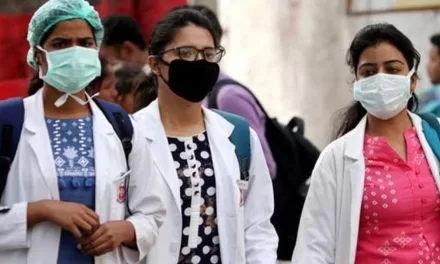
JAIPUR, RAJASTHAN — Hundreds of Foreign Medical Graduates (FMGs) who earned their MBBS degrees abroad staged an intense protest outside the Rajasthan Medical Council (RMC) headquarters on Monday. The demonstration erupted over the council’s sudden decision to halt processing permanent medical registrations for graduates who attended online classes during the COVID-19 pandemic. Seeking an immediate resolution, the protesting doctors argue that the stall leaves them in professional limbo, compounding an ongoing struggle to join India’s heavily strained healthcare workforce.
The standoff in Jaipur reflects a broader, systemic tension sweeping across India’s medical regulatory framework. At its core, the dispute pits the enforcement of rigid educational standards against the practical, messy realities of global pandemic disruptions. While the RMC insists it is waiting for absolute clarity from federal regulators, the graduates—who have already passed India’s rigorous Foreign Medical Graduate Examination (FMGE)—assert they are being unfairly penalized for unprecedented global lockdowns that forced universities worldwide to shift to remote learning.
Evolving Regulations Trigger Campus Confusions
The current crisis stems directly from a series of shifting directives issued by the National Medical Commission (NMC), India’s apex medical regulatory body.
On March 6, 2026, the NMC issued a strict mandate declaring that “online compensation certificates” would no longer be accepted for permanent registration. Instead, it demanded that any remote learning be offset by mandatory, physical, on-site compensation classes. The directive sparked widespread outrage and immediate demonstrations by organizations like the All Foreign Medical Graduates Association (AFA) and the All India Medical Students Association outside the NMC headquarters in New Delhi.
Recognizing the immense logistical hurdles this placed on students who had already returned to India, the NMC blinked. On March 18, 2026, the regulatory body withdrew the March 6 directive and released a revised public notice (No. U-15024/15/2024-UGMEB(Pt)). This new guidelines offered a pathway to relief by accepting valid compensatory certificates and official transcripts from parent foreign medical institutions.
The Federal Framework: NMC’s March 18 Guidelines at a Glance
| Provision | Regulatory Detail |
| Compensatory Certificates | FMGs with valid certificates from foreign universities are deemed eligible for permanent state registration. |
| Flexible Compensation | Foreign institutes can fulfill requirements through additional physical classes or extended course durations. |
| No Extra Indian Internship | FMGs admitted before November 18, 2021, who completed physical compensation and their internship abroad, do not require an additional Indian Compulsory Rotatory Medical Internship (CRMI). |
| Clerkship Alternative | Students completely unable to physically compensate abroad must undergo a 1-to-2-year clinical clerkship within India. |
| Passport Verification | State Medical Councils are strictly required to verify physical attendance by cross-referencing entry and exit stamps in students’ passports. |
State Councils Hesitate Amid Implementation Gaps
Despite the federal easing of rules, local implementation has ground to a halt in Rajasthan. Protesting graduates allege that the RMC’s current freeze is arbitrary, noting that dozens of peers with near-identical educational backgrounds were granted permanent registration only months prior.
“When registrations happened before, why not now?” asked Jagdish Modi, a protesting student whose permanent license application has been pending for an extended period. “We completed portions of our MBBS online because we had no choice during COVID-19. We have met the requirements, passed the screening exams, and yet we are stuck.”
The RMC defends its cautious approach as a necessary measure to protect public health and maintain healthcare quality. Dr. Giridhar Goyal, Registrar of the Rajasthan Medical Council, addressed the crowd, explaining that the duration of online learning varied wildly among applicants.
“Many of these protesting students studied online for anywhere from six months to two full years during the COVID period,” Dr. Goyal stated. “We have actively requested specific guidance from the National Medical Commission regarding exactly how much duration of online education can be safely exempted. Until those explicit, clear directives arrive from the NMC, it is simply not possible to make final decisions on these pending cases.”
A Pattern of Disparity: The Fee Hike Context
This registration freeze is not the first time FMGs in Rajasthan have clashed with state authorities. In May 2025, the RMC faced sharp criticism when it nearly doubled registration fees overnight for foreign-trained doctors—hiking the cost from ₹5,900 to ₹11,800 (inclusive of 18% GST).
By comparison, Indian Medical Graduates (IMGs) who graduate from domestic colleges pay roughly ₹2,000 for provisional certificates and ₹4,000 for permanent registration.
Registration Fee Disparity in Rajasthan (2025–2026)
----------------------------------------------------------
Indian Medical Graduate (IMG):   █████ ₹4,000
Foreign Medical Graduate (FMG):  ███████████████ ₹11,800
----------------------------------------------------------
Medical advocacy groups point to this pricing gap as evidence of systemic bias. “The massive fee disparity between FMGs and Indian Medical Graduates lacks any transparent justification,” argued Dr. Kaushal, Media Coordinator of the All FMGs Association. “Both groups utilize the exact same online registration database, yet FMGs are saddled with double the costs on top of existing hurdles like the FMGE screening exam and extended, often unpaid, internships.”
Public Health Implications: Sidelining Doctors in a Shortage
While the bureaucratic gridlock continues, public health experts warn of severe consequences for India’s healthcare infrastructure. The World Health Organization (WHO) estimates that India needs approximately 1.2 million additional doctors to meet its recommended doctor-to-patient ratio.
The physician deficit is felt most acutely in states like Rajasthan, where vast rural areas regularly suffer from severe shortages of medical personnel. Every month that an qualified doctor’s registration is delayed represents a measurable loss in healthcare delivery capacity. Sidelining hundreds of clinically trained professionals over a paperwork dispute keeps vital hands out of understaffed community health centers.
[WHO Estimated Doctor Deficit in India] ──► 1.2 Million Additional Physicians Needed
[Result of Local Registration Freezes] ──► Qualified FMGs Locked Out of Rural Clinics
Remaining Gaps and Moving Forward
Independent medical education analysts note that while the federal NMC guidelines were intended to streamline the process, they left behind significant implementation vulnerabilities:
-
Inconsistent State Interpretations: Without centralized oversight, different State Medical Councils are interpreting the NMC guidelines independently, leading to a fragmented system where an FMG might be cleared to practice in one state but rejected in another.
-
Severe Documentation Burdens: FMGs are entirely dependent on foreign universities to promptly provide highly specific compensatory transcripts. In war-torn regions or institutions facing localized disruptions, obtaining this paperwork is an administrative nightmare.
-
Passport Discrepancies: The strict reliance on passport stamps fails to account for students who may have faced unique travel routing, visa delays, or dual-citizenship documentation issues during pandemic border closures.
For the health-conscious public, the standoff highlights the complex regulatory machinery required to vet medical professionals. For the protesting FMGs, however, the immediate future remains entirely dependent on how quickly the NMC issues clarifying notes to local state bodies, and whether the Rajasthan Medical Council is willing to accelerate its review processes once those answers arrive.
Medical Disclaimer
This article is for informational purposes only and should not be considered medical advice. Always consult with qualified healthcare professionals before making any health-related decisions or changes to your treatment plan. The information presented here is based on current research and expert opinions, which may evolve as new evidence emerges.
References
- https://medicaldialogues.in/state-news/rajasthan/medicos-protest-after-rajasthan-medical-council-allegedly-stopsfmg-registration-citing-online-classes-171986