 0
0
 0
0
SAIFAI, Uttar Pradesh — In a major breakthrough for minimally invasive surgery, a team of specialized gastrointestinal surgeons at the Uttar Pradesh University of Medical Sciences (UPUMS) has successfully removed a massive 14-centimeter gallstone using advanced laparoscopic techniques. The patient, a 62-year-old woman, had been suffering from debilitating abdominal pain for more than a year before undergoing the complex, record-breaking procedure.
The surgical extraction marks a significant departure from standard medical protocols. Typically, a “giant gallstone” of this magnitude necessitates conventional open surgery—a process that requires a substantial abdominal incision, a prolonged hospital stay, and a lengthy recovery period. By utilizing laparoscopy, the surgical team demonstrated that highly complex, structurally anomalous cases can be safely managed through minimally invasive means at specialized regional medical institutions.
Technical Details of the Record-Breaking Stone
The extracted cholelith (gallstone) measured an astonishing $14\text{ cm} \times 8.3\text{ cm} \times 4.2\text{ cm}$ and weighed approximately 200 grams. To put this in perspective, standard gallstones generally range from the size of a grain of sand to a golf ball (roughly 4 cm).
[Typical Gallstone: ~1–4 cm] ───► [Extracted Gallstone: 14 cm (Size of a large grapefruit)]
According to international medical literature, the previous global benchmark for laparoscopic gallstone removal was established in 2020 by a surgical team in Trinidad and Tobago. That case, documented in the peer-reviewed Cureus Journal of Medical Science, involved the removal of a stone measuring $12.8\text{ cm} \times 7\text{ cm}$ and weighing 178 grams. The newly reported case in Saifai surpasses those dimensions in length, width, and overall mass.
Innovation in the Operating Room
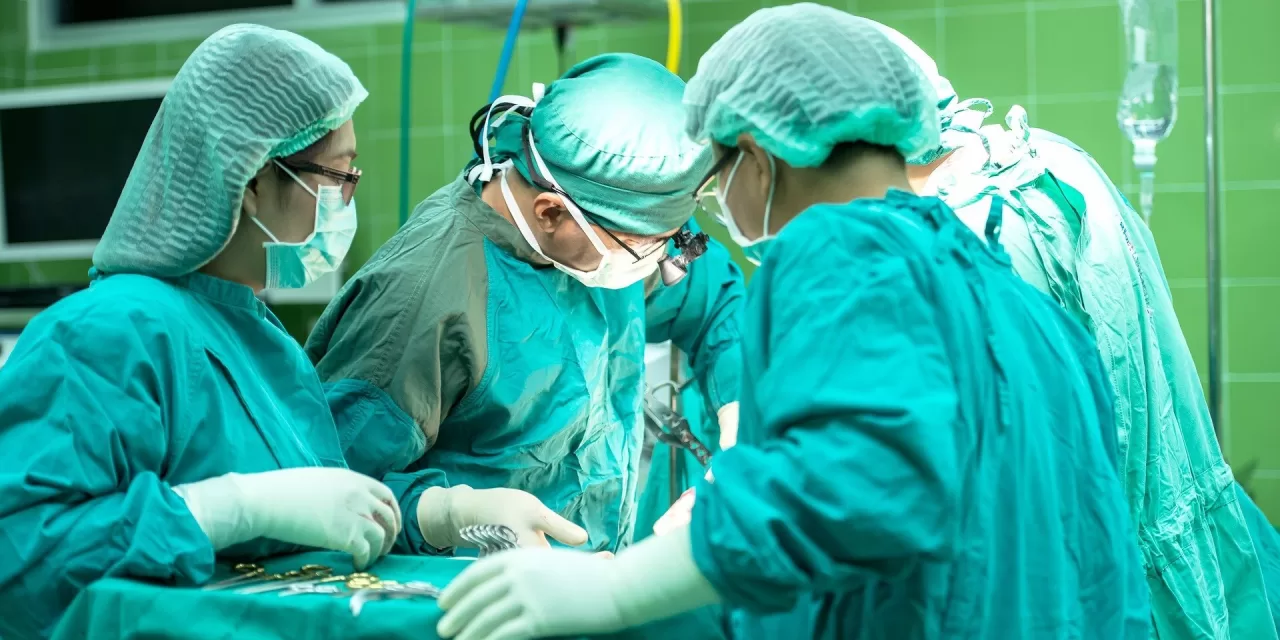
The procedure was led by Dr. Kanhaiya Lal Chaudhary, a faculty surgeon in the university’s Department of Gastro Surgery. Dr. Chaudhary utilized a standard four-port laparoscopic entry method, a technique that involves inserting narrow tubes (trocars) into four tiny abdominal punctures to guide surgical instruments and a high-definition camera.
The primary surgical hurdle of the 70-minute operation occurred during extraction. Because the stone completely filled the gallbladder, the organ could not be pulled through a standard laparoscopic port. To circumvent this without resorting to a full open laparotomy, the team carefully extended the epigastric working incision to just over 8 centimeters. This allowed them to safely extract the intact gallbladder containing the massive specimen without rupturing it inside the peritoneal cavity.
Following the operation, the patient experienced a rapid recovery, a signature benefit of laparoscopic interventions. She was ambulatory within hours and was safely discharged from the facility the following day. Dr. Ajay Singh, Vice-Chancellor of UPUMS, commended the team, stating that the operation highlights the advancing capabilities and high standards of specialized healthcare infrastructure developing outside of India’s major metropolitan private sectors.
Understanding Gallstone Pathology and Prevalence
Gallstones are hardened deposits of digestive fluid that crystallize within the gallbladder—a small, pear-shaped organ situated just beneath the liver that stores and concentrates bile. The vast majority are classified as cholesterol gallstones, which develop when the liver secretes more cholesterol than the available bile acids can effectively dissolve.
Cholelithiasis (gallstone disease) remains a prominent public health issue globally. In Western nations, it affects approximately 10% to 20% of the adult population. In India, epidemiological data shows an overall national incidence of roughly 4%, though regional variations are highly pronounced:
| Location / Subgroup | Estimated Prevalence Rate |
| Mullanpur (Punjab) | 10.8% |
| Guwahati (Assam) | 10.7% |
| Barshi (Maharashtra) | 0.3% |
| Demographic Peak | Women over 60 years of age |
Epidemiological Risk Factors
Data compiled by institutions like the Mayo Clinic and Johns Hopkins Medicine outline several key biological and lifestyle variables that alter bile chemistry and elevate stone formation risk:
-
Biological Sex: Females are twice as likely to develop gallstones as males, largely due to estrogen, which increases bile cholesterol secretion.
-
Age Profile: Risk climbs significantly after age 40, with the highest concentration of symptomatic cases appearing in individuals over 60.
-
Metabolic Profiles: Obesity alters systemic lipid metabolism, increasing cholesterol saturation in bile. Similarly, conditions like diabetes are tied to elevated triglyceride levels, which impair natural gallbladder motility.
-
Dietary Mechanics: Diets high in saturated fats and refined carbohydrates cause an over-saturation of cholesterol in the gallbladder, accelerating the crystallization process.
Clinical Implications of Giant Gallstones
In gastroenterology, any gallstone measuring greater than 5 centimeters is classified as a “giant gallstone.” These cases are exceptionally rare and introduce severe clinical risks. Independent medical studies indicate that large stones exert continuous mechanical pressure on the gallbladder wall, causing chronic inflammation.
Over extended periods, this severe inflammation increases the risk of developing gallbladder cancer. Furthermore, giant stones can erode through the gallbladder wall entirely, creating abnormal passages into the intestines (biliary enteric fistulas) or causing physical bowel obstructions (gallstone ileus).
Historically, these associated risks, combined with the technical difficulty of manipulating an enlarged, rigid gallbladder via laparoscopy, made open surgery the default clinical choice. Giant stones make it difficult for standard surgical tools to grasp the tissue safely and often obscure Calot’s triangle—the critical anatomical zone containing the cystic artery and cystic duct. The success of the UPUMS team demonstrates that with advanced training, these structural barriers can be managed without standard open incisions.
Limitations, Verification, and Next Steps
While the surgical outcome is a major milestone for the institution, independent health journalists and medical authorities emphasize that global claims require structured peer-review. The previous record-holder from Trinidad and Tobago underwent comprehensive documentation, peer assessment, and indexing via a formal DOI citation system. The UPUMS surgical team will need to submit their full case report, high-resolution imaging, and pathological verification to an international surgical journal to officially cement its status in global medical archives.
Additionally, public health experts note that while laparoscopic breakthroughs are impressive, they should not overshadow the necessity of early clinical intervention. The patient in this case endured progressive abdominal pain for over a year. Leaving a stone to grow to such dimensions increases the probability of emergency complications, which often carry a much higher rate of conversion from laparoscopic to open surgery in the middle of a procedure.
What This Means for Consumer Health
For health-conscious individuals and patients currently managing biliary issues, this milestone highlights several critical health practices:
-
Do Not Ignore Symptoms: Persistent or intermittent pain in the upper right quadrant of the abdomen—particularly sudden pain that intensifies after eating rich or fatty foods, or radiates between the shoulder blades—warrants prompt diagnostic imaging, such as an abdominal ultrasound.
-
Evolving Demographics: While historically associated with older age groups, the incidence of gallstone disease is rising among individuals aged 20 to 40. Clinical experts attribute this shift to changing metabolic trends, highly processed diets, and sedentary lifestyles.
-
Explore Minimally Invasive Options: Patients diagnosed with large or complex gallstones should consult with a gastroenterologist or hepatobiliary surgeon to evaluate whether laparoscopy is a viable option at an accredited regional center, rather than assuming open surgery is the only path forward.
Medical Disclaimer
This article is for informational purposes only and should not be considered medical advice. Always consult with qualified healthcare professionals before making any health-related decisions or changes to your treatment plan. The information presented here is based on current research and expert opinions, which may evolve as new evidence emerges.
References
- https://theprint.in/india/up-worlds-largest-gallbladder-stone-removed-with-laparoscopic-surgery-at-saifai-medical-college/2945991/?amp