0
0
 0
0
DELHI — In a major infrastructure milestone aimed at broadening healthcare accessibility across India, the Union Ministry of Ayush announced that 12,500 specialized health hubs—now officially designated as Ayushman Arogya Mandir (Ayush)—are fully operational across states and Union Territories.
The nationwide expansion, formally confirmed in a written reply to the Rajya Sabha by Union Minister of State (I/C) for Ayush, Shri Prataprao Jadhav, reflects a concerted drive to integrate traditional Indian systems of medicine—such as Ayurveda, Yoga, Unani, Siddha, Sowa-Rigpa, and Homeopathy—into mainstream primary healthcare.
The initiative upgraded 10,941 existing Ayush dispensaries and 1,559 sub-health centers into modern wellness outlets. Over the past two financial years, Central and State authorities allocated ₹1,872.71 crore toward the National Ayush Mission (NAM), utilizing ₹1,802.15 crore to construct facilities, deploy staff, and procure medical supplies.
A “Single-Window” Approach: The Co-Location Strategy
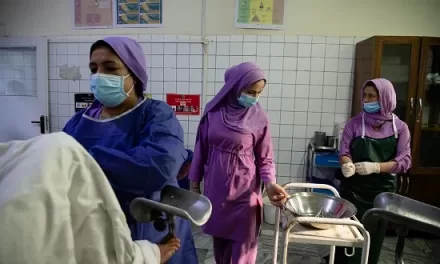
A central pillar of the initiative is the co-location of traditional and modern medical services within existing public health structures. By placing Ayush clinicians and paramedics within established facilities, the government aims to give patients direct choice between conventional biomedicine and traditional therapeutic options under one roof.
According to national database records from the National Health Mission (NHM), co-located Ayush centers now operate within:
-
6,302 Primary Health Centres (PHCs)
-
3,191 Community Health Centres (CHCs)
-
475 District Hospitals (DHs)
Under this dual framework, the Ministry of Health & Family Welfare supports clinician training and human resources through the National Health Mission, while the Ministry of Ayush funds structural infrastructure, diagnostic equipment, and medicine distribution.
“Integrating traditional systems into primary care infrastructure provides patients with holistic care, particularly for chronic lifestyle conditions where non-pharmacological interventions like Yoga and Ayurvedic dietary guidance play a preventive role,” said Dr. Sunita Malhotra, a senior public health analyst not involved in the government report. “The main advantage is accessibility—bringing structured, standardized care to rural and underserved populations.”
Supply Chains and Medicinal Plant Sustainability
To support the increased demand for herbal formulations, the National Medicinal Plants Board (NMPB) is running a targeted Central Sector Scheme focused on the sustainable cultivation, conservation, and supply chain management of medicinal flora.
The scheme funds research, in-situ and ex-situ plant conservation, and livelihood linkages with local bodies like Joint Forest Management Committees (JFMCs) and Panchayats. By establishing infrastructure for post-harvest handling, quality testing, and farmer training, the initiative aims to stabilize supply chains while preventing the over-harvesting of wild medicinal plants.
                  SUSTAINABLE MEDICINAL PLANT SUPPLY CHAIN
                                     │
      ┌──────────────────────────────┼──────────────────────────────┐
      ▼                              ▼                              ▼
In-Situ/Ex-Situ                Farmer Training &              Post-Harvest &
 Conservation                  Quality Planting               Testing Certification
 (NMPB Funded)                 (Local Panchayats)             (PCIM&H Standards)
Standardizing Traditional Medicine: Regulatory Measures & Quality Control
As traditional remedies gain wider clinical usage, public health experts emphasize the necessity of strict regulatory oversight to ensure medicine safety, purity, and freedom from contaminants like heavy metals or synthetic adulterants.
To address these safety imperatives, the government enforces legal frameworks under the Drugs & Cosmetics Act, 1940 and Drugs Rules, 1945. Manufacturers must adhere to Good Manufacturing Practices (GMP) under Schedule T and comply with pharmacopoeial standards.
Regulatory Oversight and Testing Infrastructure
-
Official Compendia: The Pharmacopoeia Commission for Indian Medicine & Homoeopathy (PCIM&H) establishes mandatory standards for drug identity, purity, and strength, serving as the official appellate testing laboratory.
-
Laboratory Network: A total of 118 private laboratories and 34 State/UT Drug Testing Laboratories are currently functional under Rules 160 A–J to test samples collected by drug inspectors.
-
Financial Support: The Ayush Oushadhi Gunvatta Evam Uttpadan Samvardhan Yojana (AOGUSY) scheme provides targeted financial assistance to upgrade manufacturing units and testing labs.
-
Quality Certification: The Ministry utilizes the Central Drugs Standard Control Organization (CDSCO) Ayush Vertical for international certifications (such as the WHO Certificate of Pharmaceutical Product) alongside the Quality Council of India (QCI) Standard and Premium marks.
Public Health Implications and Clinical Nuance
Public health researchers note that while integrating traditional medicine offers alternative avenues for wellness and disease management, clear communication regarding treatment parameters remains vital.
| Health Domain | Traditional Systems (Ayush) | Conventional Medicine (Biomedicine) | Integrated Model Benefit |
| Primary Focus | Preventive care, lifestyle adjustments, wellness maintenance | Acute care, emergency medicine, surgical interventions | Complete continuum of care |
| Chronic Disease | Supportive therapy, symptom management, metabolic alignment | Targeted pharmacological control, diagnostic tracking | Multimodal treatment choices |
| Standardization | Pharmacopoeial guidelines (PCIM&H), GMP compliance | Rigorous clinical trial phases, global regulatory standards | Standardized product safety |
While traditional remedies offer benefits for wellness, stress management, and supportive care in mild or chronic conditions, experts emphasize that acute infections, emergency trauma, surgical needs, and advanced chronic illnesses require immediate assessment by conventional medical practitioners.
Public Health Perspectives and Next Steps
Despite the operationalization of 12,500 centers, health policy experts highlight ongoing challenges that require continued observation:
-
Interoperability and Training: Ensuring seamless cross-referrals between conventional medical officers and Ayush practitioners without compromising patient care timelines.
-
Rigorous Monitoring: Maintaining strict market surveillance to quickly identify and recall “Not of Standard Quality” (NSQ) batches from supply lines.
-
Evidence-Based Integration: Continuing clinical trial research to establish rigorous safety profiles and drug-herb interaction data for complex therapies.
As these 12,500 centers begin full operations across India, public health observers view the model as a significant test case for co-located, integrative public healthcare delivery in developing nations.
References
-
Ministry of Ayush, Government of India. (2026, July 21). Upgrading Ayush dispensaries under NAM. Press Information Bureau (PIB), Delhi.
Medical Disclaimer: This article is for informational purposes only and should not be considered medical advice. Always consult with qualified healthcare professionals before making any health-related decisions or changes to your treatment plan. The information presented here is based on current research and expert opinions, which may evolve as new evidence emerges.