 0
0
 0
0
SÃO PAULO, Brazil — Health authorities in Brazil’s most populous state are investigating a suspected case of Ebola virus disease in the capital city of São Paulo. The announcement, made Saturday, May 30, 2026, marks the country’s first potential encounter with the virus during the current international crisis.
The patient, a 37-year-old male national from the Democratic Republic of Congo (DRC), recently arrived in Brazil from his home country, which is currently grappling with a rapidly expanding and deadly Ebola epidemic. Upon developing a high fever—a key clinical trigger—the patient was immediately placed under strict isolation at the Emílio Ribas Infectology Institute in São Paulo, a premier reference center equipped for high-complexity infectious diseases and strict biosafety management.
Laboratory samples have been collected and are undergoing urgent genetic sequencing to confirm or rule out the presence of the virus.
The Backdrop: A “Public Health Emergency of International Concern”
The investigation in Brazil unfolds against the backdrop of a severe, fast-moving epidemic in Central Africa. Just weeks earlier, on May 17, 2026, the World Health Organization (WHO) officially designated the situation a Public Health Emergency of International Concern (PHEIC). This designation underscores the extraordinary nature of the outbreak and the high risk of international spread.
According to data compiled by the European Centre for Disease Prevention and Control (ECDC) and the WHO as of May 29, 2026, the epidemic has expanded at an alarming velocity:
Outbreak Status Metrics (As of late May 2026)
| Metric | Confirmed Cases | Suspected Cases |
| Democratic Republic of Congo (DRC) | 125 | 906 |
| Uganda | 9 | Monitoring actively |
| Total Deceased (DRC) | 17 | 223 |
The outbreak is heavily concentrated across 11 health zones within the DRC’s conflict-impacted provinces of Ituri, North Kivu, and South Kivu. Cross-border transmission has already been documented in neighboring Uganda, where at least three of its nine confirmed cases were linked directly to travel from the DRC. Furthermore, international vulnerabilities were highlighted by a confirmed case involving an American healthcare worker who contracted the virus while treating patients in the DRC and was subsequently evacuated to Germany for specialized care.
Why This Strain Matters: The Bundibugyo Challenge
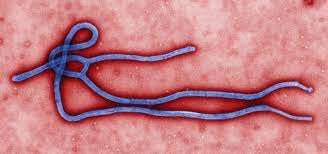
The current epidemic is uniquely challenging because it is driven by the Bundibugyo virus (Orthoebolavirus bundibugyoense). This is a rarer species of Ebola distinct from the Zaire ebolavirus, which caused the catastrophic West African epidemic between 2014 and 2016.
The genetic difference has critical implications for global public health tools:
-
No Licensed Vaccine: While highly effective vaccines (such as rVSV-ZEBOV) exist to protect against the Zaire strain, there are currently no licensed, widely approved vaccines available for the Bundibugyo variant.
-
No Specific Therapeutics: Experimental monoclonal antibodies and antiviral candidates exist, but their efficacy against Bundibugyo remains unproven. No specific targeted therapies are currently approved.
-
Case Fatality Profile: Historical data and a comprehensive meta-analysis indicate that the Bundibugyo virus carries a pooled case fatality rate (CFR) of 32.8% (95% CI: 25.8–40.2%). While statistically lower than the Zaire strain’s historical average of roughly 60% to 70%, it remains an exceedingly lethal pathogen.
Because targeted medical countermeasures are unavailable, global health authorities emphasize that early supportive care—including aggressive intravenous rehydration, electrolyte stabilization, oxygen support, and symptom management—is the primary lifesaving intervention.
Transmission Dynamics and Clinical Progression
To prevent unnecessary public anxiety, epidemiologists emphasize understanding how Ebola spreads. It is not an airborne pathogen like influenza or COVID-19.
Transmission requires direct contact with the blood, secretions, or other bodily fluids (such as vomit, diarrhea, saliva, or sweat) of an infected person who is actively displaying symptoms, or who has died from the disease. It can also spread via surfaces or items (like bedding or needles) contaminated with these fluids. Crucially, individuals incubating the virus cannot transmit it to others until outward symptoms appear.
The disease typically progresses through distinct clinical phases after an incubation period ranging from 2 to 21 days (averaging 8 to 10 days):
[Exposure] ➔ [Incubation: 2-21 Days (Asymptomatic)] ➔ [Early Phase Symptoms] ➔ [Advanced Phase Symptoms]
-
Early Phase: Abrupt onset of high fever, profound fatigue, muscle and joint pain, severe headache, and sore throat.
-
Advanced Phase: Progressive gastrointestinal distress including severe vomiting, watery diarrhea, and abdominal pain. This may be accompanied by an unexplained rash and impaired kidney and liver function.
-
Hemorrhagic Manifestations: In severe cases, patients develop internal and external bleeding, such as bleeding from the gums or blood in the stool.
Domestic Response: Precaution Without Panic in Brazil
Brazilian health officials stress that the risk of domestic transmission within South America remains exceptionally low. Brazil does not share land borders with the affected African nations, nor are there direct commercial flights operating between Brazil and the current outbreak zones in the DRC.
The state of São Paulo has active, established epidemiological surveillance systems designed precisely to intercept imported health threats.
“São Paulo acts preventively and maintains its network prepared for a rapid and secure response,” stated Regiane de Paula, Health Coordinator at the Disease Control Coordination of São Paulo’s State Health Secretariat. “Because it concentrates an important international traveler flow, the state has defined protocols, active surveillance, trained teams, and reference units for identification, notification, and timely care of suspected cases.”
To date, Brazil has investigated a total of nine suspected Ebola cases under these rigorous travel-screening protocols. Four of those historical cases were formally “discarded” after thorough medical evaluation and testing ruled out the virus. Authorities urge the public to view the current situation in São Paulo as a functioning health safety net doing its job, rather than an active outbreak.
Expert Commentary: The Value of Early Detection
Dr. Alexandra Schmidt, an infectious disease specialist at the University of São Paulo School of Medicine who is not involved in the patient’s care, emphasized that the isolation of the patient represents a victory for public health screening.
“This suspected case demonstrates the importance of Brazil’s surveillance system working exactly as intended,” Dr. Schmidt explained. “When an individual presents with a fever and a clear history of recent travel to an active outbreak zone, protocols dictate immediate isolation and diagnostic testing. The fact that this case was flagged and isolated so rapidly shows that our defensive line is alert.”
Dr. Schmidt also underscored the lack of risk to the broader public. “Ebola requires close, direct contact with infectious fluids from a highly symptomatic individual. It does not circulate invisibly through the air. As long as rigid clinical biosafety protocols are maintained within the reference hospital, the isolated patient poses no risk to the general population of São Paulo.”
Sociopolitical Hurdles in the Outbreak Epicenter
Controlling the source epidemic in eastern DRC remains complicated by what the WHO describes as a “catastrophic collision of disease and conflict.” The region faces systemic armed violence, mass civilian displacement, severe food insecurity, and deep-seated community mistrust.
Humanitarian agencies, including Médecins Sans Frontières (MSF), report that emergency response infrastructure has struggled to keep pace with the virus’s spread. WHO Director-General Dr. Tedros Adhanom Ghebreyesus traveled to Bunia, the capital of Ituri province, to evaluate containment efforts firsthand. Dr. Tedros highlighted that local containment is severely hindered by community resistance to safe burial protocols. Because the bodies of deceased Ebola victims remain highly contagious, traditional funeral practices involving the washing or handling of the deceased present a major transmission vector. Efforts to secure safe, dignified burials have occasionally met with community resistance, including instances of crowds attempting to reclaim bodies from medical facilities.
Furthermore, MSF operational leaders note that global diagnostic resources are constrained. Shortages of Bundibugyo-specific rapid testing reagents have slowed down case confirmation in remote areas, creating critical delays in contact tracing and patient isolation.
What Happens Next?
The definitive diagnosis of the patient in São Paulo rests entirely on the impending laboratory results from molecular testing.
If the diagnostic panels return negative for Ebola, the case will be officially discarded, and physicians will pivot to investigate other common causes of acute tropical fevers, such as malaria or typhoid. If the laboratory confirms a positive infection, Brazil will immediately trigger extensive contact tracing protocols—identifying and monitoring every individual who shared close transit spaces with the patient—while maintaining strict medical isolation until the patient is completely free of the virus.
For health-conscious citizens and international travelers, current guidelines remain measured. The WHO does not recommend any generalized restrictions on international travel or trade. Travelers returning from the DRC or Uganda are advised to monitor their health continuously for 21 days; should a fever or unexplained illness develop, they must seek immediate medical attention and explicitly disclose their complete travel history to healthcare providers.
Medical Disclaimer
This article is for informational purposes only and should not be considered medical advice. Always consult with qualified healthcare professionals before making any health-related decisions or changes to your treatment plan. The information presented here is based on current research and expert opinions, which may evolve as new evidence emerges.
References
-
Thomson Reuters: “Brazil investigates suspected Ebola case in Sao Paulo.” Reported by Fabio Teixeira, May 30, 2026.