 0
0
 0
0
LONDON — In a landmark discovery that significantly advances our understanding of mental health, a massive international collaboration has identified 74 distinct regions within the human genome associated with anxiety symptoms. By pooling the genetic profiles of nearly 700,000 individuals, researchers have mapped the largest set of anxiety-related genetic signals to date. The findings, published in Nature Human Behaviour, offer unprecedented insights into the neural communication pathways underlying emotional regulation. Crucially, however, the study reveals that these common genetic variations account for only about 6% of the differences in anxiety severity between individuals, reinforcing the reality that environmental factors, life experiences, and social determinants remain the dominant drivers of the condition.
Mapping the Polygenic Blueprint of Anxiety
Anxiety disorders and elevated anxiety symptoms represent some of the most pervasive mental health challenges worldwide. While clinicians have long recognized that anxiety runs in families, pinpointing the specific molecular triggers has historically proven elusive.
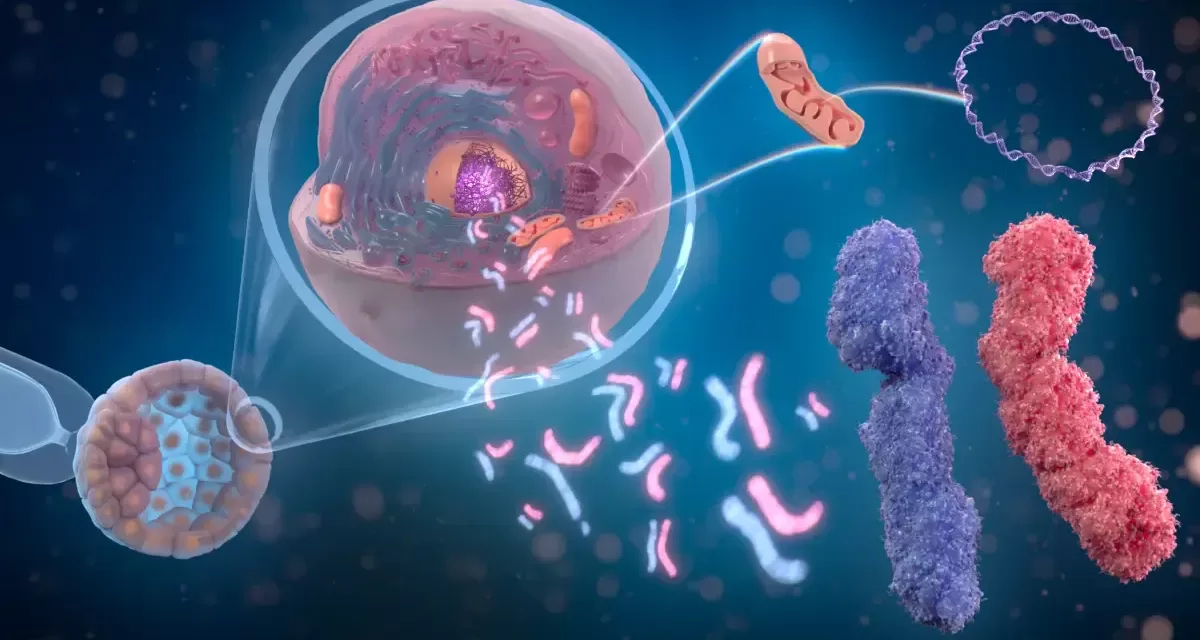
To confront this challenge, an international consortium led by institutions including King’s College London and the QIMR Berghofer Medical Research Institute conducted a Genome-Wide Association Study (GWAS). By analyzing an expansive dataset of roughly 693,869 individuals of European ancestry, the researchers possessed the statistical power required to detect incredibly subtle genetic influences that smaller studies inevitably miss.
The analysis identified 80 independent, genome-wide significant variants mapped across 74 distinct genetic loci (locations on a chromosome). Remarkably, 39 of these loci had never previously been linked to anxiety symptoms.
Rather than identifying a single “anxiety gene”—a common misconception in behavioral genetics—the study underscores a polygenic architecture. This means anxiety is influenced by hundreds or thousands of common DNA differences, each exerting a tiny, cumulative effect on an individual’s overall predisposition.
Synapses and Signals: The Biological Context
To understand how these minute genetic variations influence mood, the research team looked at where these genes are active. Many of the implicated genes are highly expressed in brain tissue, particularly within pathways that govern how neurons interact.
Two specific genes highlighted in the study, PCLO (piccolo) and SORCS3, are heavily involved in synaptic function—the mechanism by which brain cells transmit chemical messages to one another.
[Sending Neuron] ---> (Synapse: Guided by PCLO/SORCS3) ---> [Receiving Neuron]
                                     |
                       Influences Emotional Regulation
When synaptic communication is subtly altered by genetic variations, it can impact how the brain processes stress, threat, and emotional regulation. Identifying these pathways gives scientists a tangible biological starting point to explore how vulnerability to anxiety is constructed at the cellular level.
Expert Perspectives: Scale vs. Certainty
Independent experts have welcomed the study as a monumental achievement in psychiatric genetics, while simultaneously urging cautious interpretation.
“The sheer scale of this study provides a robust and highly reliable map of the genetic correlates of anxiety,” notes Dr. Arvid Thorson, a psychiatric geneticist not involved in the research. “However, a larger map does not equal an immediate clinical blueprint. These findings expand our fundamental biological knowledge, but they do not provide deterministic predictions for individuals.”
Clinicians emphasize that genetic insights must not be viewed in isolation. True clinical utility will only come when these genetic markers are integrated into broader, multi-dimensional models that account for a patient’s developmental history, psychological coping mechanisms, and immediate environmental stressors.
Public Health Implications: The 6% Equation
For the health-conscious public, the most critical takeaway lies in what scientists call “SNP-heritability.” The common genetic differences measured in this study accounted for a modest 6% of the variation in anxiety symptom severity.
This statistic carries profound public health implications. It serves as definitive proof that carrying “risk variants” is neither a diagnosis nor a preordained fate. Because non-genetic factors drive the vast majority of symptom variance, population-level strategies must continue to focus heavily on:
-
Social Determinants: Mitigating poverty, systemic stress, and unstable living conditions.
-
Early Intervention: Providing robust psychological resources in schools and workplaces.
-
Lifestyle Modifiers: Promoting physical health, sleep hygiene, and community support networks.
While the identified biological pathways could eventually inspire novel pharmacological treatments, any transition from a genetic map to a new prescription drug will require years of functional laboratory studies and rigorous clinical trials.
Limitations and the Diversity Gap
Despite its groundbreaking nature, the study carries distinct limitations that reflect ongoing challenges within genomic research.
The Ancestry Bottleneck
The dataset relied entirely on individuals of European ancestry. Because genetic architecture, variant frequencies, and environmental interactions vary across globally diverse populations, these specific findings cannot be reliably generalized to individuals of non-European descent.
Correlation vs. Causation
A GWAS identifies statistical associations, not direct causal mechanisms. Some of the 74 identified locations may simply be “tagging” nearby causal variants, or they might reflect complex gene-environment interplays rather than straightforward biological cause-and-effect relationships.
Low Predictive Value
Because the total variance explained is so low (6%), using these genetic variants to create individual risk-prediction tools or commercial genetic tests for anxiety is premature and lacks clinical utility.
Practical Takeaways for Readers
- https://economictimes.indiatimes.com/news/india/study-identifies-74-locations-in-human-genome-related-to-anxiety-symptoms/articleshow/131907754.cms?from=mdr
Medical Disclaimer: This article is for informational purposes only and should not be considered medical advice. Always consult with qualified healthcare professionals before making any health-related decisions or changes to your treatment plan. The information presented here is based on current research and expert opinions, which may evolve as new evidence emerges.