 0
0
 0
0
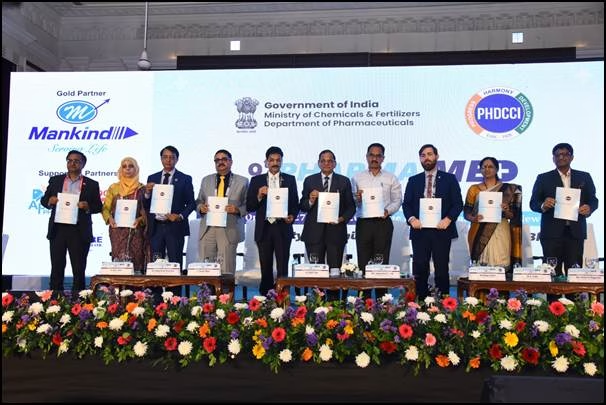
NEW DELHI — In a move signaling India’s transition from the “pharmacy of the world” to a global innovation powerhouse, the 9th edition of PharmaMed 2026 opened yesterday with a bold mandate: ensuring that cutting-edge medical advancement translates into healthcare equity for every citizen.
The summit, organized by the PHD Chamber of Commerce & Industry (PHDCCI) in collaboration with the Department of Pharmaceuticals, brought together a high-powered coalition of NITI Aayog policymakers, global regulators including the U.S. FDA, and industry titans. At the heart of the dialogue is a strategic roadmap to reduce India’s dependence on foreign raw materials while expanding the reach of life-saving treatments to the country’s most remote corners.
From Volume to Value: A Paradigm Shift
For decades, India has been celebrated for its ability to produce high-quality generic medicines at scale. However, the 2026 summit marks a pivot toward Value-Driven Growth.
Dr. Vinod K. Paul, Member of NITI Aayog, emphasized that the pharmaceutical sector is the linchpin of financial protection for Indian families. “Medicines account for a significant share of out-of-pocket healthcare expenses,” Dr. Paul stated during the inaugural session. He noted that through the Ayushman Bharat initiative, the government is now transforming 180,000 health centers to provide between 105 and 172 essential medicines free of charge at the primary care level.
This shift isn’t just about providing more pills; it’s about fostering an ecosystem where Indian labs discover the next generation of biological therapies. “India has the talent, scale, and scientific capability,” Dr. Paul added. “If aligned with strong Research, Development, and Innovation (RDI), India will not just participate in global pharma, but will lead it.”
Strengthening the Spine: Supply Chain and APIs
One of the most critical vulnerabilities exposed during global disruptions over the last five years has been the reliance on imported Active Pharmaceutical Ingredients (APIs) and Key Starting Materials (KSMs).
Shri Satyaprakash T. L., Joint Secretary of the Department of Pharmaceuticals, outlined an aggressive domestic strategy. To bolster “Atmanirbharta” (self-reliance), the government is prioritizing:
-
Enzymatic Engineering: Using indigenous biology to replace imported chemical precursors.
-
Clinical Trial Infrastructure: Plans to establish 1,000 new clinical trial sites across India to accelerate the journey from lab to market while reducing costs.
-
STEM Integration: Leveraging a workforce of 300,000 researchers across 8,000 institutions to fuel “Green Chemistry” and sustainable manufacturing.
“Biology is the new technology,” Shri Satyaprakash remarked, suggesting that the integration of “code” and “complex biology” will define the next decade of Indian manufacturing.
Global Collaboration and Quality Assurance
The summit also highlighted India’s indispensable role in the American and European healthcare systems. Shri Gregory Smith, India Country Director for the U.S. Food and Drug Administration (FDA), confirmed that India now hosts over 600 FDA-registered manufacturing facilities.
“Strengthening quality systems and regulatory alignment remains key to ensuring patient safety worldwide,” Smith noted. This emphasis on “Quality Management Maturity” aims to ensure that medicines produced in India meet the highest global safety standards, whether they are destined for a village in Uttar Pradesh or a pharmacy in New York.
What This Means for Consumers
For the average citizen, the outcomes of PharmaMed 2026 are expected to manifest in three tangible ways:
-
Lower Costs: By manufacturing APIs and KSMs domestically, the industry can reduce production costs, potentially lowering the retail price of chronic disease medications.
-
Faster Access to New Treatments: The expansion of clinical trial sites in India means that new therapies for cancer, rare diseases, and diabetes may be tested and approved locally much faster than in previous years.
-
Improved Primary Care: The integration of the pharma supply chain with the Ayushman Bharat digital grid aims to ensure that “stock-outs” at rural health centers become a thing of the past.
Challenges and Counter-Perspectives
While the vision is ambitious, experts warn of significant hurdles. Moving from generics to innovation requires massive capital expenditure. Shri Abhay Kumar Srivastava, Chair of the Pharmaceutical Manufacturing Committee at PHDCCI, noted that “backward integration” is essential for national security but requires seamless collaboration between the public and private sectors to navigate “global uncertainties.”
Additionally, some public health advocates suggest that while increasing the number of clinical trial sites is a positive step for innovation, it must be matched by rigorous ethical oversight to protect participants, particularly as the volume of trials increases.
The Road Ahead: “Viksit Bharat 2047”
The summit concluded its first day with a consensus: healthcare equity is the ultimate metric of success for the Indian pharma industry. As Dr. Ranjeet Mehta, CEO of PHDCCI, summarized, “True progress demands not just economic growth, but a healthy India where healthcare is accessible and affordable for all.”
With the “best just beginning,” according to government officials, the 2026 roadmap positions India not merely as a factory, but as a laboratory for the world—driven by the philosophy that health is a right, not a privilege.
Medical Disclaimer
Medical Disclaimer: This article is for informational purposes only and should not be considered medical advice. Always consult with qualified healthcare professionals before making any health-related decisions or changes to your treatment plan. The information presented here is based on current research and expert opinions, which may evolve as new evidence emerges.
References and Sources
Official Reports and Statements:
-
Press Information Bureau (PIB) Delhi: “PharmaMed 2026 Positions India as Global Pharma Powerhouse,” Published March 27, 2026. [Ref: PIB Delhi, 3:55 PM].