 0
0
 0
0
March 28, 2026
WASHINGTON D.C. — A landmark study published this week in The Lancet Public Health has identified a clear winner in the global battle to improve nutrition literacy: separate “high-in” warning labels. In a large-scale randomized controlled trial involving over 15,500 U.S. participants, researchers found that placing individual warning icons for saturated fat, sugar, and sodium on the front of food packaging significantly outperformed all other labeling formats. By providing an intuitive “multiple red flag” system, these labels helped consumers more accurately identify and avoid products that contribute to chronic diseases like obesity and type 2 diabetes.
The Search for a “Gold Standard” in Labeling
As the prevalence of diet-related chronic illnesses continues to climb, public health officials have long debated how to best communicate nutritional risks on the front of food packages (FOPL). While the traditional “Nutrition Facts” panel on the back of products remains a staple, its complexity often fails to influence split-second purchasing decisions in busy grocery aisles.
The new study sought to end this ambiguity. Researchers exposed 15,584 U.S. adults to a simulated online shopping environment, testing four distinct labeling schemes against a control group with no labels:
-
Multi High-In: Separate black-and-white warning labels for each nutrient (e.g., one for “High Sugar,” one for “High Sodium”).
-
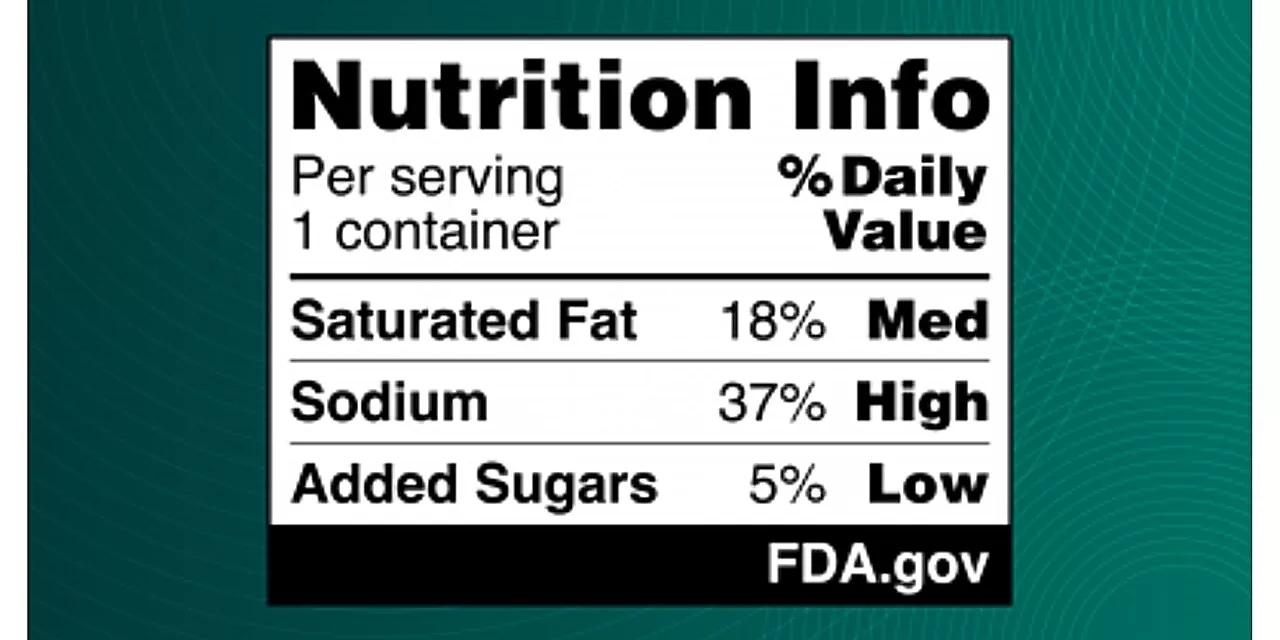
Nutrition-Info-Red: A scheme using low/medium/high descriptors with “high” highlighted in red.
-
Single High-In: A single label listing all nutrients of concern in one box.
-
Proposed U.S. Info Box: A simplified version of the standard Nutrition Facts, focusing on percentages of daily value (%DV).
Why “Multiple” Matters
The results were striking. While all labeling formats improved a participant’s ability to understand nutrient content compared to no labels at all, the Multi High-In scheme was the most effective.
According to the data, this format yielded the highest recall and reported use among shoppers. More importantly, it resulted in the lowest selection rates for unhealthy products. Unlike quantitative schemes that provide percentages—which can sometimes inadvertently make a product seem “healthier” than it is by providing too much data to process—the separate warnings acted as immediate visual cues.
“Among the label formats tested, Multi-High-In did well across a range of outcomes,” noted Dr. Brian Lemmon, the study’s lead author. “This might reflect that for this design, the number of labels provides a quick and intuitive sense of product healthfulness.”
Essentially, seeing three separate warning icons on a bag of chips creates a stronger psychological “stop” signal than a single box containing the same information.
Expert Perspectives: Cutting Through the Noise
Independent experts suggest this study could be the final nudge needed for mandatory policy changes. Dr. Marion Nestle, a renowned nutrition policy expert and Professor Emerita at New York University, who was not involved in the study, has frequently advocated for such clarity.
“Warning labels cut through industry marketing by directly flagging risks,” Dr. Nestle has noted in her analysis of food politics. “They empower shoppers like traffic lights at an intersection, providing a clear signal in an environment designed to encourage overconsumption.”
However, the path to implementation is rarely smooth. Dr. Gary Ruskin, executive director of U.S. Right to Know, points out that while the science is clear, the political hurdles are significant. “Industry opposition is fierce,” Ruskin observed, noting that food manufacturers often push for “star ratings” or “daily value” boxes that provide a more favorable, albeit more confusing, veneer to processed foods.
A Global Shift in Public Health
The implications of this research extend far beyond U.S. borders. In nations like Chile and Mexico, “high-in” octagonal warning labels are already mandatory. Real-world data from these regions shows that such labels can reduce the purchase of unhealthy items by up to 20%.
In India, where urbanization has led to a surge in the consumption of ultra-processed foods, the debate over labeling is reaching a fever pitch. With an estimated 5.8 million cases of diabetes diagnosed annually in the country, consumer groups are citing this latest Lancet data to urge the Food Safety and Standards Authority of India (FSSAI) to adopt warnings over the industry-preferred “star ratings.”
The World Health Organization (WHO) currently endorses interpretive warnings, particularly for populations with lower literacy levels, as they require less cognitive effort to interpret than traditional numerical data.
Practical Impact: From Data to Dinner Table
For the average consumer, the “Multi High-In” system simplifies a complex task. Consider a shopper looking for a quick breakfast option.
-
Without Labels: A vibrant box of cereal might claim “Made with Whole Grains,” masking its high sugar content.
-
With Multi High-In Labels: The shopper immediately sees two black icons: “High Sugar” and “High Sodium.”
This visual “shorthand” prompts an immediate swap for a healthier alternative, such as plain oats or low-sugar muesli. For healthcare professionals, these findings validate the importance of counseling patients on front-of-pack cues. A patient managing hypertension can be told, “Simply avoid any box with more than two warnings,” a much more actionable directive than “track your daily milligrams of sodium.”
Limitations and Considerations
Despite the robust sample size, the study does have limitations. As an online trial, it may favor tech-savvy participants, and simulated shopping behavior does not always perfectly mirror the distractions of a real-world supermarket.
Additionally, critics from the food industry argue that warning labels “stigmatize” foods and ignore the benefits of fortification—such as a high-sodium soup that nonetheless contains several servings of vegetables. They argue that quantitative labels (%DV) provide better context for those on specific, medically supervised diets.
The Bottom Line
The evidence suggests that when it comes to public health, simplicity is a superpower. As the FDA considers future labeling regulations, the “Multi High-In” format stands out as a scientifically backed tool to combat the chronic disease epidemic. For now, consumers are encouraged to look past front-of-package marketing claims and flip the box—or better yet, prioritize whole, single-ingredient foods that require no labels at all.
Medical Disclaimer: This article is for informational purposes only and should not be considered medical advice. Always consult with qualified healthcare professionals before making any health-related decisions or changes to your treatment plan. The information presented here is based on current research and expert opinions, which may evolve as new evidence emerges.
References
-
-
The Economic Times Health. (2026, March 25). “Separate labels for unhealthy nutrients on food packs work best, shows study.”
-