 0
0
 0
0
NEW DELHI — In one of the largest coordinated public health interventions in modern history, India’s flagship anti-addiction initiative, the Nasha Mukt Bharat Abhiyaan (NMBA), has officially engaged more than 29.32 crore citizens in its nationwide campaign against substance abuse.
Launched on August 15, 2020, by the Ministry of Social Justice and Empowerment under the National Action Plan for Drug Demand Reduction (NAPDDR), the campaign has transitioned from a targeted intervention in 272 vulnerable districts into a sweeping national movement (Jan Andolan). According to official data released by the Press Information Bureau (PIB) on July 16, 2026, the campaign has successfully mobilized over 11.20 crore youth and 7.92 crore women, leveraging community participation to dismantle the stigma surrounding substance use disorders.
A Shift From Punitive Measures to Preventive Health
For decades, global approaches to illicit substance use frequently leaned toward criminalization. However, global health authorities, including the World Health Organization (WHO), have long advocated for a paradigm shift that views substance dependence not as a moral failure, but as a chronic, relapsing medical condition requiring prevention, treatment, and social reintegration.
The NMBA’s latest metrics reflect this shift toward evidence-based public health. By deploying a “Whole-of-Government and Whole-of-Society” framework, the initiative coordinates efforts across the Narcotics Control Bureau, state administrations, psychiatric facilities, educational institutions, and non-governmental organizations (NGOs).
Mobilizing the Next Generation
A primary pillar of the campaign is early prevention. Educational institutions have hosted more than 21 lakh awareness and sensitization activities. By integrating students, educators, and young volunteers, the program aims to build psychological resilience against substance initiation.
NMBA Campaign Reach at a Glance (2020–2026)
┌──────────────────────────────────────┬─────────────────────────┐
│ Metric Area                          │ Impact / Engagement     │
├──────────────────────────────────────┼─────────────────────────┘
│ Total Citizens Reached               │ 29.32 Crore             │
│ Youth Engaged                        │ 11.20 Crore             │
│ Women Engaged                        │ 7.92 Crore              │
│ Educational Awareness Activities      │ 21+ Lakh                │
│ De-Addiction Helpline (14446) Calls  │ 4.60+ Lakh              │
└──────────────────────────────────────┴─────────────────────────┘
Expanding the Clinical Infrastructure
Awareness campaigns frequently fail if they are not backed by accessible medical infrastructure. To accommodate the influx of individuals seeking help, the Ministry has scaled up its clinical network to 768 specialized facilities nationwide. This network includes:
-
Integrated Rehabilitation Centres for Addicts (IRCAs): Providing inpatient care, detoxification, and long-term psychological therapy.
-
Addiction Treatment Facilities (ATFs): Standardizing medical management within government hospitals.
-
Community-based Peer-led Intervention Centres (CPLIs) & Outreach Centres (ODICs): Conducting harm reduction and early screening among high-risk demographics.
According to government data, these services have directly benefited over 28.29 lakh individuals. Crucially, the data reveals a 294 percent increase in treatment-seeking behavior—escalating from 2.08 lakh individuals in 2020 to more than 8.20 lakh by 2025.
“An increase in treatment seeking is an exceptionally positive indicator in public health,” says Dr. Anita Rao, a public health policy expert unaffiliated with the study. “It signifies that we are successfully lowering the barrier of shame. When individuals feel safe enough to step forward rather than hiding in the shadows of dependency, community-wide healing begins.”
Technology and Grassroots Mobilization
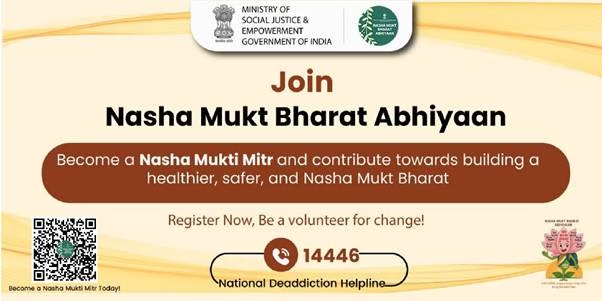
To streamline access, the national toll-free Drug De-addiction Helpline (14446) has managed over 4.60 lakh calls, offering tele-counselling, immediate crisis intervention, and localized referrals.
The structural backbone of the campaign has also received a digital upgrade via the NMBA App 2.0. The application allows local authorities and partner organizations to report awareness activities in real-time, preventing data fragmentation. Furthermore, the initiative encourages citizens to take a formal digital pledge and register as Nasha Mukti Mitras (Friends of Freedom from Addiction)—grassroots volunteers trained to identify early signs of substance use disorder and guide families toward clinical help.
Public Health Implications: The Power of Peer Intervention
From a preventative health standpoint, targeting youth and women is highly strategic. Academic literature consistently demonstrates that early-onset substance use significantly alters adolescent brain development, particularly within neural circuits governing reward, impulse control, and decision-making.
Concurrently, involving women as core stakeholders acts as a powerful preventative buffer within domestic spaces. Research indicates that maternal and familial involvement drastically decreases substance initiation rates among adolescents while improving long-term recovery compliance for family members undergoing rehabilitation.
Limitations, Realities, and the Road Ahead
While the logistical reach of the NMBA is historic, independent public health analysts emphasize that large-scale awareness metrics must be evaluated alongside long-term clinical outcomes.
1. Relapse Rates vs. Initial Treatment
Substance use disorders carry notoriously high relapse rates, frequently estimated globally between 40% and 60% by organizations like the National Institute on Drug Abuse (NIDA). While a 294% increase in treatment seeking is highly promising, the long-term success of the campaign will depend heavily on the quality of aftercare, vocational reintegration, and sustained psychiatric support beyond the initial detoxification phase.
2. Regional Disparities in Care
Independent observers note that while urban and semi-urban districts benefit from robust digital infrastructure and integrated hospital facilities, remote rural areas still face shortages of certified addiction psychiatrists, clinical psychologists, and continuous supplies of essential substitution medications.
The Verdict
The Nasha Mukt Bharat Abhiyaan has effectively transformed a fragmented medical crisis into a coordinated civic responsibility movement. By combining digital infrastructure, extensive youth outreach, and an expanded clinical network, India is building a scalable blueprint for drug demand reduction in the developing world.
For the general public, the message remains clear: addiction is a treatable medical condition, and resources are available. Citizens seeking guidance, counseling, or rehabilitation referrals are strongly encouraged to contact the national helpline at 14446.
Medical Disclaimer
Medical Disclaimer: This article is for informational purposes only and should not be considered medical advice. Always consult with qualified healthcare professionals before making any health-related decisions or changes to your treatment plan. The information presented here is based on current research and expert opinions, which may evolve as new evidence emerges.
References
-
Primary Source: Press Information Bureau (PIB) Delhi, Ministry of Social Justice and Empowerment, Government of India. Headline: “Nasha Mukt Bharat Abhiyaan Reaches Over 29.32 Crore Citizens Across The Country Through Community Participation And Nationwide Awareness Campaign.” Published: 16 July 2026.