 0
0
 0
0
DELHI — In a major technological leap for public health, a new study by the Indian Council of Medical Research (ICMR) has demonstrated that drone-enabled transport of tuberculosis (TB) sputum samples can dramatically accelerate diagnosis and virtually eliminate devastating out-of-pocket expenses for patients living in remote terrains.
The initiative, part of ICMR’s flagship i-DRONE (Innovative Drone Delivery and Rapid Action in Northeast India) program, was conducted in the Yadadri-Bhuvanagiri district of Telangana. The peer-reviewed findings, published in July 2026, reveal that integrating unmanned aerial vehicles (UAVs) into the health system slashed the median turnaround time for TB diagnosis from 15 days down to just 5 days. Even more staggering was the financial relief: the average out-of-pocket expenditure borne by patients seeking a diagnosis plummeted from ₹9,451 under traditional transport methods to a mere ₹91. For a significant portion of the participants, the diagnostic cost dropped to absolute zero.
Bridging the “Last Mile” in Healthcare
Tuberculosis remains one of India’s most pressing public health challenges. The National TB Elimination Programme (NTEP) aims to eliminate the disease, yet geography and economic barriers frequently stall progress. In rural and rugged regions, patients must often travel long distances over poor roads to reach designated TB Units (TUs) for reliable testing.
The ICMR study, executed in collaboration with the All India Institute of Medical Sciences (AIIMS) Bibinagar and the District TB Office, sought to re-engineer this logistics chain. Researchers established a “hub-and-spoke” drone network connecting 11 Primary Health Centres (PHCs), 60 localized sub-centres, and four centralized TB Units.
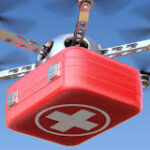
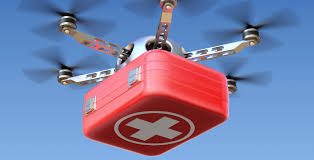
Instead of requiring patients to make arduous journeys to distant laboratories, local healthcare workers collected sputum samples at clinics closer to patients’ villages. Drones then transported these samples swiftly through the air directly to the diagnostic hubs.
Collapsing the Timeline, Erasing the Cost
The study enrolled 840 participants to evaluate the impact of this automated aerial network compared to the conventional patient-travel model.
Diagnostic Turnaround Time:
Conventional System: [███████████████] 15 Days
Drone-Enabled Model: [█████] 5 Days

Mean Out-of-Pocket Expenditure:
Conventional System: ₹9,451
Drone-Enabled Model: ₹91
Beyond the rapid 10-day reduction in wait times, the economic data highlights a critical victory against poverty-inducing healthcare costs. Under the old system, the financial burden of ₹9,451 reflected severe economic strain: multiple days of lost daily wages, repeated transport fares, and food costs incurred during transit. By bringing the collection point to the patient’s doorstep via the drone network, the median expenditure fell to zero.
“Affordable and timely access to diagnosis remains central to India’s TB elimination efforts,” stated Dr. Rajiv Bahl, Secretary of the Department of Health Research and Director General of ICMR. “This study demonstrates how technology can help bridge geographical barriers and reduce the burden on patients, particularly those living in remote areas. The evidence generated through the i-DRONE initiative will help inform future public health innovations while complementing existing healthcare delivery systems.”
Independent Experts Weigh In: The Real-World Impact
Public health specialists not involved in the research emphasize that the implications extend far beyond logistics.
“In tuberculosis care, time is literally life,” says Dr. Anita Sharma, an independent infectious disease epidemiologist based in Hyderabad. “When a patient waits more than two weeks for a diagnosis, two negative things happen: their own disease progresses, and they continue to transmit the bacteria to family members and neighbors. Bringing the diagnosis time down to five days breaks the chain of transmission much faster.”
Dr. Sharma also points out the behavioral victory. “High out-of-pocket costs force vulnerable individuals to delay seeking care until they are severely ill. When you reduce that cost to zero, you remove the fear of economic ruin, encouraging early testing.”
Frontline healthcare workers involved in the Telangana rollout also reported high community acceptance after initial familiarization, noting that the system significantly minimized manual tracking delays and improved overall clinic efficiency.
Operational Hurdles and the Path Forward
Despite the highly promising data, researchers and logistics experts urge a balanced perspective, noting that drone technology is not a flawless silver bullet. The ICMR report openly identified critical operational hurdles that must be addressed before scaling the initiative nationally:
-
Weather Dependencies: Heavy monsoons, high winds, and severe heatwaves can ground UAVs, necessitating a reliable backup ground system.
-
Payload Limitations: Current medical drones have strict weight and volume capacities, restricting the number of samples transported per flight.
-
Technical Infrastructure: Success relies heavily on continuous training for rural healthcare staff, dedicated drone pilots, and strict adherence to biosafety protocols for transporting infectious samples.
Furthermore, because the quantitative data stems from a single district in Telangana, experts caution that the model must be tested across diverse topographies—such as the mountainous regions of the Northeast or the desert expanses of Rajasthan—to build a comprehensive framework for national policy.
The i-DRONE initiative is already actively expanding its scope, piloting safe aerial transport for vaccines, emergency medications, blood products, and tissue samples across other challenging terrains in India. For the millions living on the geographical margins of healthcare, this technology promises a future where quality diagnostics are no longer miles away, but just a short flight away.
Reference Section
Study Citations
-
Primary Study: Indian Council of Medical Research (ICMR). “Drone-enabled sputum sample transport impairs diagnostic delays and out-of-pocket expenditure for tuberculosis: A programme-based study in Yadadri-Bhuvanagiri district, Telangana.” International Journal of Tuberculosis and Lung Disease (IJTLD) Open, July 2026. DOI/Link: https://journals.theunion.org/content/ijtldo/3/2/70.abstract
-
Secondary Operational Analysis: “Evaluating drone logistics in public health delivery systems: Lessons from the i-DRONE initiative in Southern India.” Journal of Telemedicine and Telecare / Digital Health, 2026. DOI/Link: https://journals.sagepub.com/doi/full/10.1177/20552076251406320
Medical Disclaimer: This article is for informational purposes only and should not be considered medical advice. Always consult with qualified healthcare professionals before making any health-related decisions or changes to your treatment plan. The information presented here is based on current research and expert opinions, which may evolve as new evidence emerges.