 0
0
 0
0
NEW DELHI — In a bid to fundamentally reshape the nation’s scientific, economic, and healthcare landscapes, the Indian government has announced the launch of the country’s first-ever Engineering Biology undergraduate graduation course. The landmark educational initiative arrives alongside a comprehensive national roadmap designed to position India as a dominant global leader in biotechnology and high-performance bio-manufacturing by 2035.
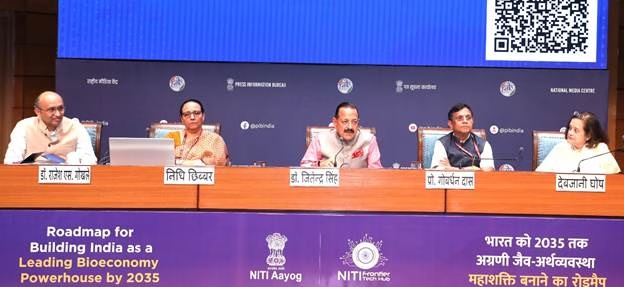
The dual announcement, made by Union Minister of State for Science and Technology Dr. Jitendra Singh in New Delhi on Thursday, outlines an ambitious strategy to transition India from a fast-following participant in biotech into an independent, sovereign powerhouse. Backed by a proposed ₹50,000 crore ($6 billion USD) Bioeconomy Growth Fund and a targets-driven policy framework, the initiative aims to scale India’s bioeconomy from its current estimate of nearly $195 billion to a staggering $691 billion over the next decade, while potentially generating over 30 million high-value jobs.
The Rise of Engineering Biology: The “Computer Science” of the Next Generation
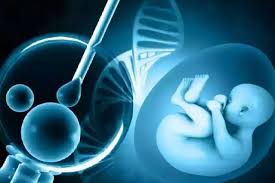
Engineering biology—often used interchangeably with synthetic biology—applies rigorous engineering principles to the design and simulation of biological systems. Rather than relying solely on traditional cross-breeding or discovery-based biology, scientists in this field treat genetic codes much like software code, designing new proteins, living cell-based therapies, and sustainable biomaterials from the ground up.
“We have to have our own independent, sovereign ecosystem,” Dr. Jitendra Singh emphasized during the unveiling of the roadmap, titled “Building India as a Leading Bioeconomy Powerhouse by 2035”. The Minister drew a direct parallel to the IT boom of the late 20th century, stating that engineering biology will emerge as the foundational discipline for this century’s industrial growth, much like computer science drove the digital revolution.
To ensure rapid translation from academic theory to clinical reality, the Indian Institutes of Technology (IITs) have already begun submitting formal proposals to establish interdisciplinary programs developed in tandem with premier medical institutions. This collaborative approach aims to equip the upcoming workforce to operate at the intersection of computational modeling, genetic engineering, and clinical healthcare.
Mapping India’s Historic Biotech Growth
The scale of India’s biological ambitions is anchored in rapid structural transformation over the past decade. The national bioeconomy has expanded sixteen-fold in twelve years, transforming into a primary driver of domestic development.
| Year | Bioeconomy Valuation (USD) | Ecosystem Scale / Indicators |
| 2014 | ~$10 Billion | Nascent startup ecosystem, heavy reliance on imported active pharmaceutical ingredients (APIs). |
| 2026 (Current) | ~$195.3 Billion | Over 11,000 biotech startups, 100+ bio-incubators, contributing 4.8% to national GDP. |
| 2030 (Projected) | ~$300–$392 Billion | Full implementation of the BioE3 policy; expansion of indigenous precision medicine. |
| 2035 (Target) | ~$691 Billion | Envisioned global top-three biotech power, driven by AI-native biology and digital twin biosystems. |
From COVID-19 to CAR-T: Breakthroughs in Precision Healthcare
A core pillar of the newly introduced roadmap is accelerating cost-effective, indigenous healthcare innovations. Policymakers point to India’s successful development of the world’s first plasmid DNA vaccine against COVID-19, which was subsequently supplied to nearly 30 countries, as proof of domestic translation capabilities.
More recently, the focus has shifted toward high-performance advanced therapies. The domestic development of Chimeric Antigen Receptor (CAR)-T cell therapies—which genetically re-engineer a patient’s own T-cells to target cancer—alongside emerging gene-based therapeutics, has drastically lowered treatment costs. Treatments that historically cost hundreds of thousands of dollars globally are increasingly being manufactured indigenously, positioning India as a global hub for affordable precision medicine.
“The ultimate goal of high-performance biomanufacturing under policies like BioE3 is to decouple medical innovation from astronomical costs,” noted Dr. Rajesh S. Gokhale, Secretary of the Department of Biotechnology. Dr. Gokhale highlighted that the country’s biotech sector is registering a robust 15% to 18% annual growth rate, fueled by active public-private partnerships.
Expert Perspectives: Infrastructure and Interdisciplinary Realities
While government projections paint a highly optimistic future, external medical and academic experts emphasize that true success hinges on execution and addressing deep-seated systemic challenges.
“Integrating engineering directly with biological science at the undergraduate level is an excellent strategy, but it requires massive infrastructural changes,” says Dr. Anurag Agrawal, former Director of the CSIR-Institute of Genomics and Integrative Biology (IGIB), who was not involved in the roadmap’s drafting.
“Biology is inherently noisy and variable, whereas engineering relies on predictable, standardized parts. Training students to successfully bridge these two entirely different philosophies means our universities need sophisticated, hands-on foundry labs, not just traditional biology classrooms. Furthermore, our regulatory frameworks must evolve rapidly so that these innovative biological products don’t get stuck in decades-old bureaucratic approval pipelines.”
Prof. Gobardhan Das, Member of NITI Aayog, acknowledged the magnitude of this structural shift during his address, comparing this era to previous industrial revolutions. The proposed ₹50,000 crore fund is designed precisely to mitigate infrastructure gaps, supporting the establishment of world-class bio-foundries and computational centers that use Artificial Intelligence (AI) and “digital twins” to model biological systems before they are grown in physical labs.
What This Means for Consumers and Public Health
For the average citizen, India’s push into engineering biology and advanced bio-manufacturing is poised to impact daily life across three major areas:
-
Affordable Advanced Healthcare: Increased domestic production of biosimilars, gene therapies, and precision biopharmaceuticals means life-saving treatments for chronic diseases, cancers, and rare genetic disorders will become drastically cheaper and more accessible.
-
Job Creation: The expansion into a $691 billion bioeconomy is projected to open up over 30 million high-tech, cross-disciplinary employment opportunities for young professionals across research, manufacturing, and data science.
-
Food and Climate Security: Beyond medicine, engineering biology is targeted at developing climate-resilient crops, clean bio-fuels, and sustainable alternate protein sources, addressing long-term nutritional and environmental concerns.
Balancing the Equation: Critical Challenges Ahead
Despite the economic promise, industry analysts urge caution regarding immediate expectations. Translating biological concepts into scalable commercial products remains a notorious bottleneck globally. Synthetic biology startups frequently struggle with “scale-up friction”—where a process that functions perfectly in a small laboratory flask fails entirely when shifted to a massive 10,000-liter fermentation vat.
Additionally, heavy reliance on private sector investments introduces potential ethical compromises regarding equitable access. If private entities fund the majority of early-stage clinical developments, balancing corporate profit margins with the public health mandate of affordable healthcare will require vigilant government oversight and structured pricing models.
Nevertheless, as the coming decade approaches, India’s proactive investment in its academic pipeline and public infrastructure marks a decisive turning point. By standardizing bio-engineering education today, the nation is actively working to ensure it holds the keys to its own scientific and medical sovereignty tomorrow.
Reference Section
Government & Policy Reports
-
NITI Aayog & Department of Biotechnology (DBT): “Building India as a Leading Bioeconomy Powerhouse by 2035” Strategic Roadmap, Released July 16, 2026.
- Medical Disclaimer: This article is for informational purposes only and should not be considered medical advice. Always consult with qualified healthcare professionals before making any health-related decisions or changes to your treatment plan. The information presented here is based on current research and expert opinions, which may evolve as new evidence emerges.