 0
0
 0
0
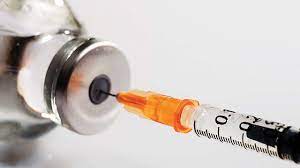
NEW DELHI — In a major breakthrough for global public health, India has successfully moved out of the list of the world’s top 10 countries with the highest burden of “zero-dose” children—infants who have not received a single routine vaccination.
According to the latest World Health Organization (WHO) and UNICEF Estimates of National Immunization Coverage (WUENIC) released on July 15, 2026, India recorded approximately 679,000 zero-dose children in 2025. This marks a significant 25% decline from the roughly 909,000 completely unvaccinated children reported in 2024. While the global total of zero-dose children stalled at 13.5 million, public health experts credit India’s intensified, targeted outreach strategies for driving down its national numbers and transforming the region’s immunization landscape.
Tracking the Data: India’s Gains vs. Global Stagnation
The 2025 WUENIC report highlights a stark contrast between India’s decisive forward momentum and a plateauing global immunization recovery. Worldwide, 13.5 million children missed out on all routine vaccinations in 2025. The data reveals that approximately 53% of these unprotected children live in just 10 countries, including Nigeria, Pakistan, and Indonesia. For the first time in recent history, India is notably absent from that high-burden cohort.
However, global health leaders caution that the international picture remains fragile. DTP3 coverage—the three doses of the diphtheria, tetanus, and pertussis vaccine used as the standard global benchmark for routine childhood immunization—remained stagnant at 85% in 2025. Furthermore, global first-dose measles coverage stood at 84%, leaving nearly 21 million children entirely unprotected against a highly contagious virus.
Measles acts as an early warning system for public health networks; because it transmits so easily, a sudden spike in measles cases invariably exposes underlying cracks in a country’s vaccination infrastructure.
Why the “Zero-Dose” Metric Matters
In the lexicon of public health, a “zero-dose” child is defined as an infant who has missed the very first dose of a diphtheria-tetanus-pertussis-containing vaccine. These children are entirely unprotected against a host of debilitating and life-threatening preventable illnesses, including polio, diphtheria, pertussis (whooping cough), and tetanus.
Beyond individual risk, the zero-dose metric serves as a crucial socio-economic diagnostic tool.
“Reaching zero-dose children is about far more than administering a single shot,” explains Dr. Ananya Sen, an independent public health policy researcher not involved in the WHO report. “It serves as a primary indicator of health equity. When a child receives zero vaccines, it tells us that the health system has completely failed to reach that family. These children almost always live in the margins—remote rural tracts, urban slums, migrant communities, or conflict-affected zones.”
For the general public, the implications of these coverage gaps are clear. High community immunity acts as a collective shield. When pockets of children are left unvaccinated, the risk of localized outbreaks increases exponentially, threatening infants who are too young to receive their full vaccine series and individuals with compromised immune systems.
The Mechanics Behind India’s Success
India’s steady retreat from the top of the zero-dose burden list is the result of multi-year, systemic interventions designed to close equity gaps. The government’s execution of intensified catch-up campaigns, alongside expanded community-level mobilization, successfully tracked down populations that slipped through the cracks during the disruptions of the early 2020s.
Despite these nationwide improvements, complex data challenges persist inside the Indian context. The latest WUENIC estimates draw attention to variations between government-administered data and UN-modeled figures, particularly regarding the timing and tracking of the crucial Hepatitis B birth dose.
Independent analysts point out that discrepancies in “denominators”—the estimated total population of eligible infants versus actual recorded births—alongside varying record-keeping qualities at rural health centers, can sometimes skew localized indicators. This makes thorough subnational validation essential to ensure that on-the-ground progress matches official statistical models.
Expert Perspectives: Celebration Tempered by Caution
While international bodies have warmly welcomed India’s progress, regional leadership urges against premature celebrations. In statements following the July 15 release, UNICEF South Asia representatives characterized the drop as a “proud milestone” for the nation’s healthcare workers, while simultaneously emphasizing that the remaining unvaccinated children represent the absolute hardest-to-reach demographics.
Public health experts stress that “the last mile” is always the most resource-intensive. Reaching the remaining 679,000 children will require dismantling stubborn barriers, including deeply entrenched vaccine hesitancy, systemic logistical hurdles in remote topographies, and the distinct migratory patterns of urban poor populations.
Limitations: Reading Between the Regional Lines
Journalistic objectivity requires looking closely at what these statistics mean—and what they do not mean. Falling outside the global top 10 does not imply that India has eradicated its childhood vulnerability; rather, it signifies that other developing nations now bear a disproportionately higher share of the global 13.5 million zero-dose burden.
Furthermore, national aggregates can be deeply deceptive. A macro-level decline in zero-dose children frequently masks profound district-level and state-level inequalities. While certain Indian states boast near-universal routine immunization, other regions continue to battle persistent pockets of low coverage driven by local socio-economic challenges. Public health vigilance must remain micro-targeted, as a single poorly immunized district can serve as the epicenter for a broader resurgence of preventable disease.
Actionable Takeaways for Families and Policymakers
For parents and caregivers, the practical message is unambiguous: keeping childhood immunizations strictly on schedule is the single most effective action individuals can take to protect their families and wider communities. If a child has missed a dose due to migration, illness, or logistical issues, local public health clinics offer structured catch-up schedules to restore full protection.
For policymakers and public health architects, the mandate shifts from macro-campaigns to precise, localized intervention. Sustaining India’s milestone will require removing lingering barriers to care, actively correcting localized misinformation, and prioritizing timely birth-dose tracking. India’s transition out of the top zero-dose nations is an undeniable public health victory, but it remains an ongoing process rather than a final destination.
References
-
Free Press Journal. “India No Longer Among Top 10 Countries With Most Unvaccinated Children: UN Report.” Published July 14, 2026.
Medical Disclaimer: This article is for informational purposes only and should not be considered medical advice. Always consult with qualified healthcare professionals before making any health-related decisions or changes to your treatment plan. The information presented here is based on current research and expert opinions, which may evolve as new evidence emerges.